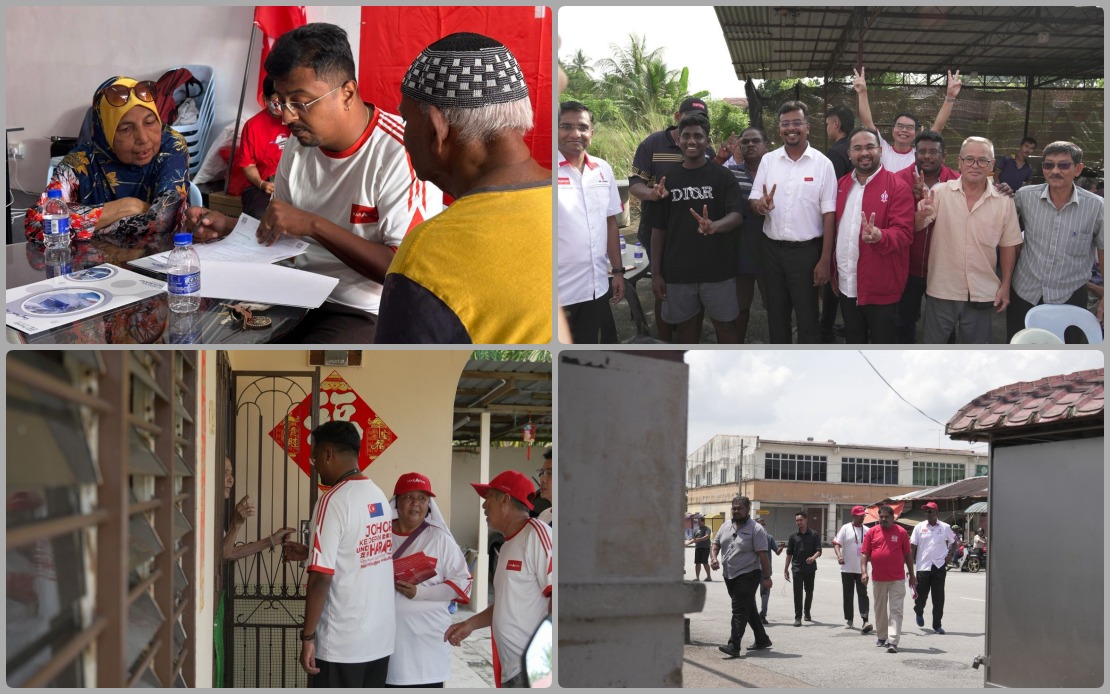
Dr. A. Ruban, the Pakatan Harapan (PH) candidate contesting the Paloh state assembly seat, was admitted to a hospital in Batu Pahat on July 7 for treatment of a spinal condition that has caused acute pain and restricted his mobility. The hospitalisation marks a significant interruption to campaign activities just days before the Johor state election is scheduled to take place on July 11.
According to Abdul Majid Abd Aziz, who serves as the campaign manager for Dr. Ruban's bid for the Paloh seat, the candidate began experiencing severe discomfort early in the day that necessitated immediate medical intervention. The underlying cause stems from a pre-existing spinal ailment that has troubled Dr. Ruban in the past, requiring surgical intervention on a previous occasion. The recurrence of pain appears to have been triggered by the demanding nature of the election campaign cycle.
The intensive grassroots engagement required during state election campaigns places considerable physical demands on candidates, who typically spend long hours traversing constituencies to meet voters directly. In Dr. Ruban's case, Abdul Majid attributed the exacerbation of his spinal condition to fatigue accumulated over weeks of door-to-door outreach and public appearances. The campaign schedule, combined with the physical toll of these activities, appears to have strained his back sufficiently to warrant immediate hospitalisation and medical supervision.
While the situation raised concerns about Dr. Ruban's immediate availability for campaigning, his campaign manager provided reassurance that the candidate's condition is not grave or life-threatening. Medical authorities anticipate that Dr. Ruban could be discharged from the hospital within one to two days, suggesting that the hospitalisation is primarily for pain management and monitoring rather than complicated surgical intervention. This timeline would theoretically allow him to resume some level of campaign engagement before voters cast their ballots.
The interruption to Dr. Ruban's personal campaign activities comes at a critical juncture in the electoral cycle. Early voting took place on the same day he was admitted to hospital, meaning that a portion of the electorate has already cast their votes. With the main polling day scheduled just four days later, every moment counts for candidates seeking to mobilise their support base and reinforce their message with undecided voters.
Recognising these constraints, the PH campaign machinery for the Paloh seat has mobilised alternative strategies to maintain visibility and voter engagement despite their candidate's temporary absence from the field. Abdul Majid emphasised that party operatives and campaign volunteers would intensify their door-to-door operations and community interactions to ensure that Dr. Ruban's policy platform and election manifesto reach the electorate. This delegation of campaign responsibilities represents a practical adaptation to unforeseen circumstances while maintaining momentum for the candidacy.
The Paloh seat has emerged as a competitive four-way contest in the 16th Johor state election. Alongside Dr. Ruban's PH bid, the electorate faces choices between D. Jeevakumar representing Perikatan Nasional (PN), independent candidate G. Kamaleswaren, and the incumbent Lee Ting Han contesting on the Barisan Nasional (BN) ticket. This multi-candidate scenario means that the distribution of votes across competing camps could prove decisive, particularly if Dr. Ruban's reduced on-ground presence in the final days affects his campaign's ability to consolidate support.
The timing of Dr. Ruban's hospitalisation introduces an element of unpredictability into an already competitive race. In Malaysian electoral contests, personal visibility and direct voter interaction frequently influence campaign momentum and candidate credibility. The candidate's sudden absence from public engagements, even when explained by legitimate medical reasons, may be perceived by some voters as reducing accessibility or commitment during the critical final campaign period. Conversely, voters sympathetic to his situation may view his determination to continue fighting his campaign despite health adversity as a sign of dedication to the constituency's interests.
For the broader PH campaign in Johor, the Paloh situation underscores the physical and mental stamina required of candidates in state-level elections. Campaign activities during election periods are notoriously taxing, with candidates often sacrificing sleep and managing stress while maintaining public composure and delivering consistent messaging. Dr. Ruban's medical episode, triggered by pre-existing spinal vulnerability amplified by campaign fatigue, reflects the genuine health risks that intensive electioneering can pose, particularly for older candidates or those with pre-existing medical conditions.
The incident also highlights how Malaysian election campaigns operate with compressed timelines and high-intensity activity levels. Unlike some democracies with extended campaign periods, Johor's state election cycle involves rapid mobilisation and concentrated effort within weeks. This pressure-cooker environment can expose latent health vulnerabilities, making it challenging for candidates to simultaneously maintain personal wellbeing and meet electoral commitments. The support system around candidates, including their campaign teams, becomes crucial in managing these competing demands effectively.
Moving forward, the Paloh constituency presents a test of how effectively campaign organisations can adapt to disruptions and maintain electoral competitiveness. The PH team's commitment to continuing ground-level engagement without their candidate's direct participation will be observable in coming days. Whether voters ultimately penalise PH for Dr. Ruban's reduced visibility or reward the party's organisational resilience will contribute to understanding how Malaysian voters evaluate the totality of a campaign effort beyond individual candidate performance.

