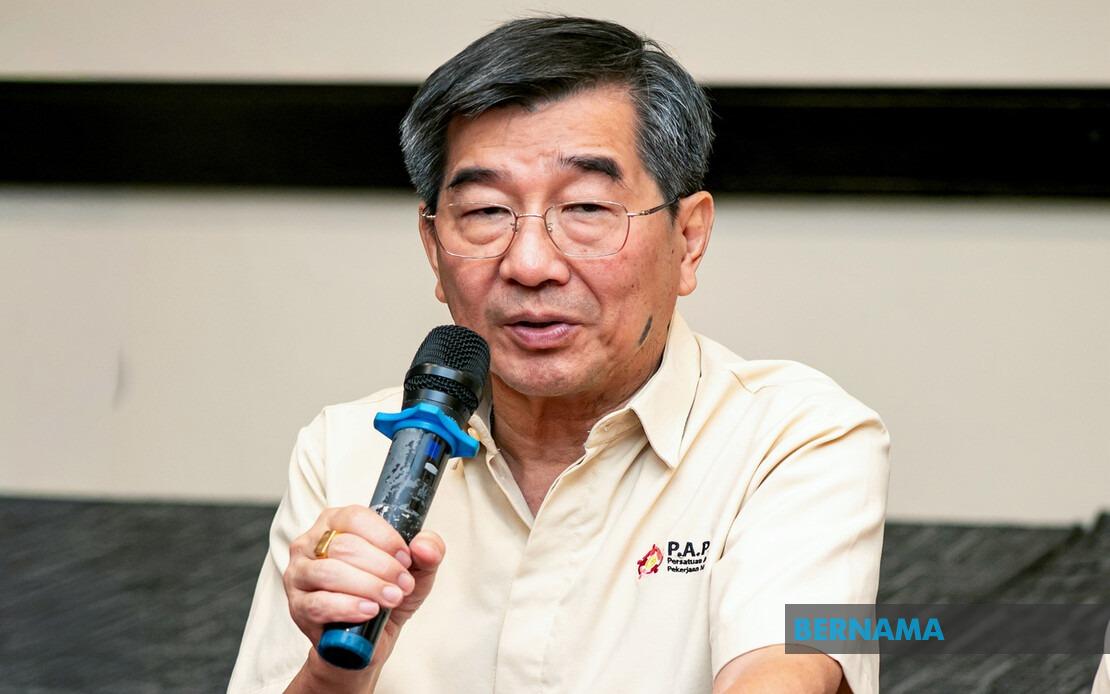
The Malaysian Association of Employment Agencies (PAPA) has unveiled a pioneering insurance programme designed to bridge critical protection gaps affecting both household employers and domestic workers across the nation. Developed in partnership with GMAT Sdn Bhd and Allianz Malaysia, the scheme represents a significant attempt to modernise risk management within Malaysia's substantial domestic work sector, where an estimated two million workers operate with minimal formal safeguards. The initiative reflects growing recognition that existing frameworks have failed to adequately protect either party throughout the employment relationship.
Datuk Foo Yong Hooi, PAPA's president, explained that the programme addresses a fundamental structural vulnerability within the domestic recruitment landscape. Employers typically receive guarantee periods spanning three to six months following worker placement, yet find themselves entirely unprotected once these windows close. This timing coincides precisely with when many employment problems emerge, leaving households financially exposed to unexpected disruptions. The new insurance framework fundamentally alters this dynamic by extending meaningful coverage well beyond those initial months, creating a sustainable safety net for the duration of employment.
Under the scheme's terms, employers receive RM5,000 in compensation should a domestic worker abscond during the insured period, effectively offsetting the combined costs of emergency recruitment, agency placement fees, and temporary household disruption. This represents a strategic first-year focus, recognising that the initial twelve months constitute the highest-risk phase of any domestic employment relationship. Following the first year, while the abscondment benefit expires, other protective elements including personal accident coverage and hospitalisation benefits remain continuously active, ensuring employers retain meaningful recourse against other foreseeable emergencies.
The hospitalisation and surgical coverage component marks a particularly significant advancement, extending protections far beyond workplace injuries to encompass general medical conditions and illnesses. Domestic workers who receive medical certification of unfitness for duty qualify for weekly compensation lasting up to twelve weeks, providing income replacement during recovery periods when household functions are disrupted. Additionally, the policy addresses an often-overlooked vulnerability by offering limited assistance for lost essential documents, particularly passports, a problem affecting countless migrant domestic workers navigating Malaysia's bureaucratic requirements.
Foo acknowledged the programme's relationship to a previous abscondment initiative abandoned two decades earlier, which had struggled with fraudulent claim submissions that ultimately rendered the scheme unsustainable. The intervening years have permitted lessons learned and more sophisticated underwriting approaches to be incorporated, suggesting this iteration benefits from accumulated experience and improved verification mechanisms. This historical context underscores why comprehensive reform has taken considerable time, requiring careful design to balance accessibility with fraud prevention.
A particularly meaningful gap the insurance addresses involves medical conditions discovered only after employment commences. Domestic workers often arrive without comprehensive health documentation, and pre-existing ailments or chronic conditions frequently surface weeks or months into employment, creating unexpected financial burdens on households. Since domestic workers historically fell outside Social Security Organisation (PERKESO) coverage—an exclusion justified by their informal classification—employers previously bore these costs alone. The new scheme effectively creates a shared responsibility model where structured insurance pools these risks across numerous households, making unexpected medical expenses manageable rather than potentially catastrophic.
PERKESO's coverage limitations, restricted primarily to workplace accidents and injuries directly arising from employment duties, left substantial gaps in protection for everyday health emergencies. Foo positioned the new programme as deliberately complementary to rather than duplicative of existing social protection mechanisms, filling spaces that formal schemes deliberately or inadvertently leave unaddressed. This layered approach recognises that comprehensive worker protection requires multiple instruments operating in concert rather than expecting single systems to solve multifaceted challenges.
While initially targeting PAPA membership, the programme remains accessible to broader employer populations with domestic workers, avoiding the pitfall of limiting protective mechanisms to association members alone. This expansive approach acknowledges that comprehensive sector improvement requires participation beyond conventional networks. M. Marimuthu, GMAT Sdn Bhd's chief executive, highlighted the policy's digital accessibility, enabling online purchase and straightforward hospitalisation claim reimbursement from private medical facilities, subject to specified financial limits that maintain underwriting discipline.
For Malaysian policymakers observing from regional vantage points, this insurance innovation suggests pathways beyond purely regulatory approaches to protecting vulnerable worker populations. By creating economic incentives for both employers and workers to maintain stable employment relationships while pooling specific risks across larger populations, the scheme may offer templates applicable to other informal sectors characterised by limited worker protections and significant information asymmetries. The programme's emphasis on addressing gaps rather than wholesale system replacement reflects pragmatic acknowledgement that transforming entrenched practices requires meeting stakeholders where they operate rather than imposing ideal systems divorced from practical realities.
The initiative also carries implications for Singapore and other neighbouring economies managing substantial domestic worker populations. Malaysia's willingness to innovate within insurance and risk-pooling frameworks demonstrates that protecting informal workers need not await comprehensive legislative overhaul. By combining employer incentives, worker benefits, and structured insurance mechanisms, countries can meaningfully improve practical protections even while broader policy discussions continue. This balanced approach, protecting household employers from catastrophic losses while ensuring domestic workers receive medical coverage and income support during emergencies, potentially offers a replicable model for addressing protection gaps throughout Southeast Asia's domestic work sector.

