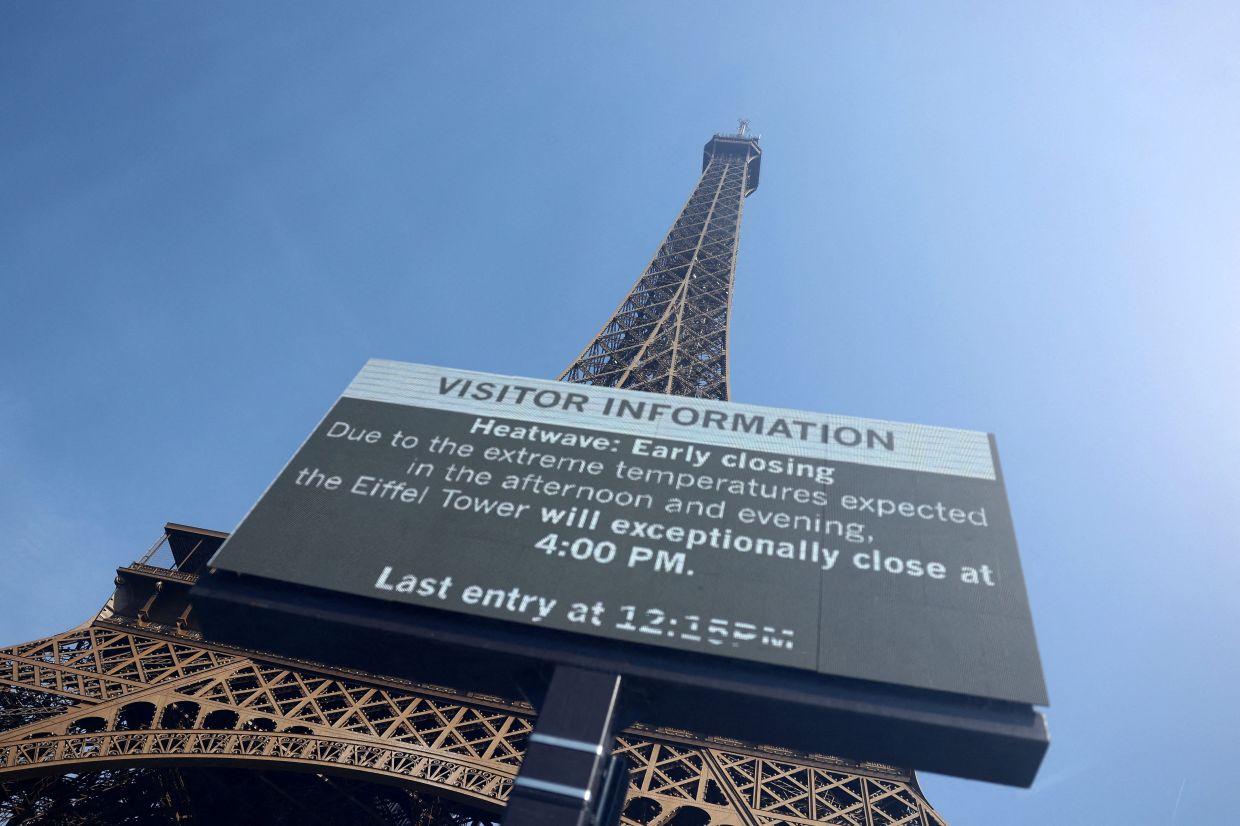
A severe heatwave gripping France this week has disrupted tourism to the French capital on an unprecedented scale, with major attractions including the Eiffel Tower and the Louvre Museum cutting operations short as temperatures soared to levels unseen since records began in 1947. The combination of extreme heat and infrastructure limitations designed for cooler climates has created a perfect storm for the tourism sector, forcing thousands of visitors to abandon carefully planned itineraries and seek refuge indoors or relocate to air-conditioned accommodation.
Spanish nurse Maite Blazques, 35, from Madrid, epitomises the challenges facing international visitors. She had spent months saving to bring her six-year-old son to Paris, one of Europe's most coveted family destinations, but found herself unable to visit the Eiffel Tower's summit or take the scenic Marais district walking tour she had planned. The cancellations represented far more than logistical inconvenience—they symbolised the erosion of the quintessential Paris experience that draws millions annually. On June 23, when France recorded its hottest day in recorded history, the tower's operators announced it would close exceptionally early at 4pm, a dramatic curtailment for a monument that normally welcomes visitors past midnight during peak season and attracts seven million tourists annually.
The ripple effects extended throughout the city's tourism infrastructure. American tourist Tamara Dancer had her guided tour cancelled on the same afternoon, describing the impact as a blow to her entire vacation. Meanwhile, other visitors attempted to navigate sweltering streets armed with umbrellas, hats and portable fans, transforming the typically romantic Parisian experience into an endurance test. John Beeler, a 45-year-old American engineer, expressed frustration about the pervasiveness of the heat—not merely on the famous streets and squares, but also in underground metro carriages and even within rental accommodation. The situation deteriorated enough to force him and his wife to abandon their original plans and book an air-conditioned hotel room instead.
For those attempting to continue sightseeing, the limited options revealed fundamental vulnerabilities in how Paris manages mass tourism during environmental extremes. The Louvre, the world's most visited museum with approximately nine million annual visitors, remained technically open but faced capacity constraints. Drake Winners, a 66-year-old London retiree, shifted his strategy entirely—rather than discovering Paris through walking, he retreated indoors to museums and churches where cooler conditions offered respite. Yet even this approach had limitations. Museum management issued stark statements acknowledging that the vast palace, constructed over centuries by successive French monarchs and presidents, was fundamentally "not sufficiently adapted to climate change."
This admission carries particular significance for understanding Europe's infrastructure challenges in an era of accelerating environmental change. The Louvre, already beset by complications ranging from a US$100 million jewellery theft to water leaks and ongoing maintenance issues, now confronts the deeper reality that its architectural heritage presents barriers to climate resilience. The palace's vast interior spaces, designed for an earlier era's temperature patterns, lack adequate cooling systems—a problem that money alone cannot quickly resolve given the building's protected historic status.
The disruptions extended far beyond Paris proper. More than half of mainland France remained under the weather service's highest alert level, prompting popular destinations across the country to implement precautionary measures. Mont Saint-Michel, the spectacular island fortress in Normandy that ranks among France's most visited attractions outside the capital region, issued explicit warnings to tourists, urging them to postpone visits during the red alert period. Such directives, while necessary for public safety, further illustrated how climate-driven extreme weather was becoming a structural constraint on European tourism.
The situation carries important implications for Southeast Asian travellers and tourism stakeholders. Malaysia and the region rely significantly on European travel experiences in long-haul packages, with Paris featuring prominently in multi-country itineraries. As European summer temperatures become more volatile and unpredictable, tour operators throughout Southeast Asia face growing pressure to revise booking patterns, incorporate climate-related contingencies, and reset customer expectations about traditional peak travel seasons. The disruptions experienced by visitors from Spain, the United States and the United Kingdom suggest that no tourist demographic remains insulated from climate impacts.
Furthermore, the Parisian heatwave highlights broader questions about tourism infrastructure sustainability in a warming world. Unlike Southeast Asian destinations that have evolved under tropical conditions, European cities were historically designed and built for cooler climates. Retrofitting centuries-old monuments with modern climate control presents technical, financial and regulatory challenges that developing tourism sectors in the region may learn from—whether through investment in adaptable infrastructure or through realistic acknowledgement of seasonal limitations. For Malaysia, which positions itself as a year-round tropical destination, the contrast is instructive: while monsoon seasons affect certain regions, the country's relatively consistent temperatures prevent the kind of sudden operational crises now commonplace in Europe.
The human dimension of the Paris crisis deserves particular attention. Tourists like Maite Blazques and her son represent countless individuals who have saved considerable resources for once-in-a-lifetime experiences, only to encounter circumstances beyond their control or the tourism industry's immediate capacity to manage. The disappointment and disruption they experienced will influence future travel decisions, potentially shifting booking patterns toward destinations perceived as more climate-resilient. For Southeast Asian tourism authorities, the message is clear: climate adaptation and operational flexibility will increasingly become competitive advantages.
Looking forward, the Paris situation suggests that Europe's iconic summer tourism season may be entering a period of structural uncertainty. As temperature records continue to fall, early closures and capacity restrictions may become routine rather than exceptional. Visitors from Asia, who typically plan European trips months in advance based on traditional seasonal calendars, may need to recalibrate expectations and adopt flexible booking strategies. The tourism industry across all regions will need to develop new protocols for managing climate-related disruptions while maintaining visitor safety—a challenge that transcends geographic boundaries and will shape travel patterns for decades to come.

