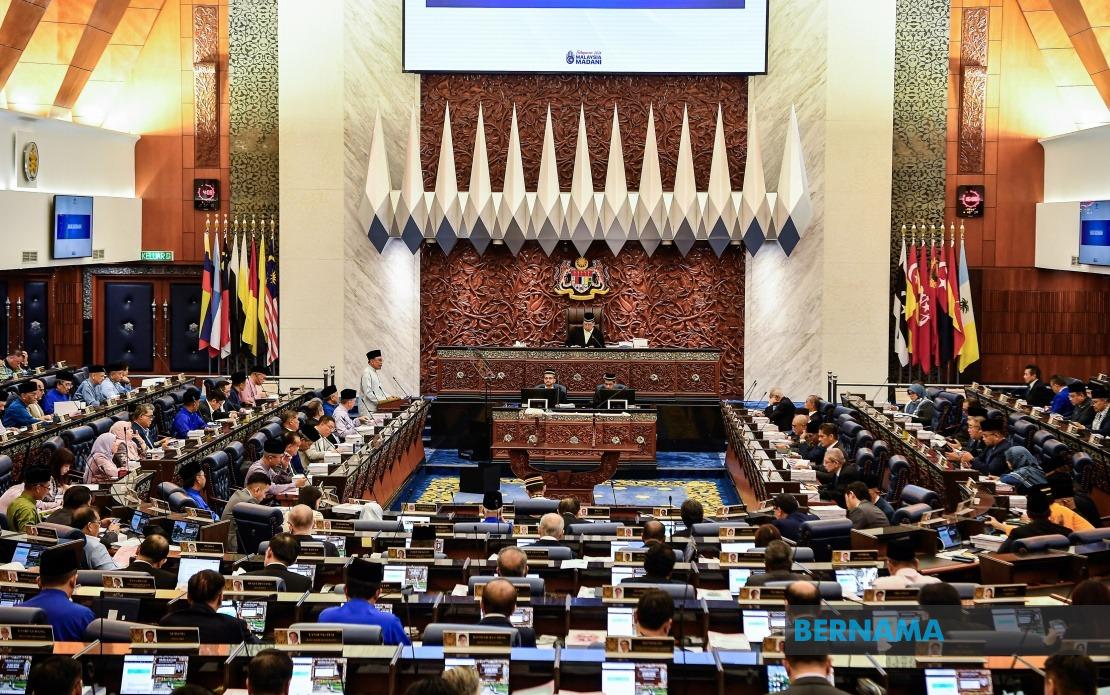
Parliament has endorsed the Malaysian Communications and Multimedia Commission (Amendment) Bill 2026, a legislative measure intended to reinforce the independence and operational effectiveness of Malaysia's primary communications regulator. The measure cleared the lower house on July 15 through a majority voice vote following substantive debate involving fourteen lawmakers spanning both government and opposition ranks. The amendments address longstanding concerns about the institutional framework governing one of Southeast Asia's most consequential regulatory bodies overseeing a sector critical to national digital infrastructure and economic competitiveness.
Deputy Communications Minister Teo Nie Ching outlined the government's rationale for the legislative changes during parliamentary proceedings. She articulated that the amendments uphold established conventions dating to 1998 permitting ministerial appointment of the MCMC chairman and commissioners, while introducing safeguards designed to insulate decision-making from partisan pressures. The specification that the chairman must remain independent of any legislative body represents a deliberate attempt to erect institutional barriers against political conflicts of interest, a concern that has periodically surfaced in regional telecommunications governance debates.
The bill's most immediately visible provision involves dramatically expanding the commission's financial discretion in procurement decisions. The ceiling on contract approvals increases from RM5 million to RM50 million, representing a tenfold increase that the government justifies as overdue recalibration given inflation and technological evolution since the threshold's establishment nearly three decades ago. Teo positioned this adjustment as consistent with procurement guidelines issued by the Finance Ministry governing federal statutory bodies, which permit institutions fully funded through internal revenue streams to approve expenditures reaching RM499 million. Nevertheless, she emphasised that the ministry opted for conservative calibration at RM50 million, judging this level appropriate given the commission's track record and operational requirements.
The financial provisions reflect tangible economic pressures reshaping telecommunications infrastructure investment across the region. Rising material costs, labour expenses, and the exponential complexity of modern network technologies—particularly in domains like spectrum management, cybersecurity, and digital infrastructure deployment—have outpaced the regulatory framework's original design assumptions. For Malaysian businesses and telecommunications operators subject to MCMC oversight, the expanded procurement authority potentially streamlines infrastructure approval processes and reduces administrative friction in network development, though implementation details remain to be clarified.
Opposition and backbench parliamentarians articulated reservations about the reform package despite acknowledging its necessity. Dr Halimah Ali from Kapar raised substantive governance concerns, advocating for mechanisms that transcend ministerial discretion in commissioner selection. She proposed importing principles from Malaysia's Human Rights Commission (SUHAKAM) framework, which relies upon broader consultative processes emphasising expertise, professional standing, and track records rather than executive appointment alone. This argument reflects growing regional momentum for independent regulatory institutions insulated from electoral cycles and political patronage networks, a structural aspiration present across ASEAN democracies grappling with balancing regulatory effectiveness against political accountability.
Datuk Mas Ermieyati Samsudin from Masjid Tanah extended this critical perspective by emphasising enhanced oversight mechanisms surrounding the Universal Service Provision (USP) Fund, a mechanism designed to subsidise telecommunications access in underserved regions. She advocated for periodic parliamentary reporting on fund deployment and strengthened audit protocols, concerns reflecting legitimate fiscal accountability demands in statutory resource management. The USP Fund represents a vehicle through which regulatory bodies redistribute market returns to achieve universal access objectives—a persistent challenge across developing telecommunications markets where commercial incentives alone prove insufficient to serve low-density populations.
Dr Richard Rapu from Betong offered a supportive analytical perspective, characterising the amendments as foundational improvements transforming MCMC into a more sophisticated institutional apparatus equipped for contemporary digital economy demands. His framing emphasised that regulatory modernisation, particularly strengthening institutional independence and professional capacity, addresses structural prerequisites for managing increasingly complex policy domains spanning broadband deployment, digital content governance, cybersecurity regulation, and emerging technologies. For Malaysian stakeholders dependent on MCMC's regulatory decisions—spanning telecommunications operators to content platforms and technology companies—the reforms signal potential improvements in decision-making consistency and technical sophistication.
The amendments occur within a regional context where telecommunications regulators across Southeast Asia confront comparable institutional pressures. As digital economies mature and as regulatory responsibilities expand into emerging domains including digital taxation, artificial intelligence governance, and platform regulation, statutory bodies face mounting expectations to operate with enhanced technical capacity and institutional insulation from political interference. Malaysia's reform trajectory thus carries implications extending beyond national boundaries, potentially influencing institutional design discussions across ASEAN member states similarly balancing regulatory effectiveness against democratic accountability.
Practical implementation challenges loom despite parliamentary approval. The expanded procurement authority requires detailed operational guidelines clarifying decision processes, approval hierarchies, and accountability mechanisms. Stakeholders including telecommunications operators, consumer advocacy groups, and technology companies will monitor whether enhanced financial discretion translates into expedited infrastructure approvals or whether bureaucratic practices persist despite formal threshold changes. The distinction between formal authority and actual administrative behaviour frequently determines regulatory effectiveness in practice.
The procurement ceiling increase addresses genuine inflation-driven pressures compelling regulatory modernisation. Over the quarter-century since 1998, construction costs, technology prices, and professional service fees have escalated substantially, rendering the original RM5 million threshold progressively constraining for major infrastructure projects. Setting the new limit at RM50 million represents prudent calibration reflecting contemporary project costs whilst maintaining fiscal discipline relative to the RM499 million ceiling governing fully self-funded statutory bodies. For major telecommunications infrastructure projects spanning network expansion, disaster recovery systems, and technology upgrades, this flexibility should meaningfully reduce administrative impediments.
The restriction on legislative participation by the MCMC chairman addresses legitimate governance concerns regarding potential conflicts between regulatory duties and parliamentary obligations. Commissioners navigating legislative relationships whilst regulating industry participants face inherent tension between institutional independence and political accountability. By requiring separation between these roles, the amendment reinforces the principle that technical regulatory expertise and industry knowledge should predominate over political considerations in telecommunications governance—a principle increasingly recognised as essential for regulatory credibility across developed and developing markets alike.
Parliamentary debate around these amendments reflects broader tension between regulatory independence and democratic accountability. Critics advocating for mechanisms mimicking SUHAKAM's consultative appointment process implicitly argue that expanded ministerial discretion, even constrained by competence criteria, insufficiently protects against political manipulation. Conversely, proponents emphasise practical governance realities requiring executive leadership capacity to appoint capable commissioners capable of technical decision-making. This philosophical debate traverses global regulatory governance literature, with no consensus emerging regarding optimal institutional design balancing professional autonomy against political legitimacy.
The bill's passage suggests parliamentary consensus that MCMC modernisation requires urgent attention despite legitimate disputes regarding specific mechanisms. Malaysia's telecommunications sector confronts escalating regulatory complexity across broadband infrastructure, digital platform governance, spectrum allocation, and emerging technologies—domains demanding sophisticated institutional capacity transcending political cycles. Whether the amendments provide sufficient insulation from political interference whilst maintaining appropriate accountability mechanisms remains to be validated through implementation, requiring careful monitoring by affected stakeholders including operators, consumers, and civil society groups tracking regulatory independence in Malaysian public institutions.

