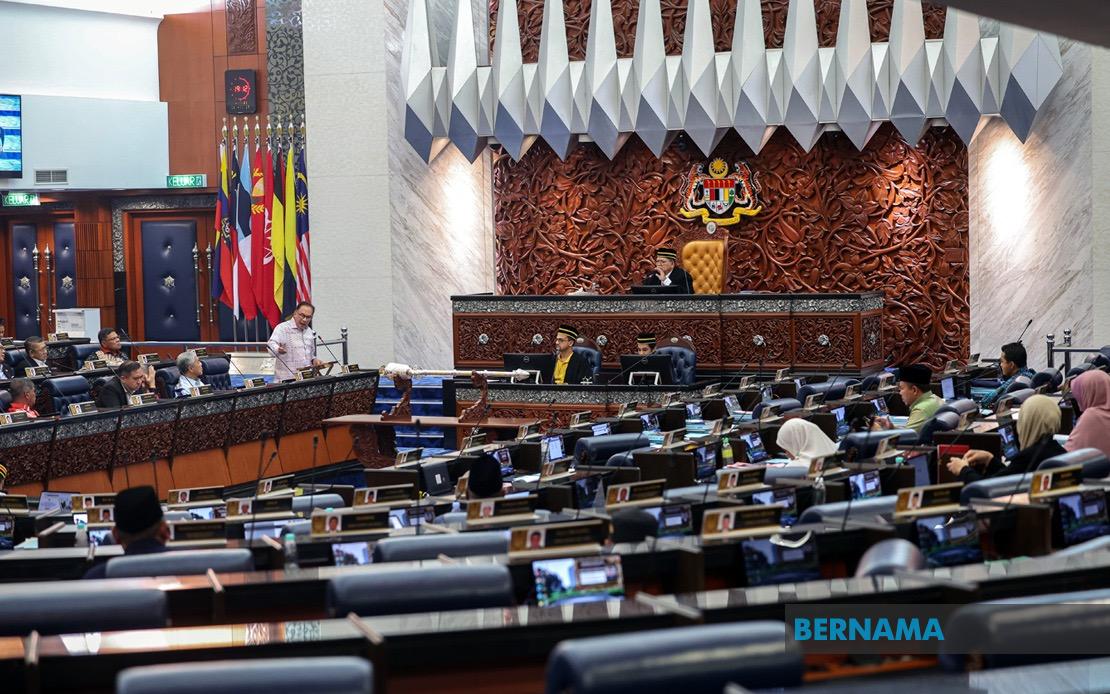
Malaysia's parliament has given the green light to redirect RM14.5 billion in outstanding proceeds from Malaysian Government Investment Issues (MGII) into the Development Fund, marking another step in the government's planned infrastructure spending for 2026. The Dewan Rakyat passed the motion by majority voice vote following discussions led by Datuk Seri Ismail Abd Muttalib from Maran and Datuk Zulkafperi Hanapi, with Deputy Finance Minister Liew Chin Tong presenting the technical resolution to lawmakers.
The financing structure underpinning this transfer reflects how Malaysia funds its development agenda. The Development Fund draws revenue from several sources including transfers from the Consolidated Revenue Account, the Consolidated Loan Account, loan repayments, and receipts tied to development activities. Within this ecosystem, proceeds from the Consolidated Loan Account—which includes MGII, Malaysian Government Securities, Treasury Bills, and external borrowings—form a critical component. This diversified funding approach allows the government to separate its borrowing activities between operating expenses, which must be covered by tax and revenue collections, and development expenditure, which can be financed through debt issuance under the country's legal framework.
The broader MGII programme being executed this year totals an estimated RM95 billion, a substantial figure that reflects the government's ambitions for capital investment. Deputy Finance Minister Liew broke down the allocation to clarify Parliament's understanding of how this money would be deployed. Of the total, RM55 billion is earmarked to refinance existing MGII that are maturing—essentially rolling over debt obligations rather than creating new liabilities. An additional RM2 billion will help redeem Malaysian Islamic Treasury Bills (MITB), short-term shariah-compliant instruments that play a role in Malaysia's Islamic finance ecosystem. The remaining RM38 billion is dedicated to partially covering the 2026 fiscal deficit, providing the government with flexibility to fund both operational shortfalls and development priorities.
Between January and May 2026, the government issued RM40 billion in gross MGII proceeds. However, when accounting for RM25.5 billion needed to refinance maturing instruments, the net proceeds available for new development spending total RM14.5 billion—precisely the amount parliament approved for transfer today. This distinction between gross and net issuance is crucial for understanding Malaysia's true debt position and the genuine additional fiscal space created by new borrowing. The government has signalled its intention to bring the remaining MGII issuances covering June through December 2026 to parliament for approval at the next sitting, suggesting a phased approach to managing capital deployment throughout the year.
Liew's presentation to parliament addressed one of the more sophisticated concerns about Malaysia's domestic debt markets: the potential for government securities to crowd out private sector investment opportunities. When the government issues large quantities of debt, local institutional investors such as the Employees Provident Fund (EPF) and the Retirement Fund Incorporated (KWAP)—both custodians of retirement savings for millions of Malaysians—naturally become major purchasers of these instruments. Critics worry this diverts capital that might otherwise finance private enterprise, potentially hampering economic dynamism. However, Liew countered that the government has actually been reducing new borrowing year on year recently, and that government securities provide necessary investment outlets for these institutions to generate competitive returns.
The deputy minister's response to the crowding-out concern carries strategic weight for Malaysia's broader financial stability. He emphasised that without domestic investment opportunities in government debt, large institutional funds might redirect capital outward, potentially weakening demand for ringgit-denominated assets. This logic underscores why maintaining healthy government securities markets matters beyond mere fiscal accounting—it affects currency valuations, foreign exchange reserves, and Malaysia's ability to attract and retain capital flows. For the EPF and KWAP, buying government securities offers safety, predictable returns, and alignment with their fiduciary duty to preserve retirement capital, making these instruments structurally important to Malaysia's financial ecosystem.
The approval reflects broader parliamentary engagement with fiscal mechanics that often receive little public scrutiny. Both the approving and questioning lawmakers demonstrated familiarity with technical distinctions between refinancing and new issuance, shariah-compliant versus conventional debt instruments, and the relationship between borrowing and development spending. This level of parliamentary questioning—whether about the breakdown of the RM95 billion total or the potential market impacts—suggests awareness among elected representatives of the complex trade-offs inherent in government financing decisions. Such scrutiny, while perhaps not headline-grabbing, forms an important accountability mechanism for how Malaysia deploys borrowed funds.
For Malaysian taxpayers and workers, the practical implications of today's vote centre on infrastructure and services that development spending typically finances: roads, rail networks, hospitals, schools, and digital infrastructure. The ringga-denominated cost of borrowing has fluctuated with regional interest rates and global sentiment toward emerging markets, meaning the value extracted from this RM14.5 billion depends partly on how efficiently projects are executed and what returns they generate economically. Development funds are not spending programmes but rather financing mechanisms, meaning the actual selection and implementation of projects involve separate decisions by relevant ministries and agencies.
Regionally, Malaysia's approach to government financing through securities issuance and development fund transfers sits within a broader Southeast Asian context. Other major economies in the region maintain similar structures separating operational and capital budgets, though implementation and efficiency vary considerably. Malaysia's reliance on domestic institutional investors—particularly the EPF—for absorbing government debt differs from some neighbours that depend more heavily on international capital markets. This domestically-oriented approach provides stability during periods of regional financial volatility but also requires maintaining investor confidence in ringgit assets and government creditworthiness.
The phased approach to MGII transfers, with parliament approving mid-year proceeds and the government indicating it will return for approval of latter half issuances, reflects a measured approach to capital deployment and parliamentary oversight. Rather than securing authorisation for the full year upfront, this methodology allows adjustments based on actual market conditions, fiscal performance, and project readiness. It also maintains regular parliamentary engagement with financing decisions, preventing the executive from operating entirely independently on borrowing matters—a constitutional protection that matters for fiscal accountability even if the rubber-stamp approval today suggests limited legislative resistance to the government's borrowing plan.
Looking ahead, the success of this development spending will depend on project selection, implementation capacity, and whether the infrastructure financed by these funds generates sufficient economic returns to justify the borrowing costs. Malaysia's development fund has financed major national projects for decades, though debates persist about whether spending has always achieved optimal returns. As the government executes the 2026 development programme, parliament and the public will eventually assess whether the RM95 billion in MGII issuance—and specifically the RM14.5 billion approved today—contributed meaningfully to improved infrastructure, productivity, and living standards that justify the debt burden being placed on future generations of Malaysian taxpayers.

