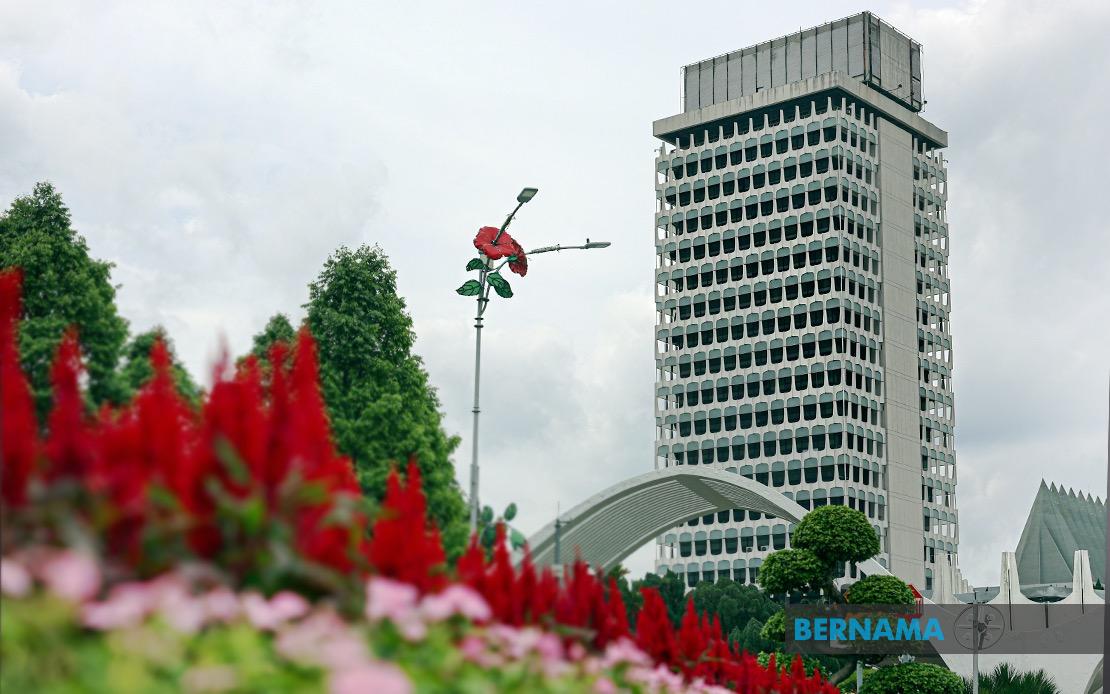
Parliament's Second Meeting of the Fifth Session opens Monday for a 16-day sitting through July 16, bringing constitutional matters and legislative reforms that could reshape Malaysia's institutional landscape. Two previously unsuccessful constitutional amendments will be re-tabled, indicating parliamentary leadership's determination to advance what it views as essential governance reforms despite earlier setbacks.
The Constitution (Amendment) Bill 2026, which proposes to cap the prime minister's tenure at 10 years, failed to achieve the required two-thirds majority when first presented. Constitutional amendments in Malaysia demand this supermajority—a threshold that reflects the framers' intention to protect foundational governance structures from simple political majorities. The government's decision to bring it back suggests either additional support has been secured or there is political commitment to pressing the issue despite uncertain prospects. The limitation would represent a significant structural change to executive power, establishing a precedent that sitting prime ministers would know from the outset that their tenure has constitutional bounds.
Equally significant is the re-tabling of the Constitution (Amendment) Bill (No. 2) 2026, which seeks to separate the offices of Attorney General and Public Prosecutor. Currently unified under one person, this arrangement concentrates considerable legal authority. The proposed separation would create institutional checks, with the Public Prosecutor handling criminal prosecution independently of the Attorney General's broader legal advisory role to government. The bill's referral to the Parliamentary Special Select Committee after its initial presentation indicates parliamentary procedure is functioning deliberately—the committee scrutiny allows deeper examination of how such separation would function practically across Malaysia's justice system.
Beyond constitutional matters, the Road Transport Act 1987 (Amendment) Bill will dominate discussion on the session's opening day, with debate scheduled for the following day. Transport Minister Anthony Loke has positioned these amendments as a direct response to persistent illegal street racing, which claims lives and destabilizes communities across Malaysia. The 42 clauses spanning 11 different areas represent comprehensive legislative intervention—not merely surface-level prohibition but structural enforcement enhancement. Particularly notable is the targeting of 'tonto' syndicates, organized criminal networks that have weaponized motorcycle culture across urban Malaysia, turning street racing from reckless behaviour into organized extortion and territorial violence affecting innocent road users and businesses.
Loke's emphasis on strengthened enforcement mechanisms and compliance measures suggests the legislation goes beyond criminalizing conduct. It likely enhances police powers for investigation, increases penalties for repeat offenders, and creates administrative tools such as vehicle impoundment or licence suspension that can intervene before criminal prosecution becomes necessary. For Malaysian motorists and residents of high-racing areas, these amendments address a years-long frustration with perceived inadequacy of existing legal tools to suppress racing activity that has escalated despite enforcement efforts.
The Cybercrime Bill 2026 also features on the session agenda, arriving at a moment when Malaysia's regulatory environment for digital offences remains contested. Cybercrime encompasses everything from fraud and harassment to national security threats, and legislation must balance law enforcement capacity against civil liberties concerns. Malaysia's previous cybercrime legislation has drawn international scrutiny over definitional breadth and potential for misuse against legitimate expression, so this new bill will signal whether parliament is recalibrating that balance.
Parliament's focus on energy security reflects regional anxiety about supply chain disruption stemming from West Asian conflict. Malaysia, while not directly engaged in Middle Eastern disputes, remains exposed to global energy market volatility through petroleum prices and supply availability. Parliamentary discussion of these geopolitical impacts on domestic energy economics suggests concern about inflationary pressures and industrial competitiveness in coming months. Dewan Rakyat Speaker Tan Sri Johari Abdul's framing of energy security alongside domestic issues like cost of living indicates parliament's recognition that global and local economic pressures converge on Malaysian households.
Johari's address to parliament emphasizes procedural discipline and substantive seriousness—a subtle warning that parliamentary debate should prioritize evidence and constructive solutions over partisan rhetoric. His specific reference to cost of living, education, health, employment and community wellbeing reflects public concerns that dominate Malaysian discourse. By directing MPs toward these issues, Johari signals that parliament should function as a genuine deliberative body addressing citizen needs rather than as political theatre for external audiences. This matters particularly given the concurrent Johor State Election, which creates competing demands on MPs' attention and resources.
The intersection of the Dewan Rakyat sitting with Johor's state election presents coordination challenges. MPs representing Johor face conflicting obligations—parliamentary duties demand attendance and engagement in the capital, while state election campaigns require grassroots presence. Johari's explicit reminder that MPs must prioritize parliamentary attendance reflects institutional concern that electioneering could hollow out parliamentary function. In practise, this tension tests whether Malaysia's political system can maintain legislative continuity during electoral cycles, or whether campaign pressures systematically diminish parliament's capacity for sustained policy work.
The scale of work before parliament is substantial. Constitutional amendments require sustained debate and often signal fundamental reorientation of institutional power. Road safety legislation touches millions of daily commuters and addresses public safety directly. Energy security discussions connect international geopolitics to household economics. Together, these items constitute a legislative agenda that will define Malaysia's governance trajectory through the remainder of the parliamentary term.
The upcoming Dewan Negara sitting from July 20 to August 4 provides opportunity for the upper house to review and scrutinize bills passed by the Dewan Rakyat. Malaysia's bicameral structure means parliament's work extends beyond the lower house—bills face additional examination and potential amendment. The temporal separation between the two sittings allows bills originating in the Dewan Rakyat to advance through the legislative pipeline while the upper house conducts its own agenda.
For Malaysian stakeholders, this 16-day session represents the parliamentary moment when major structural questions about executive authority, prosecutorial independence, and road safety enforcement will advance or stall. The outcomes will indicate whether parliament functions as an effective brake on executive power and source of institutional innovation, or whether constitutional supermajority requirements render significant reform effectively impossible. How parliament conducts this session—through quality debate, evidence-based deliberation, and genuine scrutiny—will shape both the substance of resulting laws and public confidence in parliamentary democracy itself.

