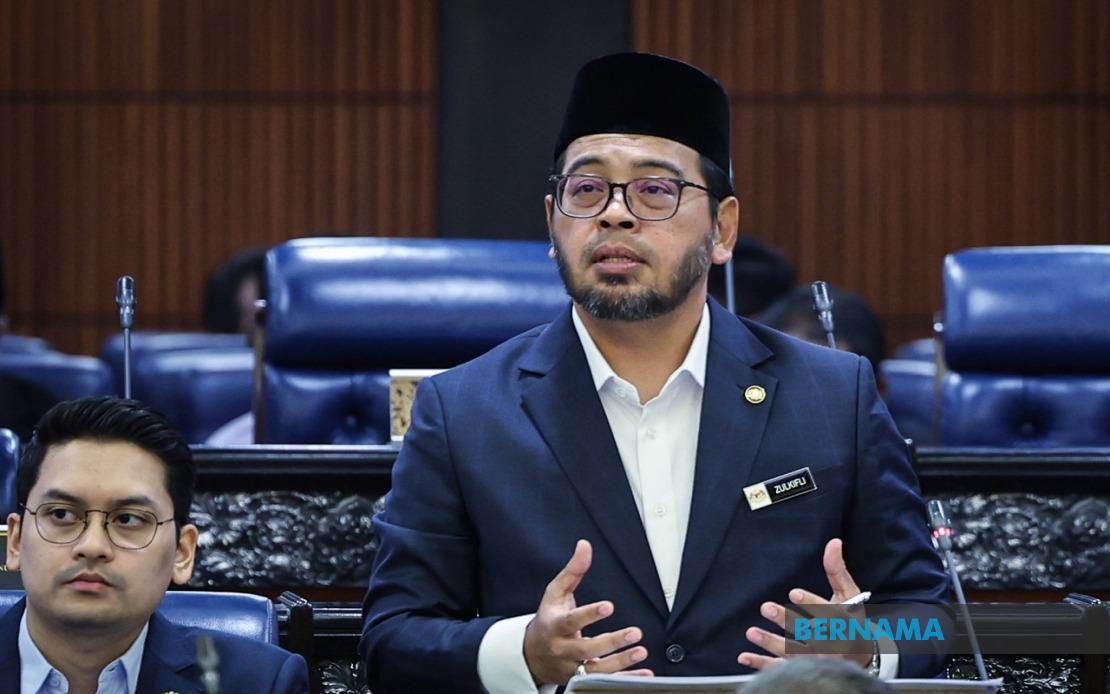
Lawmakers intensified pressure on the government to overhaul Tabung Haji following a special 10-hour parliamentary sitting on the institution's damaging Royal Commission of Inquiry report. The August 11 debate revealed the scale of financial mismanagement that has eroded public trust in Malaysia's largest Islamic finance institution, with parliamentarians united in demanding criminal investigations, legislative reforms, and systemic overhauls to prevent future losses affecting millions of Muslim pilgrims saving for the haj.
The RCI's findings exposed nearly RM13 billion in losses stemming from 14 problematic investments made between 2014 and 2020, a period marked by weak governance, inadequate investment oversight, and concerning decision-making processes. Of this staggering figure, the federal government absorbed RM10.2 billion through a 2018 rescue operation involving Urusharta Jamaah Sdn Bhd (UJSB), effectively shifting the burden from TH's balance sheet to taxpayers. The remainder—RM2.6 billion in impairment losses—remained on TH's books as investments continued to deteriorate under the institution's management through 2025, illustrating how initial rescue measures failed to resolve underlying structural problems.
One investment exemplified the depth of TH's failures: the Al-Rawda Real Estates Development & Project Management arrangement involved transferring 1.4 billion Saudi riyals (approximately RM1.5 billion) to an intermediary to secure four-hotel leases in Madinah and Makkah for pilgrim accommodation. When the counterparty failed to honour rental payment obligations to TH, the institution ultimately wrote down the entire investment by RM1 billion in 2024—a complete loss that depositors' savings financed. Such mishaps pointed to alarming gaps in due diligence, counterparty verification, and contract enforcement mechanisms that governance specialists argue should never have materialised in a government-linked institution managing public religious funds.
During the sitting, Minister of Finance II Datuk Seri Amir Hamzah Azizan detailed the breakdown of these losses, contextualising the scale of TH's crisis within broader public financial management. The revelation that seven of the 14 problematic investments resulted in total losses, while others remained under active management with deteriorating valuations, underscored how TH's decision-making culture had permitted capital destruction on an unprecedented scale. Parliamentarians from government and opposition benches expressed alarm that such losses could accumulate without triggering immediate regulatory intervention or board-level accountability mechanisms, raising fundamental questions about TH's independence and oversight infrastructure.
MPs coalesced around demands for urgent legislative amendments to the Tabung Haji Act 1995 (Act 535), recognising that outdated statutes had enabled governance weaknesses and insufficient shareholder protections. Specific calls centred on strengthening investment oversight protocols, establishing clearer separation between operational management and political influence, and creating robust whistleblower protections and internal audit mechanisms. The legislative agenda reflects broader concerns that TH's institutional architecture permitted decision-making by individuals with questionable qualifications in complex financial engineering, unchecked by independent professional oversight or fiduciary accountability.
Criminal accountability emerged as a paramount concern, with MPs insisting that RCI findings be swiftly translated into thorough investigations of alleged misconduct. Minister in the Prime Minister's Department (Religious Affairs) Dr Zulkifli Hasan confirmed that authorities had already initiated inquiries resulting in several individuals' detention on suspicion of bribery, abuse of power, and governance violations. However, lawmakers demanded transparency regarding investigation scope, timeline, and prosecutorial outcomes, fearing that institutional resistance or incomplete evidence-gathering could shield senior officials from justice and diminish public faith in accountability mechanisms.
The government's decision to delay the RCI report's public release generated parliamentary debate about communication strategy and institutional credibility. Authorities argued the delay enabled TH to implement preliminary reforms and stabilise its financial condition before public disclosure of failures. Yet critics contended that transparency delays risked appearing like cover-ups and suggested that simultaneous public release and remedial action planning would have demonstrated greater institutional confidence and public accountability commitment. This tension between institutional stability and public transparency remains unresolved in Malaysian governance discourse, particularly affecting religiously-significant institutions managing communal resources.
Dr Zulkifli emphasised that institutional resilience must derive from systemic design rather than individual leadership, arguing that robust processes, controls, and checks-and-balances would ensure continuity regardless of personnel changes. This principle represents a deliberate shift toward depersonalised governance and away from Malaysia's traditional reliance on individual leader reputation. Implementation requires embedding clear hierarchical decision authorities, objective investment criteria, mandatory compliance procedures, and external audit independence—reforms that demand cultural transformation within TH's leadership structure and operating philosophy.
A multi-agency task force proposal to identify investments at imminent loss risk received government endorsement, suggesting institutional readiness to employ cross-sector expertise beyond TH's internal capacity. This collaborative approach acknowledges that TH's investment portfolio complexity exceeds traditional Islamic finance specialisation, requiring engagement with forensic auditors, asset recovery specialists, and regulatory authorities. For Malaysian readers, this expansion of investigative resources signals determination to maximise asset recovery and prevent further deterioration, though success depends heavily on coordination effectiveness and resource allocation across competing bureaucratic priorities.
The haj cost structure—maintained at RM33,300 across three consecutive pilgrim seasons from 2024 to 2026—remained central to government messaging around TH's recovery trajectory. Fixing costs despite underlying financial distress required compensating depositors from reserve depletion and operational restructuring, creating budgetary pressures that limit TH's capacity for future capital investment or service expansion. For millions of Malaysian Muslims saving incrementally toward pilgrimage, cost stability provides immediate reassurance, yet masks underlying concerns about whether institutional revenue generation and investment recoveries will ultimately sustain affordable access to the haj without continued government subsidy.
That 39 MPs participated in the special sitting suggested broad parliamentary engagement with TH governance, though opposition lawmakers' decision to boycott the proceedings drew criticism as abdication of oversight responsibility. This parliamentary schism reflected broader political polarisation affecting institutional accountability discourse, with observers questioning whether partisan division would obstruct sustained reform implementation or compromise investigation impartiality. For Malaysian governance, the episode illustrates how politically-sensitive institutions struggle to maintain nonpartisan accountability when reform momentum intersects with electoral calculations and inter-coalition positioning.
The RCI's 25 recommendations—of which 75 per cent had been implemented by July 30—require sustained focus to ensure completion and effectiveness. Remaining recommendations likely address legislative framework updates, organisational restructuring, and enhanced accountability mechanisms that demand extended implementation timelines and potential constitutional or statutory amendments. Parliamentary oversight committees must maintain vigilance over implementation progress, resisting institutional tendency toward compliance theatre where reforms appear implemented yet lack substantive operational impact.
For Southeast Asia's Islamic finance ecosystem, the TH crisis demonstrates how governance failures in large institutional players can erode confidence across the region's halal finance infrastructure. Malaysian authorities' transparent engagement with the RCI findings and commitment to systematic reform may provide lessons for peer jurisdictions managing similar challenges, yet the scale of losses and breadth of failures underscore how institutional design and regulatory oversight require constant calibration against evolving financial complexity and governance risks.

