The walkout by opposition MPs from a parliamentary briefing on Tabung Haji's Royal Commission of Inquiry report has ignited a sharp rebuke from government lawmakers and dissident opposition figures, exposing deep fractures within the opposition coalition over how to handle matters of national economic importance. The controversy centers on opposition lawmakers' decision to boycott the special Dewan Rakyat sitting where Minister in the Prime Minister's Department for Religious Affairs Dr Zulkifli Hasan presented findings from the inquiry into the Islamic pilgrimage fund's management and operations spanning 2014 to 2020, a period that encompassed significant financial challenges for the institution.
Muar MP Syed Saddiq Syed Abdul Rahman delivered a withering critique of the boycott, characterizing it as a fundamental dereliction of parliamentary duty. He argued that the opposition's refusal to engage with the debate represented a failure to exercise the crucial oversight function that distinguishes a functioning democracy. His statement touched on what he viewed as a particular irony: that lawmakers who frequently invoke their commitment to Malay and Islamic causes had chosen to abstain from scrutinizing one of the most cherished institutions within the Malay-Muslim community. Syed Saddiq framed the walkout not merely as a procedural disagreement but as a betrayal of the trust vested in MPs by more than 10 million Tabung Haji depositors whose savings and retirement security hang in the balance.
The debate illuminated a significant philosophical divide over parliamentary responsibility. Syed Saddiq contended that legislative work cannot be contingent on the personal health circumstances of any single political figure, however senior, arguing that to suggest otherwise would reduce Parliament to a one-person institution rather than a collective deliberative body. This argument carries particular weight in Malaysia's context, where the health and availability of the prime minister have occasionally disrupted normal governmental functioning. He urged his colleagues to approach the Tabung Haji issue pragmatically: if facts merited scrutiny, they should be debated; if wrongdoing existed, it should be exposed. The underlying message was that the legislative chamber should be a forum for truth-seeking rather than partisan theatre.
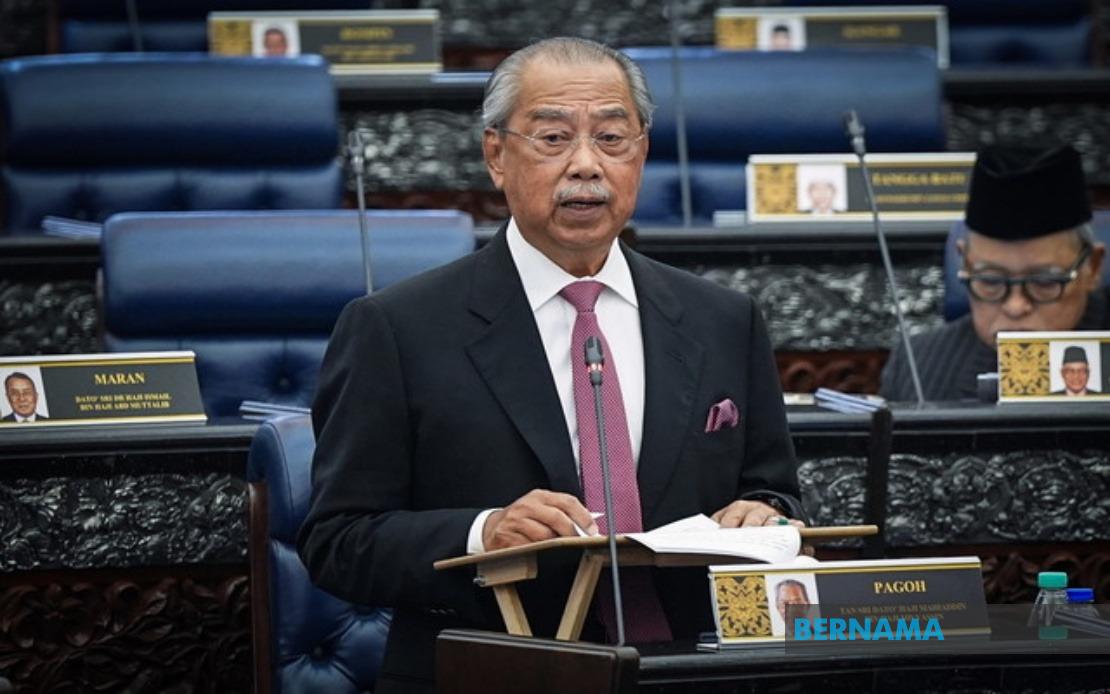
Pagoh MP Tan Sri Muhyiddin Yassin provided an alternative opposition perspective that proved even more pointed in its criticism of the boycott. As a senior figure within Perikatan Nasional, Muhyiddin's decision to remain in Parliament and participate in the RCI debate while many of his coalition partners walked out underscored the internal tensions within the opposition bloc. He explicitly framed his party's participation as evidence of responsible opposition governance, contrasting Bersatu's approach with what he characterized as the less principled stance of other opposition lawmakers. The fact that six Bersatu MPs chose to stay and engage substantively with the Tabung Haji report suggested a calculation that protecting the institution's integrity and the interests of its depositors transcended narrow partisan considerations.
Putrajaya MP Datuk Dr Radzi Jidin echoed this sentiment with characteristic directness, emphasizing that the issue transcended political maneuvering and spoke directly to public interest. His invocation of "political drama" carried an implicit condemnation of opposition tactics while asserting that Malaysian voters deserved transparency about how one of their most important savings vehicles had been managed. This framing proved strategically important: it recast the debate not as an opportunity for opposition parties to embarrass the government but as a necessary national conversation about institutional accountability. The suggestion that Malaysians needed to understand the truth about Tabung Haji's operations grounded the discussion in popular concerns rather than elite political calculations.
Padang Serai MP Datuk Azman Nasrudin reinforced these arguments by emphasizing the numerical magnitude of those affected by the Tabung Haji situation. The reference to 10 million depositors and the broader population of 30 million Malaysians was not mere rhetorical flourish; it served to emphasize that the stakes involved far outweighed any temporary political advantage that a boycott might generate. His criticism that opposition MPs had used "unreasonable grounds" for their walkout suggested that whatever justifications had been offered lacked substance when measured against the scale of the issue being debated. The mention of the country's finances being at stake broadened the concern beyond religious or community considerations to encompass national economic stability.
Sri Gading MP Aminolhuda Hassan introduced a notable cross-communal dimension to the debate by commending Betong MP Datuk Dr Richard Rapu @ Aman anak Begri for his substantive contributions despite not being Muslim. This recognition served multiple purposes: it acknowledged that stewardship of Tabung Haji transcended religious identity, emphasized that responsible governance is a universal principle, and subtly highlighted that some MPs had prioritized sectarian considerations over fiduciary responsibility. The praise for a non-Muslim MP engaging seriously with an Islamic institution's management problems suggested that the boycotting opposition had failed to match this standard of committed public service.
The list of opposition figures who participated in the walkout revealed a coordination at the senior levels of the opposition coalition. Opposition Leader Datuk Seri Hamzah Zainuddin, Perikatan Nasional chief whip Datuk Seri Takiyuddin Hassan, and PN chairman Datuk Seri Dr Samsuri Mokhtar were among those who left the chamber, indicating that the boycott represented a deliberate strategic choice by opposition leadership rather than the independent decisions of individual MPs. This orchestrated nature of the withdrawal likely magnified the political impact of the walkout while simultaneously providing a unified target for criticism from government and dissident opposition lawmakers.
Criticism of the boycott extended into the opposition's own ranks, with Angkatan Muda Keadilan, the youth wing of PKR, issuing a scathing statement characterizing the decision by PN coalition partners, particularly PAS and Wawasan, as both irresponsible and disappointing. The youth organization emphasized that Parliament constitutes the nation's premier forum for public deliberation and institutional accountability, and that absenting oneself from such proceedings undermines democracy's foundational mechanisms. Their assessment that the boycott created perceptions of misplaced political priorities over depositor protection struck at the heart of the opposition's legitimacy claim to represent ordinary Malaysians' interests.
The controversy reflects a broader Malaysian political reality in which questions about resource management and financial oversight have become increasingly fraught along partisan lines. Tabung Haji, as a mandatory savings scheme for Muslims performing the hajj pilgrimage, carries profound spiritual and financial significance for millions of Malaysians, making its governance a matter of public interest that transcends normal political competition. The opposition's apparent calculation that boycotting the RCI debate served some tactical advantage proved vulnerable to the straightforward counterargument that forsaking the opportunity to scrutinize and debate institutional mismanagement amounts to a dereliction of basic parliamentary duty.
The RCI report covering 2014 to 2020 examines a period during which Tabung Haji faced significant operational and financial challenges, including substantial investment losses that eroded depositor confidence. The decision to establish a Royal Commission of Inquiry represented an acknowledgment that the institution's management required independent scrutiny. By declining to participate in parliamentary deliberation of the RCI's findings, the boycotting opposition forfeited the platform to advance their criticisms and policy recommendations, a surrender that opposition MPs who remained in the chamber were not shy about highlighting. The implicit argument was that if the opposition possessed legitimate concerns about Tabung Haji's management, the parliamentary debate provided the optimal venue to air them comprehensively.
The episode also underscores tensions within the opposition coalition between parties or factions prioritizing tactical partisan advantage and those emphasizing substantive governance responsibility. Muhyiddin's willingness to position Bersatu as the "responsible opposition" while other coalition partners walked out created internal opposition dynamics that could reverberate through future political alignments. In a Malaysian context where opposition unity against the government has proven historically fragile, such public differentiation regarding commitment to institutional oversight could strengthen or weaken coalition bonds depending on how voters and party members perceive the moral and practical merits of each position.
For Malaysian citizens with Tabung Haji deposits, the parliamentary debate represented a rare opportunity for their elected representatives to engage publicly with an independent inquiry into how their mandatory savings have been managed. The choice by some opposition MPs to absent themselves meant that a significant bloc of parliamentary voices did not contribute to the deliberation on potential reforms, oversight mechanisms, or remedies for identified problems. This practical consequence of the boycott—the reduction of voice diversity in public deliberation about a matter affecting millions of Malaysians—provides perhaps the most compelling argument for why the opposition's decision to walk out merited the criticism it received from fellow lawmakers across the political spectrum.

