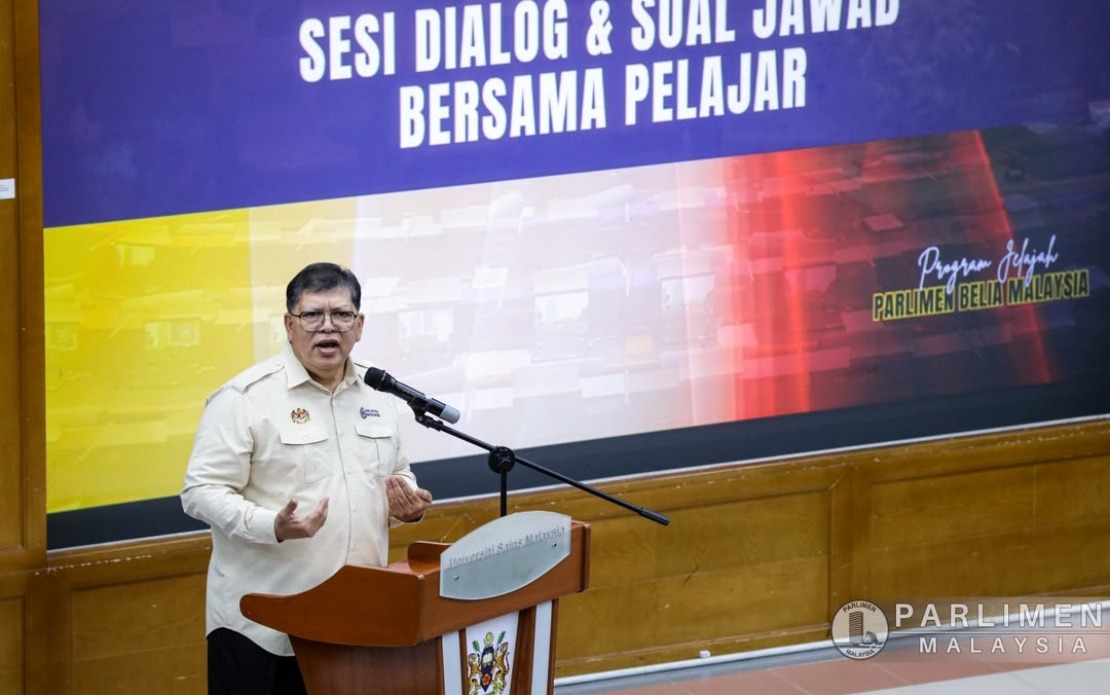
Dewan Rakyat Speaker Tan Sri Johari Abdul has delivered a pointed message to Members of Parliament: the institution must function as a beacon of democratic values for younger generations preparing to participate in the Malaysian Youth Parliament, which officially commences on September 11. Speaking to journalists in Kuala Lumpur, Johari stressed that Parliament transcends its conventional role as a debating chamber, instead functioning as the nation's supreme legislative body and a critical reference point for how democracy operates in Malaysia.
With over 300,000 youths aged 18 to 30 targeted for registration ahead of the Youth Parliament elections in August, the current conduct of MPs carries symbolic weight. Johari emphasised that young leaders entering the PBMy platform require exemplars of behaviour—elected officials who conduct themselves with dignity, integrity, and commitment to substantive discourse rather than partisan posturing. The Malaysian Youth Parliament mirrors the structure of the national chamber, comprising 222 seats allocated to parliamentary constituencies, allowing young citizens to experience legislative processes firsthand.
The Speaker's comments reflect growing awareness that parliamentary conduct shapes public perception of democratic institutions. In an era of widespread social media coverage and live-streamed parliamentary sessions, every utterance and gesture by MPs becomes part of the public record instantly accessible to citizens. Younger observers, particularly those considering participation in democratic structures, absorb not only the formal rules of procedure but also the informal culture of debate—whether exchanges prioritise substance over theatrics, whether opposing viewpoints receive respectful consideration, and whether solutions-focused dialogue predominates over personalised attacks.
Johari articulated a vision of parliamentary debate characterised by factual accuracy, courtesy, and genuine problem-solving orientation. This represents a deliberate departure from adversarial patterns sometimes observed in legislatures across the region, where point-scoring and rhetorical flourishes occasionally overshadow policy substance. By calling for "dignified, orderly and integrity-driven" proceedings, the Speaker positioned Parliament as an institution capable of teaching younger citizens that democratic engagement need not compromise civility or respect.
The Malaysian Youth Parliament programme itself has undergone significant institutional restructuring. Originally launched in 2015 under the Ministry of Youth and Sports, the initiative operated with limited resources and visibility for eight years. However, in October 2023, the government transferred full management and implementation responsibility to Parliament Malaysia, signalling enhanced commitment to youth political engagement at the highest institutional level. This transition elevates the programme's profile and ensures direct alignment with parliamentary operations and standards.
The programme's operational mechanics reflect contemporary approaches to democratic participation. Rather than establishing actual political parties, youth participants join non-partisan organisations registered with Parliament Malaysia, currently numbering over 10 groups. This structure permits genuine political activity and coalition-building while preventing the intrusion of national party politics into the youth parliament's functioning. Members serve two-year terms, with parliamentary sittings held three times annually for two-day periods, providing sustained engagement rather than one-off civic exercises.
The electoral timeline reveals careful planning to ensure substantial participation. Nomination day falls on July 8, with official candidate announcements on July 11. A 27-day campaign period runs from July 12 through August 7, allowing candidates to campaign nationwide and build awareness among eligible youth. Online voting via the e-PBMy system occurs across a 24-hour window from 10 am on August 8 until 10 am on August 9, utilising digital infrastructure to maximise accessibility and convenience for younger voters unaccustomed to traditional polling processes.
For Malaysian readers and Southeast Asian observers, the Youth Parliament initiative represents a significant investment in democratic pipeline development. As societies across the region grapple with declining youth engagement in formal political processes and rising disillusionment with institutional democracy, Malaysia's expansion of youth parliamentary participation offers a contrasting approach. Rather than treating young citizens as peripheral to governance discussions, the programme creates spaces for substantive engagement with legislative processes, policy development, and democratic discourse.
The implications extend beyond symbolic gestures toward institutional legitimacy. Young people who participate in structured democratic engagement develop informed opinions about governance, experience negotiation and consensus-building across ideological lines, and gain practical understanding of how legislatures function. These experiences cultivate future voters more likely to participate in electoral processes, better equipped to evaluate political claims, and potentially more committed to democratic norms. For a nation confronting questions about political maturity and institutional stability, nurturing such engagement represents strategic investment in democratic resilience.
Speaker Johari's emphasis on parliamentary conduct as pedagogy underscores the educational dimensions of institutional design. Young participants observing question time sessions, committee deliberations, and legislative debates absorb lessons about democratic accountability, policy scrutiny, and institutional constraints on executive power. Conversely, if parliamentary proceedings devolve into theatre, personality-driven conflicts, or disregard for procedural norms, youth observers internalise messages that democratic institutions lack substantive importance. The quality of parliamentary conduct therefore carries implications extending far beyond the chamber itself, shaping how future generations approach democratic participation.
For eligible youth interested in participation, registration opens via the official Malaysian Youth Parliament portal at https://pbmy.parlimen.gov.my/my/. The programme's growth trajectory suggests expanding institutional capacity to accommodate younger participants, with the August elections and September inauguration representing the first major cohort under Parliament Malaysia's full stewardship. Registration drives targeting the 300,000-youth goal indicate sustained organisational effort to transform demographic potential into actual participation.

