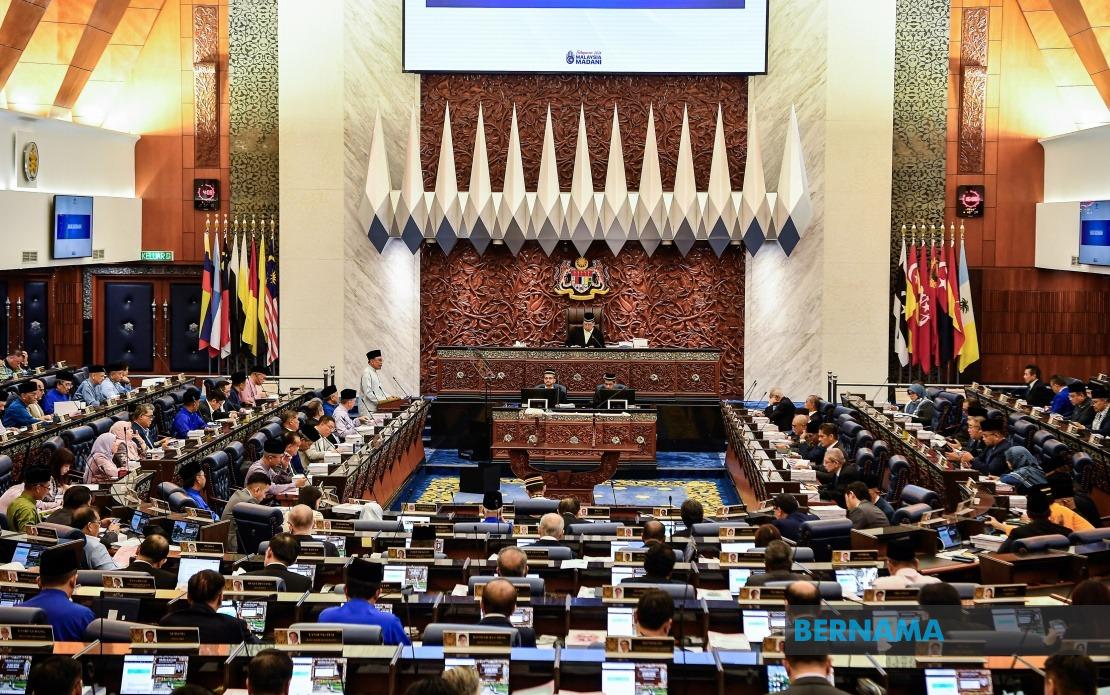
Parliament has given its approval to the Cybercrimes Bill 2026, a sweeping legislative response to the proliferation of artificial deepfakes and non-consensual sharing of digitally altered intimate photographs. The measure, which contains 61 distinct clauses addressing various cybercrime offences, secured passage through the Dewan Rakyat on July 1 following contributions from 48 lawmakers across both government and opposition benches. The voice vote demonstrated broad parliamentary consensus on the need to criminalise behaviour that exploits advancing computer technology to harm individuals and violate their dignity.
The timing of the Bill reflects growing international alarm over deepfake technology, which has become increasingly accessible and difficult to detect. Across Southeast Asia and globally, malicious actors have weaponised synthetic media to harass women, extort victims, and manipulate public opinion. Malaysia's legislative initiative arrives as the technology outpaces existing legal frameworks, leaving victims without recourse and enforcement agencies without clear statutory authority. The new law attempts to close this enforcement gap by explicitly criminalising both the creation and distribution of non-consensual intimate imagery produced through digital manipulation, addressing a gap in Malaysian jurisprudence that has left victims vulnerable.
Deputy Prime Minister Datuk Seri Dr Ahmad Zahid Hamidi, in presenting the government's position during the parliamentary wind-up, sought to address growing civil liberties concerns about the surveillance and investigative powers embedded within the Bill. His remarks underscored a central tension in modern cybercrime legislation: the need for law enforcement to access digital systems and data while preventing the abuse of such powers. The Deputy Prime Minister explicitly stated that the legislation does not confer unlimited authority upon authorities and does not supersede established legal protections, including the Official Secrets Act 1972. This reassurance was directed at opposition parliamentarians and civil society observers concerned that cybercrime legislation could become a backdoor mechanism for expanding state surveillance.
Central to these safeguards is the requirement that any notice to preserve computer data must be issued only when an investigating officer possesses reasonable grounds to believe the data is material to an active investigation and faces genuine risk of deletion, alteration, or destruction if immediate preservation measures are not taken. This threshold attempts to prevent fishing expeditions or preemptive data seizures unrelated to specific suspected offences. The provision reflects international best practices in digital forensics, where premature or overly broad preservation orders can compromise privacy and chill legitimate online speech. By anchoring data preservation to investigative necessity and imminent loss risk, the law attempts to balance law enforcement needs against individual privacy interests.
Equally important are the restrictions on disclosure of computer data to authorities. The Deputy Prime Minister confirmed that such disclosure can occur only through written notice to the person or entity controlling the data, and only within the framework of lawful investigation. This procedural requirement creates an auditable trail and prevents surreptitious access to private communications or stored files. The emphasis on written procedures and lawful investigation standards suggests parliamentary intent to subject investigative activities to judicial oversight and evidentiary standards, though the details of such oversight mechanisms would emerge through subsidiary legislation and judicial interpretation.
The legislative debate encompassing 48 parliamentarians indicates substantial engagement with the Bill's provisions across the political spectrum. Government lawmakers would have focused on the law enforcement imperatives driving the legislation, while opposition members likely pressed on privacy protections and the scope of investigative powers. This iterative parliamentary process, despite occasional partisan divides, reflects the international consensus that deepfakes and non-consensual intimate imagery represent genuine harms requiring statutory prohibition. The breadth of parliamentary participation suggests that the Bill, despite containing contentious provisions, achieved sufficient bipartisan acceptance to secure comfortable passage.
For Malaysian technology users and digital rights advocates, the law's passage creates both opportunities and concerns. The prohibition on deepfakes and non-consensual intimate imagery provides explicit legal recourse for victims whose complaints previously fell into regulatory grey areas. Women and other vulnerable groups disproportionately affected by such abuse now possess statutory remedies and can expect law enforcement to treat these crimes seriously. Simultaneously, the data preservation and access provisions warrant close scrutiny as subsidiary regulations are developed. The devil frequently resides in implementation details, and the principled safeguards articulated by the Deputy Prime Minister must translate into binding procedural rules and judicial oversight mechanisms.
Regionally, Malaysia's approach sits within a broader Southeast Asian pattern of tightening cybercrime legislation. Neighbouring jurisdictions have pursued similar paths, sometimes with greater emphasis on state surveillance capabilities than individual privacy protection. Malaysia's explicit articulation of checks and balances, if genuinely operationalised, could establish a more rights-respecting model for the region. However, legislative intent frequently diverges from administrative practice, and the months ahead will prove decisive as the government promulgates subsidiary legislation detailing investigative procedures.
The Bill's passage also reflects Malaysia's positioning within global conversations on artificial intelligence and synthetic media governance. As AI technology accelerates the production of increasingly convincing deepfakes, legislatures worldwide confront urgent questions about criminalisation, technological resilience, and media literacy. Malaysia's decision to create explicit statutory offences signals that technological solutions alone cannot address harm flowing from deliberate misuse of synthetic media. The law recognises that societal protection requires both criminal prohibitions against malicious creation and distribution, and robust investigative mechanisms to identify perpetrators.
Moving forward, the legislation's effectiveness will hinge upon law enforcement training, judicial interpretation, and the procedural details established through subsidiary regulations. Prosecutors must develop capacity to investigate digitally manipulated imagery and secure convictions under novel statutory provisions. The judiciary will interpret the scope of investigative powers and the validity of evidence obtained through data access procedures. Civil society organisations should maintain vigilance to ensure implementation adheres to the safeguards the Deputy Prime Minister articulated. The balance between protecting vulnerable individuals from deepfake abuse and preserving digital privacy represents an ongoing tension that Malaysia's new cybercrime legislation attempts but cannot permanently resolve.

