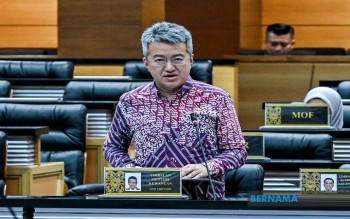
Malaysia's parliament has concluded a productive session by approving two major legislative measures designed to reshape how the nation manages its finances and collects statistical data. The Dewan Rakyat's passage of the National Trust Fund (KWAN) Bill 2026 and the Statistics Bill 2026 on July 16 represents a significant step toward modernising governance structures that had grown outdated after decades of operation. These bills emerged from a 16-day sitting that began on June 22, during which legislators addressed critical issues spanning financial management, intergenerational equity, and data integrity.
The KWAN legislation establishes a robust legal foundation for a fund that has accumulated considerable assets despite operating under a framework that predates many of today's governance standards. At the end of 2024, the National Trust Fund held RM22.43 billion in assets, a remarkable figure accumulated almost entirely through Petronas's voluntary contributions of RM13.5 billion over nearly four decades. Deputy Finance Minister Liew Chin Tong, who tabled the bill, emphasised that the new legislative framework ensures more disciplined withdrawal procedures and clearer accountability mechanisms. The contribution rate, fixed at a minimum of 0.1 per cent of government revenues, can only be adjusted through parliamentary amendment, ensuring that no single administration can unilaterally alter the commitment to intergenerational savings.
The significance of locking in contribution rates through statutory amendment rather than executive discretion cannot be overstated for Malaysian policymakers and observers. By requiring parliamentary approval for any changes to contribution levels, the legislation provides protection against short-term fiscal pressures that might otherwise tempt governments to reduce allocations to future generations. This structural safeguard reflects international best practices in sovereign wealth fund management, where consistent, predictable funding streams prove essential to long-term strategic objectives. The mechanism also demonstrates parliamentary confidence in establishing constraints on executive financial power, a principle increasingly relevant across Southeast Asian democracies.
Withdrawals from KWAN remain strictly circumscribed to three critical areas: education, healthcare, and climate change mitigation and adaptation. This targeted approach reflects contemporary priorities while maintaining flexibility across sectors that impact human development and environmental sustainability. The restriction prevents the fund from becoming a general revenue source during budgetary shortfalls, a risk that has historically undermined sovereign wealth funds in other jurisdictions. For Malaysian stakeholders concerned about intergenerational equity, the bill's emphasis on disciplined withdrawals should prove reassuring, particularly as climate-related expenditures likely to increase substantially in coming decades.
The Statistics Bill 2026 addresses an equally pressing governance challenge by retiring legislation that had served since 1965. Economy Minister Akmal Nasrullah Mohd Nasir underscored that the replacement statute enables production of data and statistics reflecting Malaysia's contemporary social, economic, and environmental realities. A rapidly evolving economy characterised by digitalisation, demographic shifts, and regional integration requires statistical frameworks capable of capturing phenomena that policymakers in 1965 could not have anticipated. The new bill incorporates recommendations from the United Nations, the United Nations Statistical Commission, and the United Nations Economic Commission for Europe, anchoring Malaysian statistical practices to international standards.
Establishment of a National Statistics Council represents a structural innovation with implications extending far beyond technical data collection. This principal advisory body will guide statistical matters, assess and endorse standards and procedures, and coordinate statistical governance across government agencies. Such institutional architecture proves particularly valuable in multi-level governance systems where federal, state, and local authorities all generate data. The council's existence should improve coordination and consistency, reducing the fragmentation that often characterises statistical systems in developing economies where different agencies operate under varying methodologies and quality standards.
Data confidentiality protections embedded in the Statistics Bill 2026 align with United Nations Fundamental Principles of Official Statistics, recognising confidentiality as a core statistical principle. This alignment matters considerably for building public confidence in government data collection, a prerequisite for reliable statistics. When citizens and businesses trust that personal and commercial information supplied to statistical authorities remains protected, response rates improve and data quality increases. For Malaysia's economic and social planning, which increasingly relies on detailed microdata for policy analysis, such protections prove essential.
Parliament's approval on July 15 of RM14.5 billion transferred from Malaysian Government Investment Issues proceeds into the Development Fund reflects ongoing attention to capital formation and developmental financing. These transfers, sourced from the Consolidated Loan Account through issuance of Malaysian Government Securities and Investment Issues, fund infrastructure and developmental projects throughout the country. The Development Fund's multiple financing sources—including loan repayments and dedicated receipts—provide stability for long-term developmental commitments. For Malaysian investors and businesses dependent on government-funded infrastructure, such transparent mechanisms signal predictable capital availability for developmental purposes.
Discussions during the parliamentary session also illuminated governance challenges beyond these bills. The Retirement Fund's investment in eFishery, an Indonesian startup that subsequently fell victim to organised fraud involving management manipulation of financial reports, highlighted vulnerabilities in due diligence processes for sovereign investments. This episode underscores the importance of rigorous oversight mechanisms when government funds venture into emerging market investments, particularly in jurisdictions where regulatory environments may lack robustness. The eFishery case serves as a cautionary reminder that even professionally managed funds face risks from sophisticated fraudulent schemes designed to deceive experienced investors.
1Malaysia Development Bhd remains a substantial fiscal liability, with the government having settled RM42.5 billion in debts and commitments while RM20.1 billion remains outstanding pending potential future recoveries. This unresolved burden continues to constrain fiscal flexibility and complicates long-term financial planning. Efforts to recover additional funds from 1MDB-related assets remain ongoing both domestically and internationally, with implications for Malaysia's debt servicing capacity and available resources for developmental initiatives. The continuing 1MDB legacy demonstrates how lapses in governance accountability during previous administrations can create enduring financial consequences affecting current and future policymaking.
For Malaysian policymakers and regional observers, the passage of these bills signals commitment to modernising governance frameworks and establishing contemporary oversight mechanisms. The KWAN legislation protects intergenerational savings while the Statistics Bill 2026 enables more reliable data for policy formulation. Together, they represent progress toward governance structures that balance democratic accountability with long-term strategic objectives. As Southeast Asian nations collectively face challenges including demographic change, climate transition, and technological disruption, Malaysia's efforts to establish robust legislative frameworks for financial management and statistical governance merit attention from regional counterparts seeking similar modernisation.
The parliamentary session's conclusion, with the Dewan Rakyat adjourned until a date to be determined, marks a pause in legislative activity but not in the implementation phase ahead. The real test of these bills will emerge as regulatory frameworks are developed, institutional structures operationalised, and operational procedures refined. Government agencies will require time and resources to implement the new statutory requirements, while civil society and business groups will need to understand revised procedures and compliance obligations. The coming months will prove critical for translating legislative intent into practical governance improvements that deliver the accountability, transparency, and long-term financial security these bills promise.

