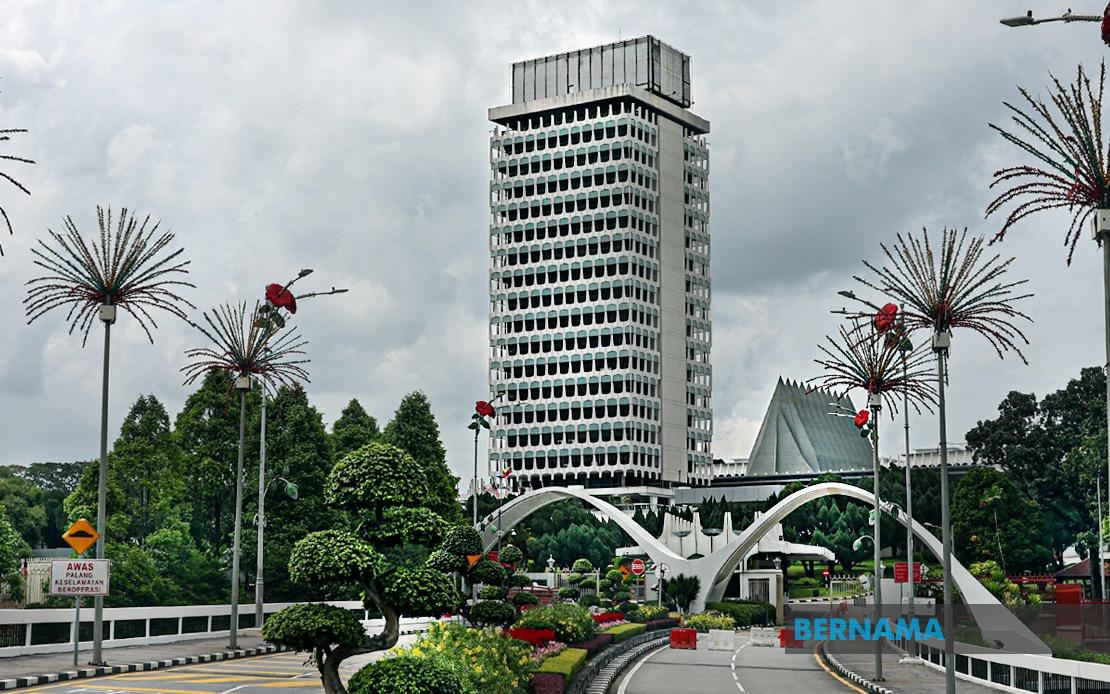
Malaysia's parliament convened today with a notably defensive economic agenda, as lawmakers seek clarity from the government on how geopolitical shocks and emerging policy challenges might threaten the nation's growth trajectory. The opening session of the Second Meeting of the Fifth Session of the 15th Parliament signals growing parliamentary concern about external economic vulnerabilities and domestic governance gaps that could constrain Malaysia's development goals in the coming years.
Datuk Dr Richard Rapu @ Aman anak Begri, representing the GPS-Betong constituency, has tabled a pointed inquiry directed at the Economy Minister regarding recent assessments of how disruptions to trade flowing through the Strait of Hormuz might ripple through Malaysia's industrial base. The question zeroes in on operating cost pressures facing local manufacturers and importers, a concern that reflects Malaysia's heavy dependence on stable maritime corridors for its supply chains. Through the Hormuz waterway flows approximately one-third of global seaborne traded oil, making it a critical artery for nations reliant on energy imports.
In tandem with this economic risk assessment, Rapu has sought confirmation of the government's inflation readings for the second quarter of 2026 and whether the administration possesses adequate contingency strategies embedded within the 13th Malaysia Plan to cushion the economy against a prolonged downturn globally. The dual questioning suggests parliamentary unease about whether current policy frameworks contain sufficient buffers to maintain the government's stated GDP growth targets should external conditions deteriorate sharply. Malaysia's exposure to international trade and energy price volatility means that geopolitical flashpoints, even those geographically distant, can quickly translate into domestic cost pressures and reduced consumer purchasing power.
The parliamentary docket also reflects growing anxiety about the pilgrimage experience for Malaysian Muslims. Onn Abu Bakar of Batu Pahat has brought the question of haj system reform to the Prime Minister's office, with particular emphasis on the three-pronged challenge of managing escalating costs, reducing the waiting period for intending pilgrims, and safeguarding the health and welfare of worshippers undertaking the sacred journey. Malaysia's Muslim population numbers roughly 20 million, and the haj represents a deeply significant religious and cultural obligation. Addressing systemic bottlenecks in haj administration has become an electoral and social policy priority for successive administrations.
The artificial intelligence governance question posed by Wong Shu Qi of Kluang reveals parliament's emerging preoccupation with how rapidly advancing technology can be weaponised to cause harm. The Digital Minister will be pressed on whether the AI Governance Bill currently in draft form contains explicit safeguards against particularly egregious misuses of algorithmic systems, including the synthetic creation of child sexual abuse material through deepfake technology, identity fraud through spoofing, and the non-consensual distribution of intimate digital content. These concerns echo global regulatory movements in jurisdictions ranging from the European Union to Singapore, where lawmakers are moving to establish guardrails around AI deployment before harmful applications become entrenched.
For Malaysia specifically, such legislation assumes heightened importance given the nation's sophisticated digital infrastructure and rapidly growing online user base. The absence of clear legal boundaries around AI misuse creates a regulatory vacuum that could expose Malaysians—particularly vulnerable populations including children and women—to emerging forms of digital abuse before protective legislation materialises. The fact that parliament is now explicitly questioning this component of the AI bill suggests that earlier drafts may have been seen as insufficiently protective against these specific harms.
The food security question posed by Datuk Dr Radzi Jidin of Putrajaya underscores how regional instability in the Middle East reverberates through Malaysia's agricultural supply chains and commodity markets. The government will be asked to articulate its layered approach to mitigating food security risks, detailing short-term emergency interventions, medium-term supply diversification strategies, and long-term structural reforms to either increase domestic production or identify geopolitically stable alternative suppliers. Malaysia imports roughly 80 percent of its food requirements, making it acutely vulnerable to disruptions in global agricultural markets, shipping routes, and regional conflicts that affect major suppliers or trade corridors.
Beyond these interrogatory elements, parliament's current sitting will see the formal tabling of two pieces of legislation with significant implications for Malaysia's digital and transport sectors. The Cybercrime Bill 2026 represents an update to Malaysia's legal arsenal against digital offences, while the Road Transport Act Amendment Bill targets regulatory modernisation of the nation's automotive and logistics regulations. These legislative initiatives, running parallel to parliamentary scrutiny of policy implementation, illustrate the multi-pronged nature of Malaysia's current governance agenda.
The 16-day parliamentary session extending through July 16 establishes an extended window for substantive legislative work and policy debate. This extended sitting reflects an apparent government determination to move several bills through the chamber during this period, suggesting that the administration views parliamentary time as a scarce resource that must be deployed strategically. For observers tracking Malaysian economic and regulatory policy, this session will likely reveal the administration's true priorities regarding economic resilience, technological governance, and social infrastructure, even as lawmakers probe the government's preparedness for mounting external challenges.
Collectively, the questions and legislation on parliament's agenda reflect a nation acutely conscious of its economic interdependencies, technological vulnerabilities, and the need to update governance frameworks in parallel with rapid societal change. Whether the government's responses and the bills tabled provide adequate reassurance to parliament and the Malaysian public will become apparent over the coming fortnight of debate and division.

