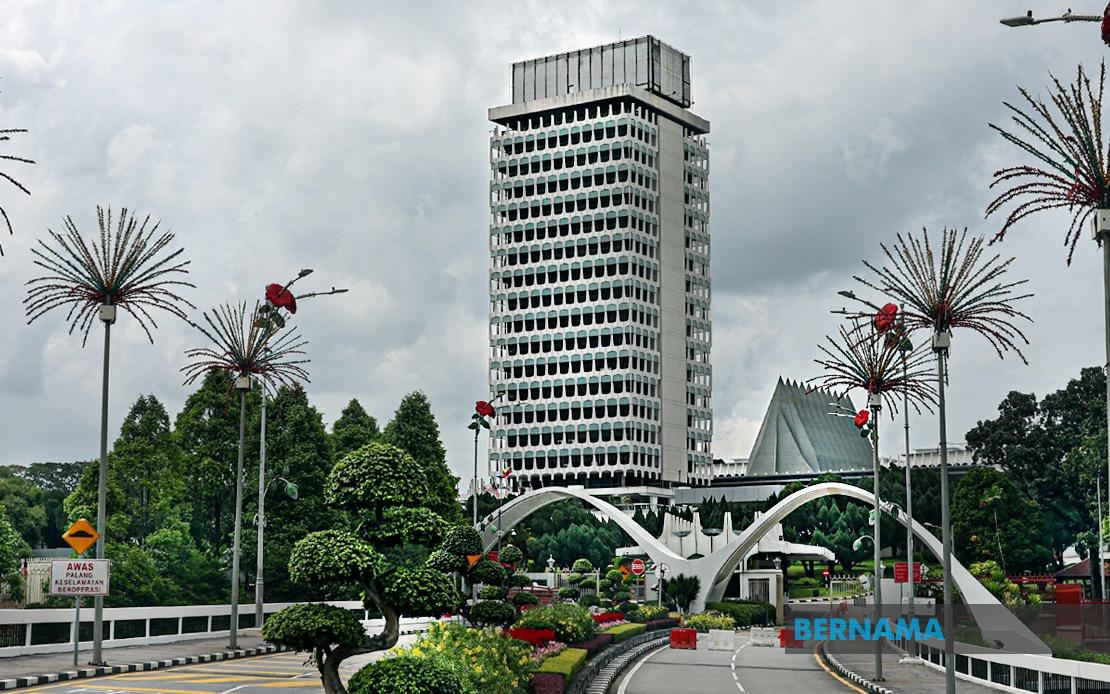
Prime Minister Datuk Seri Anwar Ibrahim moved to settle a contentious debate over federal funding distribution during the second week of parliamentary proceedings, asserting that the vast majority of Malaysian states benefit from government allocations that substantially exceed the tax revenue they generate. Speaking during Ministers' Question Time on Tuesday, Anwar emphasised that resource allocation decisions prioritise development requirements and citizen welfare rather than partisan considerations, directly countering suggestions that certain states were receiving inequitable treatment or deliberate neglect from Kuala Lumpur.
The Prime Minister's intervention reflects broader concerns within state governments about how Kuala Lumpur apportions development funds and how decisions are made regarding resource distribution across the federation. His remarks serve to reframe the fiscal relationship between the centre and the states, suggesting that even states with lower tax bases receive substantially more in benefits than they contribute to federal coffers—a point that challenges narratives of regional marginalisation that occasionally surface in parliamentary debates and state-level politics.
Anwar additionally outlined procedural requirements for states seeking supplementary funding, particularly where development projects involve Notice of Change submissions. Such requests now require formal renegotiation before the federal government commits to additional allocations or extends loans to state administrations. This clarification establishes clearer governance frameworks around ad hoc funding requests and prevents informal agreements that might circumvent established procedures.
The Prime Minister reinforced strict adherence to electoral regulations, cautioning that announcements of new initiatives or policy measures during election campaign periods breach Section 24B of the Election Offences Act 1954. This reminder carries particular significance given Malaysia's recurring cycles of state and federal elections, which frequently generate pressure on government officials to announce projects or benefits that might influence voter sentiment.
Parliament successfully enacted three significant pieces of legislation during the week. The Sexual Offences Against Children (Amendment) Bill 2026 strengthens protections for vulnerable minors, while amendments to the Employment Insurance System (Amendment) Bill 2025 modernise workplace protection frameworks. Most notably, the Cybercrime Bill 2026 introduces comprehensive provisions addressing digital threats, including offences related to deepfake creation and distribution of manipulated intimate imagery through sophisticated digital systems. This legislation responds to the escalating problem of synthetic media abuse and non-consensual image sharing, which has become an increasingly pressing concern across Southeast Asia as digital literacy fails to keep pace with technological capability.
Minister in the Prime Minister's Department (Law and Institutional Reform) Datuk Seri Azalina Othman Said disclosed that government officials are currently drafting modernised contract law provisions designed to recognise third-party rights and establish contemporary frameworks governing commercial agency relationships. The initiative explicitly incorporates considerations around artificial intelligence applications within commercial arrangements. A comprehensive final report on Contract Law Reform in Malaysia, encompassing policy recommendations, comparative international analysis, and proposed legislative language, has been circulated to parliamentary members for deliberation. This modernisation effort acknowledges that Malaysia's contractual frameworks require updating to accommodate digital commerce, AI-driven transactions, and evolving business models that existing legislation does not adequately address.
The government reiterated its commitment to maintaining the availability of essential commodities and managing price stability for basic necessities, recognising that inflationary pressures continue affecting household budgets across Malaysia. Economy Minister Akmal Nasrullah Mohd Nasir reported that daily surveillance mechanisms monitor both supply levels and pricing of critical goods, whilst coordinating with Petroliam Nasional Berhad and industry stakeholders to secure energy supply stability and protect both consumer interests and critical economic sectors from disruption. This integrated approach acknowledges that price control requires not only regulatory intervention but also supply chain optimisation and sustained dialogue with major producers and distributors.
Education remains a significant budget priority, with Deputy Education Minister Wong Kah Woh announcing that the MADANI Book Voucher programme 2026 will distribute RM221.6 million among over 2.2 million students under Ministry of Education administration. Electronic vouchers valued at RM100 per student commenced redemption last Wednesday and extend until October 31. This initiative represents targeted spending aimed at improving educational access and encouraging reading habits among younger Malaysians during a critical developmental period.
Communications Minister Datuk Fahmi Fadzil reported substantial progress on regulatory architecture under the Online Safety Act 2025, with government agencies finalising implementation frameworks and developing supplementary regulatory instruments addressing private messaging functionality. These additional measures clarify the obligations incumbent upon digital platforms when managing harmful content disseminated through their infrastructure. The Malaysian Communications and Multimedia Commission is investigating deployment of agentic artificial intelligence systems to streamline complaint investigation procedures and reduce administrative burdens on enforcement personnel. Concurrently, social media operators are encouraged to employ AI-based detection and removal systems to identify and eliminate guideline-violating content more expeditiously, representing a collaborative approach where government establishes clear standards whilst industry implements technological solutions.
The regulatory evolution around online safety reflects recognition across government that traditional enforcement mechanisms struggle to manage the volume and velocity of digital content generation, particularly as harmful material spreads through encrypted messaging systems beyond conventional monitoring capabilities. Malaysian authorities are essentially acknowledging that combating digital harm requires sophisticated technological countermeasures rather than solely administrative or legal responses.
The current Dewan Rakyat sitting extends across sixteen days from June 22 through July 16, providing extended opportunity for legislative consideration of complex matters and detailed examination of government policy positions. This session demonstrates parliament's engagement with emerging technological challenges, child protection improvements, contract law modernisation, and ongoing fiscal distribution questions that reflect contemporary policy preoccupations within Malaysia's political economy.

