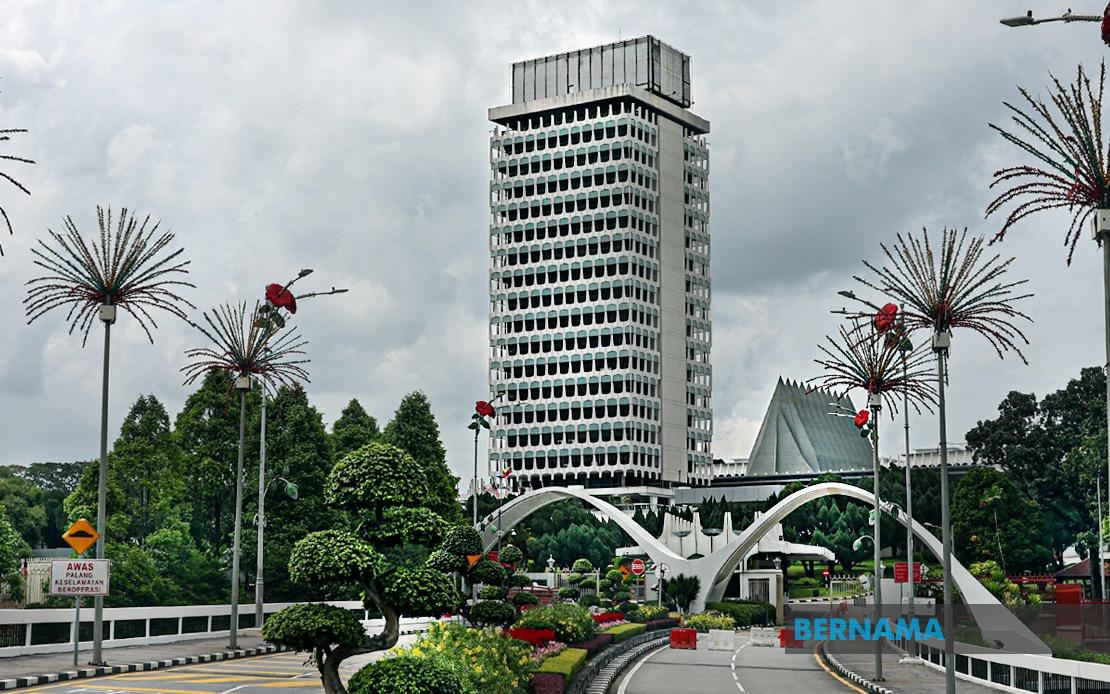
Parliament reconvenes today with a packed legislative agenda that reveals mounting concerns about energy security, economic resilience, and Malaysia's diplomatic position in the troubled Myanmar situation. The Dewan Rakyat will field questions spanning renewable energy adoption, economic mitigation strategies amid global uncertainty, fuel subsidy reform, and the nation's evolving stance on the military junta in Myanmar—issues that collectively underscore the government's balancing act between domestic pressures and regional geopolitical responsibility.
The renewable energy portfolio emerges as a primary focus, with Ampang MP Rodziah Ismail pressing the Minister of Energy Transition and Water Transformation for specifics on the Corporate Renewable Energy Supply Scheme (CRESS). Her inquiry targets both participation metrics and the outcomes of a critical System Access Charge rate review—a technical matter with substantial implications for Malaysia's bid to become a competitive regional data centre hub. The charge structure directly affects operating expenses for data centres, which remain energy-intensive facilities. Her questioning also encompasses the Corporate Green Power Programme and Battery Energy Storage Systems deployment, signalling parliamentarians' interest in whether the government's energy transition roadmap is genuinely attracting industrial buy-in or merely advancing on paper.
The data centre ambition itself carries strategic weight for Southeast Asia's digital economy. Malaysia has positioned itself as an alternative to Singapore for cloud infrastructure, citing lower costs and regulatory flexibility. However, the System Access Charge rate—essentially the fee data operators pay to connect to the grid—can either accelerate or throttle this aspiration. Parliament's focus here suggests awareness that energy pricing directly competes with Thailand, Indonesia, and Vietnam for investment. If charges prove excessive, multinational operators may redirect planned facilities elsewhere in the region, undermining Malaysia's digital ambitions and employment prospects.
On the economic front, Bachok MP Mohd Syahir Che Sulaiman will interrogate the National Economic Action Council's crisis response. Rising job losses and business contractions amid the energy crisis require transparent accountability. The question probes whether mitigation measures—ranging from subsidies to business relief packages—have actually translated into measurable stabilisation. This line of inquiry reflects opposition concern that the government may be announcing programmes without delivering tangible results, a recurring criticism in Malaysian politics.
Fuel subsidy targeting modernisation features prominently through questions from Simpang Renggam MP Datuk Seri Hasni Mohammad. The Finance Minister will face scrutiny on the decision to standardise fuel subsidies using MyKad identification, coupled with the 200-litre entitlement cap for both petrol and diesel. This touchstone issue affects millions of commuters and small business operators dependent on fuel cost predictability. Parliamentarians are essentially testing whether this targeting mechanism genuinely reaches those most in need or whether it imposes undue hardship on legitimate consumers in rural and suburban areas.
Malaysia's Myanmar policy emerges as perhaps the session's most geopolitically sensitive matter. Selayang MP William Leong Jee Keen will question the Foreign Minister on how the Five-Point Consensus—ASEAN's diplomatic framework for addressing Myanmar's military coup—has translated into concrete Malaysian foreign policy. The Five-Point Consensus, endorsed at the ASEAN Regional Forum level, calls for dialogue, humanitarian assistance, and eventual democratisation. However, implementation has stalled amid Myanmar junta intransigence and internal ASEAN disagreement over pressure tactics. Malaysia must navigate between ASEAN consensus requirements and its own values regarding democratic governance, human rights, and regional stability. This parliamentary examination signals backbench interest in ensuring Malaysia's diplomatic efforts carry substance beyond rhetorical support.
Data sovereignty enters the discussion through Gombak MP Datuk Seri Amirudin Shari's questions to the Digital Minister. His concerns target the alignment of state-level initiatives, specifically Selangor's Dark Fiber Network infrastructure project, with national data sovereignty imperatives and security doctrine. The tension here reflects growing awareness globally that data infrastructure decisions carry strategic implications. Critical information systems housed abroad create vulnerability; conversely, localised infrastructure requires substantial investment. His additional query on whether data sovereignty considerations form part of Malaysia's aspiration to become an AI-ready nation by 2030 indicates parliamentary scrutiny of whether technological ambition proceeds strategically or reactively.
The Islamic Education curriculum debate, raised by Bagan Serai MP Datuk Idris Ahmad in a question to the Prime Minister, addresses a different policy domain yet one equally reflective of governance effectiveness. The inquiry seeks clarity on whether the current curriculum genuinely develops student competencies and whether Federal-state coordination on Islamic Religious Education standards meets acceptable benchmarks. Education quality directly influences social cohesion and workforce readiness; parliamentary oversight here signals recognition that policy implementation gaps undermine intended outcomes.
Sabah and Sarawak representation constitutes another substantial item. Kota Belud MP Isnaraissah Munirah Majilis will press for updates on Malaysia Agreement 1963 (MA63) implementation and the timeline for increasing parliamentary seats for Borneo states to 35 per cent of total nationwide allocation. This remains a contentious federalism issue, particularly in Sabah where political instability has partially stemmed from perceptions of under-representation. Progress updates matter enormously for maintaining confidence in federal commitments to Bornean constitutional rights and political voice.
The Public Accounts Committee will subsequently brief parliament on health insurance premium increases, private hospital charges, and their cascading effects on public health access. This examination—spanning Ministry of Finance, Ministry of Health, and Bank Negara Malaysia oversight—reflects parliamentary determination to examine whether market dynamics or regulatory failures drive cost escalation. Healthcare affordability ranks consistently high in public concern surveys; parliament's willingness to scrutinise the PAC's findings signals responsiveness to constituent priorities, particularly as inflation pressures household budgets across Malaysia.
Following these question-and-answer sessions, the Dewan Rakyat will resume deliberation on the Prisons (Amendment) Bill 2026, continuing legislative work that addresses correctional system modernisation or reform. The session itself extends across 16 sitting days through July 16, providing substantial opportunity for detailed examination of government policy across multiple domains. This extended sitting permits thorough debate rather than rushed procedures, theoretically enabling more rigorous parliamentary accountability. The collectively wide-ranging agenda—from technical energy regulation to constitutional federalism to international relations—reflects parliament's broad oversight mandate and the multifaceted pressures confronting Malaysian governance in an era of energy transition, economic uncertainty, and regional geopolitical flux.

