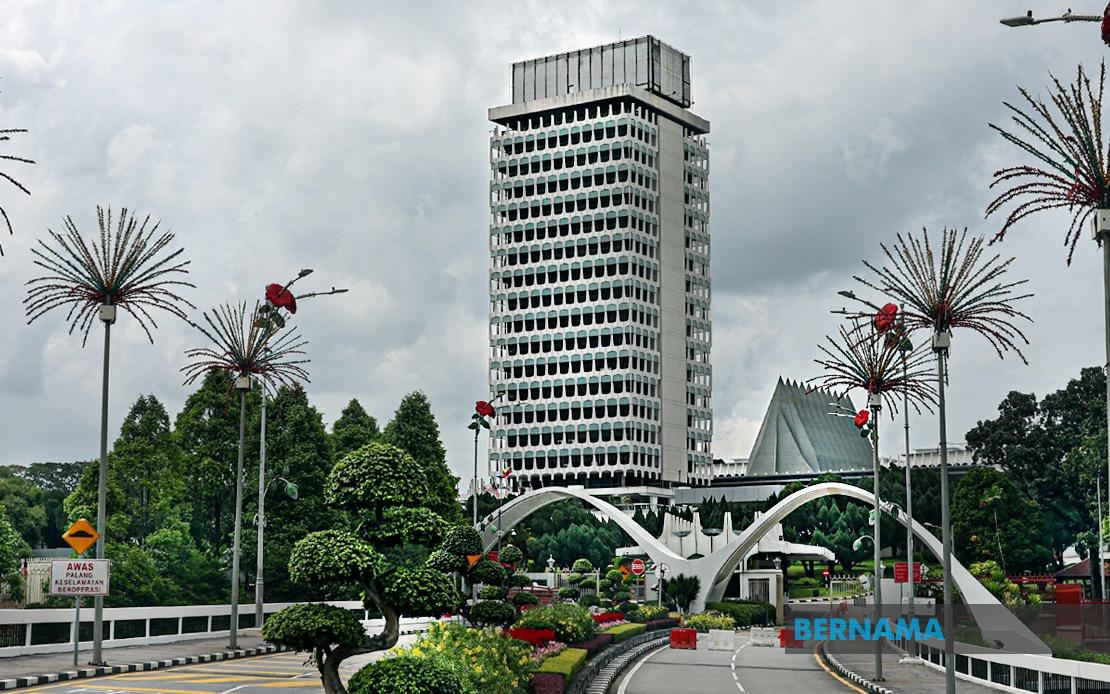
Legislators in the Dewan Rakyat are zeroing in on two interconnected challenges facing Malaysia: reforming the governance and funding framework of the nation's human rights watchdog and addressing the persistent disconnect between headline inflation statistics and what families actually pay at the supermarket and for utilities. The parliamentary session, which commenced on July 1 and will run until July 16, has elevated both issues to prominence as Parliament examines whether current policy responses adequately reflect lived economic reality.
The proposed amendments to the Human Rights Commission of Malaysia (SUHAKAM) Act 1999 represent a significant attempt to restructure how Malaysia's principal human rights body sustains its operations. Currently, Teresa Kok Suh Sim (PH-Seputeh) will probe the Prime Minister on whether the government intends to permit SUHAKAM to establish revenue streams through educational initiatives—specifically training programmes and specialised courses—rather than remaining entirely reliant on annual government budget allocations. This line of inquiry suggests parliamentary recognition that financial autonomy could enhance institutional independence, a cornerstone of credible human rights monitoring globally. The implications extend beyond SUHAKAM itself; if approved, such reforms could establish a precedent for other independent constitutional bodies seeking greater operational flexibility.
Parallel to this governance question sits a more immediately pressing concern for ordinary Malaysians. Mohd Syahir Che Sulaiman (PN-Bachok) will ask the Economy Minister to explain the persistent gap between official inflation measurements and the cost-of-living pressures citizens experience month to month. This distinction matters profoundly. Official inflation data, typically compiled from a standardised basket of goods and services, may not reflect the actual spending patterns of lower and middle-income households, who allocate significantly higher proportions of income to food, fuel, and transportation. When these categories surge faster than the general inflation index, the real burden falls heaviest on those with the least flexibility in their budgets.
The question signals parliamentary frustration with the apparent disconnect between macroeconomic indicators and household sentiment. Even as Malaysia's economy grows and official statistics suggest modest inflation, surveys consistently show public anxiety about purchasing power erosion. This gap has become a defining feature of post-pandemic economies globally, yet the Dewan Rakyat's focused questioning suggests policymakers recognise they must address not just the data itself but the credibility gap it creates. The Economy Minister will also be pressed on what indicators the government employs to verify that economic growth is genuinely translating into improved household purchasing power—a crucial accountability measure.
Beyond these headline issues, Parliament's agenda reflects the breadth of governance concerns requiring legislative attention. Kuala Lumpur's recurring flood challenges will surface when V. Ganabatirau (PH-Klang) inquires about the government's review of land-use changes involving flood retention ponds in the capital. Urban planning and environmental management intersect here; as cities expand and densify, the protection afforded by retention infrastructure becomes increasingly vital, yet bureaucratic processes governing land transfers sometimes lag behind development pressures.
The education sector also features prominently in the parliamentary discourse. Datuk Dr Ku Abd Rahman Ku Ismail (PN-Kubang Pasu) will seek clarity from the Higher Education Minister on the current distribution of students across Science, Technology, Engineering and Mathematics (STEM) fields versus humanities and social sciences. More significantly, he will ask for transparency regarding engineering workforce targets across disciplines necessary to support Malaysia's transition toward high-technology industries. This reflects anxiety about whether Malaysia's tertiary education pipeline adequately serves advanced manufacturing and knowledge-economy sectors—concerns that carry weight as the nation competes in Southeast Asia's innovation race.
The parliamentary calendar also includes the tabling of the Cybercrime Bill 2026 for its second reading, signalling government determination to update Malaysia's digital security legal framework. Cybercrime legislation carries particular sensitivity in Malaysia given concerns about balancing security imperatives with free expression protections—an equilibrium that lawmakers must navigate carefully.
These priorities underscore how contemporary parliamentary work spans governance integrity, economic justice, infrastructure resilience, workforce development, and digital-age regulation. The concentration of such diverse but ultimately interconnected issues within a single parliamentary session reflects the complexity governing modern Malaysia. For Malaysian observers and regional watchers alike, these debates will reveal whether legislative scrutiny drives meaningful policy adjustment or whether the gap between parliamentary concern and executive action persists. The outcomes will be telling.

