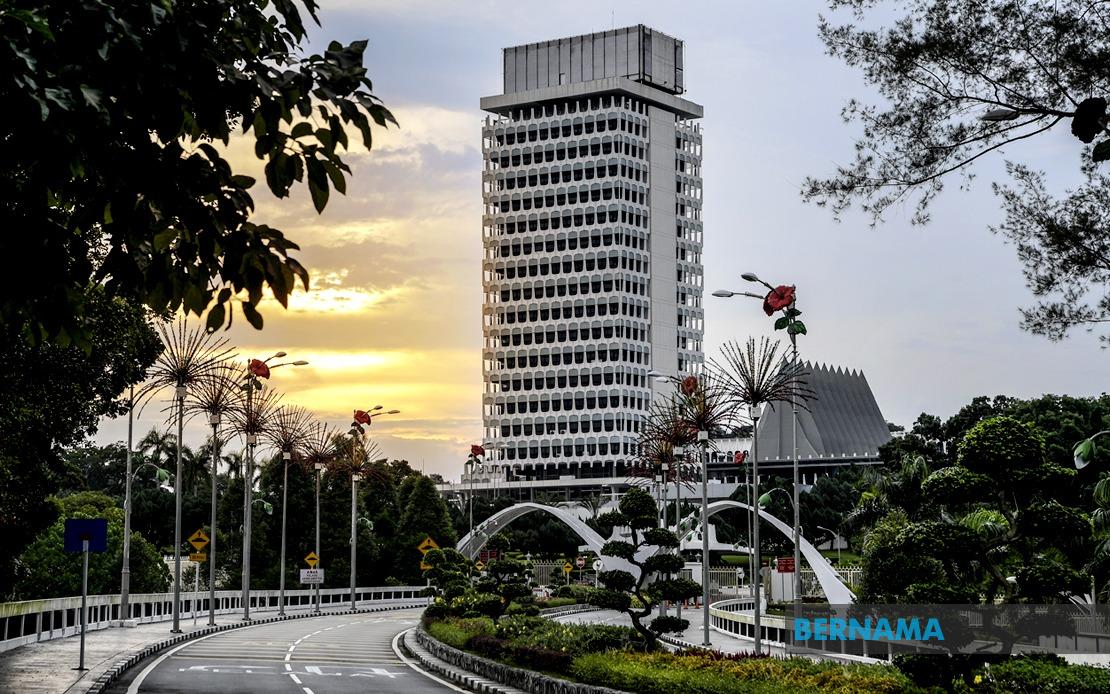
Parliament reconvened for its 16-day sitting on July 6 with an agenda spanning consumer protections, retirement adequacy and regional development inequalities, reflecting growing concerns across multiple sectors of Malaysian society. The Dewan Rakyat's Order Paper signals that legislators will probe three interconnected governance challenges: the vulnerability of insurance consumers, the adequacy of worker retirement provisions, and the stubborn digital divides limiting economic opportunity in rural areas. These topics underscore tensions between market-driven systems and the need for stronger institutional safeguards as Malaysia navigates demographic shifts and economic pressures.
During Question Time, Tan Kok Wai from Petaling Jaya's Cheras constituency will press the Finance Minister on regulatory frameworks governing the insurance sector. His focus centres on safeguarding policyholders—particularly those with critical illness and cancer diagnoses—against arbitrary policy terminations and unreasonable claim denials. The parliamentarian's intervention reflects documented instances where insurers have withdrawn coverage or rejected legitimate claims, leaving vulnerable patients exposed to catastrophic medical bills. Beyond complaint mechanisms, Tan seeks assurance that the government will mandate stronger transparency standards and enhance the independence of dispute resolution bodies, shifting power dynamics that currently favour institutional actors over individual policyholders.
Parallel to this, Datuk Seri Aminuddin Harun representing Port Dickson will interrogate the government's broader retirement security strategy. His question targets a structural challenge affecting millions of Malaysians: whether Employees Provident Fund balances will suffice as workers age and expenses mount. The EPF faces mounting pressure as demographic projections show Malaysia's population ageing sharply by 2030, precisely when pensioners transition from earning years into withdrawal cycles. Combined with inflation eroding purchasing power—particularly for essential services like healthcare and housing—many workers fear their accumulated savings will prove inadequate. The government's response will signal whether it intends deeper reforms to contribution rates, investment returns or supplementary savings vehicles.
The rural connectivity question posed by Hassan Saad of Baling exposes persistent infrastructure and capability gaps that undermine economic inclusion. While urban Malaysia enjoys broadband access, rural communities remain tethered to patchy, expensive internet connections that handicap digital literacy and small business viability. His interrogation focuses on the National Information Dissemination Centres (NADI), a government initiative designed to democratise access to information and digital tools. The effectiveness of this programme depends not merely on computer provision but on sustained training, locally relevant content and market connections—elements that demand sustained investment and community engagement rather than one-off infrastructure deployments.
A separate parliamentary enquiry will examine the Mobile eCOSS application introduced in May 2025, an anti-fraud system targeting subsidised cooking oil distribution. The system attempts to prevent diversion of price-controlled commodities into black markets, a chronic problem that simultaneously undermines government finances and creates parallel economies benefiting intermediaries rather than intended beneficiaries. The question implicitly asks whether technology alone can solve supply chain corruption or whether enforcement and institutional accountability remain essential counterparts.
Equally significant are questions regarding microfinance scheme effectiveness for micro, small and medium enterprises, which employ millions of Malaysians but face persistent access barriers to affordable credit. Government-backed financing programmes aim to bridge this gap, yet their real-world impact remains inconsistently documented. Parliamentary scrutiny may illuminate whether schemes are genuinely reaching underserved populations or primarily benefiting better-connected applicants with collateral and business track records.
Beyond Question Time, Parliament will receive a briefing from the Health Select Committee on a comprehensive examination of Malaysia's organ donation and transplant system. This report addresses critical gaps in a system where organ shortage persistently delays life-saving procedures. Reform proposals likely touch on cultural attitudes toward donation, registration mechanisms, hospital capacity and equitable allocation frameworks—matters requiring both legislative change and sustained public education.
The legislative agenda also advances two related competition bills intended to strengthen Malaysia's competition enforcement framework. The Competition (Amendment) Bill 2026 and the Competition Commission (Amendment) Bill 2026 proceed through committee-stage deliberations, indicating Parliament's attention to market concentration and anti-competitive practices. These measures respond to concerns that concentrated market structures inflate consumer prices and restrict consumer choice, particularly in essential sectors.
Collectively, the July 6-16 sitting reflects Parliament's engagement with foundational questions about Malaysia's economic architecture: how effectively markets operate when left to self-regulation, whether government safety nets genuinely protect vulnerable populations, and how rural communities participate in digital and financial systems that increasingly define economic opportunity. The questions tabled by opposition and ruling coalition members alike suggest cross-party recognition that market outcomes and existing policies have left significant gaps. How robustly Parliament presses for substantive reforms versus accepting ministerial assurances will determine whether this session generates genuine policy recalibration or merely ritualistic oversight.

