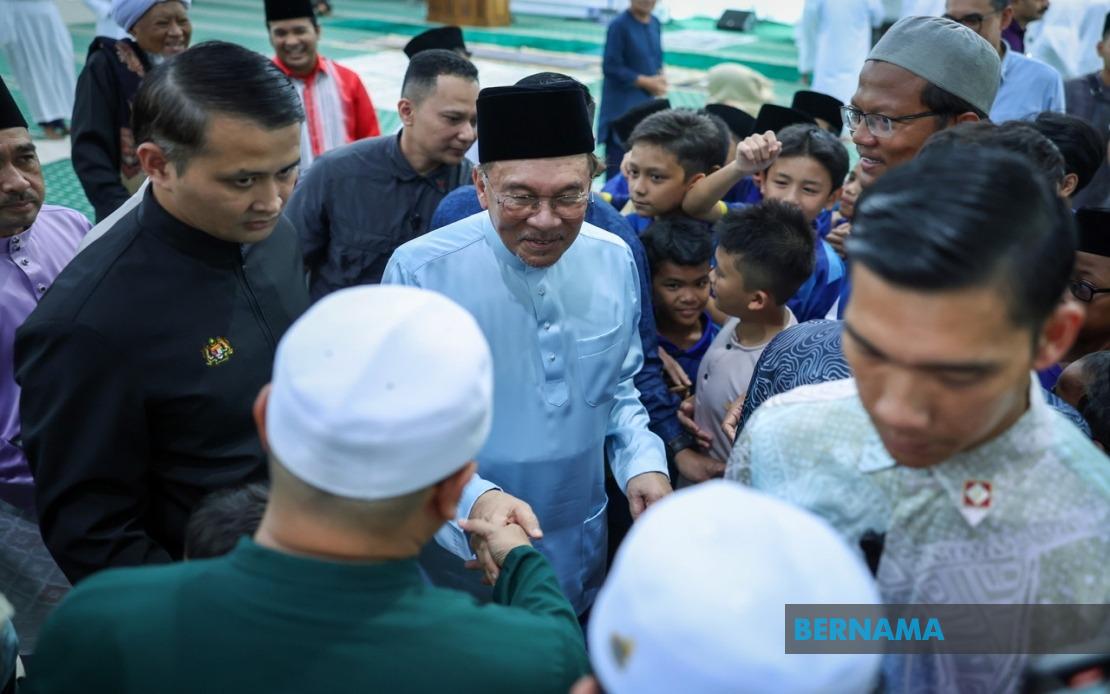
Prime Minister Datuk Seri Anwar Ibrahim has drawn a clear distinction between parliamentary constituency funding and the authority vested in individual lawmakers, stressing that such allocations exist to serve the broader population rather than privileging those who hold elected office. Speaking after Friday prayers at Masjid Ar-Rasyidin in Alor Gajah on August 7, the Premier underlined that government resources directed to electoral districts carry a fundamental public purpose rooted in improving living conditions across communities.
The clarification addresses mounting concerns raised by several Members of Parliament who claim the administration has restricted their access to constituency development funds. Anwar's intervention suggests these tensions reflect a deeper misunderstanding—or deliberate misrepresentation—about how such allocations should function within Malaysia's democratic governance framework. By explicitly stating that funds need not flow through MPs as intermediaries, the Prime Minister has signalled an intention to bypass potential gatekeeping by legislators who may resist government priorities or belong to opposition parties.
Anwar outlined concrete examples of how constituency allocations should be deployed across communities. Schools, religious educational institutions, mosques, and essential infrastructure such as drainage systems represent the intended beneficiaries. This inventory reflects Malaysia's multicommunal character and the diverse needs present in typical electoral districts. The emphasis on religious facilities alongside secular public works acknowledges the social fabric binding Malaysian constituencies while framing development spending as serving collective rather than individual interests.
The government's position carries particular significance given Malaysia's recent political trajectory. Since the coalition supporting Anwar came to power, questions have arisen regarding resource distribution between government-aligned and opposition MPs. By declaring that constituency funds will be channelled directly to residents regardless of their representative's political affiliation, Anwar has adopted a stance suggesting meritocratic allocation based on community need rather than partisan loyalty. This approach potentially neutralises criticism that the government weaponises budget authority against political opponents.
Anwar noted that this allocation principle represents longstanding policy rather than recent innovation. His assertion that sitting and former MPs understand these parameters suggests the current disputes may stem from changed political circumstances rather than changed rules. When lawmakers transition from government to opposition benches, their reduced influence over fund distribution becomes apparent—a transition that may provoke complaints previously forestalled by access to administrative machinery. The Prime Minister's comment implies expectations that experienced legislators should recognise such inevitable consequences of electoral outcomes.
The direct-to-constituents funding model raises practical questions about implementation. How does government machinery identify and prioritise projects within constituencies where the elected representative may be unsympathetic or uncooperative? Anwar's framing suggests federal and state bureaucracies retain sufficient independence to execute development programmes without MP endorsement. Whether such institutional independence exists in practice across Malaysia's diverse administrative landscape remains uncertain, particularly in states where opposition parties hold nominal sway while bureaucratic apparatus answers to federal authorities.
For Southeast Asian observers, Anwar's intervention illuminates broader questions about resource distribution in electoral democracies where party control over central government differs from local representation. Malaysia's peculiar constitutional structure—combining federal authority over certain functions with state-level control over others—creates opportunities for exactly the kind of partisan fund allocation disputes now surfacing. Anwar's position implicitly advocates depoliticising development spending, a goal arguably incompatible with electoral competition unless enforcement mechanisms prove robust.
The Prime Minister's remarks also addressed personnel matters within his own party. He confirmed that PKR deputy president Nurul Izzah, his daughter, had requested temporary leave from her official role due to other commitments. Anwar characterised this as a temporary arrangement while emphasising her continued party involvement. The brevity of his remarks and lack of detail surrounding her commitments suggest either routine professional reasons or delicate political sensitivities surrounding familial relationships within party hierarchy.
Nurul Izzah's step-back from formal position carries implications for PKR's internal balance. As deputy president of the party backing the Prime Minister, her departure—however temporary—creates a succession gap. Whether her absence reflects genuine external obligations or signals evolving internal party dynamics remains unclear from Anwar's public statements. The fact that a family member holds senior party position while the Prime Minister navigates questions about resource fairness and political patronage adds layers to debates about how governance should function in democratic Malaysia.
The distinction Anwar articulates between MP authority and constituent benefit extends beyond mere budgetary semantics. It touches fundamental tensions in representative democracy regarding whether elected officials function as trustees exercising discretionary judgment for community benefit, or as delegates implementing constituent preferences. By positioning parliamentary allocations as community property rather than MP prerogative, Anwar adopts a democratic populism that appeals to anti-corruption sentiment while potentially constraining legislative independence.
For Malaysian constituencies and their residents, this clarification offers modest assurance that development funding will not be completely withheld based on electoral outcomes. Opposition-held constituencies may receive development investment despite their representatives' political stance, though questions persist about whether such investments will address locally-identified priorities or reflect federal government agendas. The practical consequences will likely manifest over coming months as constituency projects proceed—or stall—under this purportedly apolitical allocation framework.
Moving forward, the sustainability of Anwar's position depends on consistent implementation. If government funds flow equitably to constituencies regardless of MP affiliation, the policy gains credibility as a principled governance reform. Conversely, if allocation patterns demonstrate partisan bias despite the Prime Minister's rhetoric, the declaration becomes merely convenient political messaging. Malaysian voters and constituency residents will judge the government's integrity partly through how faithfully it executes this proclaimed commitment to separating legitimate legislative roles from administrative resource stewardship.

