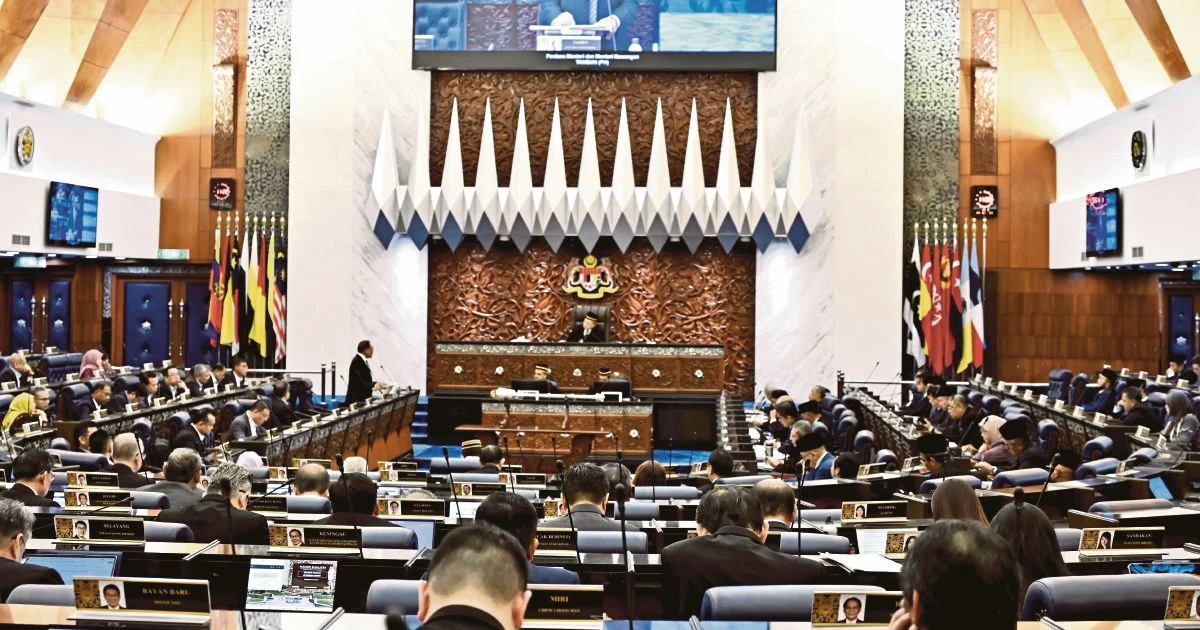
Scarcely an hour after parliament reconvened today, the Dewan Rakyat descended into acrimonious debate when disagreements surrounding the opposition leadership position spiralled into broader recriminations between ruling coalition and opposition benches. The confrontation exposed simmering grievances within the wider political landscape, particularly focusing on the conduct of PAS towards its coalition partner Bersatu.
The clash centred on procedural and constitutional questions about who legitimately holds the role of opposition leader, a matter that has grown increasingly contentious in recent weeks. Rather than remaining confined to technical parliamentary discussion, the dispute rapidly transformed into a broader indictment of factional behaviour within the opposition alliance, with government parliamentarians seizing the opportunity to highlight divisions among their opponents.
Takiyuddin Hassan, a prominent opposition figure, found himself at the centre of the storm, engaging in a tense back-and-forth with a government MP whose intervention had sparked the escalation. The verbal exchanges carried distinct undertones of personal and political hostility, with both sides deploying legislative procedure as a vehicle for advancing their underlying partisan interests.
At the heart of the controversy lies the allegation that PAS has engaged in what critics characterise as bullying behaviour toward Bersatu. This characterisation reflects genuine strains within the opposition coalition structure, where the Islamist party has consolidated substantial parliamentary representation while Bersatu, under Muhyiddin Yassin's leadership, has faced periodic marginalisation. The accusation goes beyond mere parliamentary theatre; it speaks to fundamental questions about coalition governance, power dynamics, and whether smaller partners can maintain meaningful influence within broader political alliances.
The incident provides a window into the fractious state of Malaysian opposition politics. Rather than presenting a united alternative to the government, various opposition formations have continued pursuing separate agendas, with ideological differences and competition for resources creating persistent friction. Observers have noted that such public displays of discord undermine opposition credibility and weaken their collective bargaining position in parliament.
For government MPs, the spectacle offered an inviting opportunity to broadcast opposition weakness and internal dysfunction. By highlighting alleged mistreatment of Bersatu by PAS, government parliamentarians aimed to delegitimise opposition unity claims and suggest that voters cannot expect coherent governance from disunited opposition partners. This tactical advantage emerged precisely because the opposition itself has failed to resolve underlying leadership and power-sharing questions.
The parliamentary outburst underscores how institutional procedures and formal positions become battlegrounds for deeper political struggles in Malaysian politics. Questions about opposition leadership recognition carry constitutional weight and parliamentary privilege implications, yet they also function as proxies for more fundamental disputes about influence, resources, and strategic direction within opposition formations.
Bersatu's position within this dynamic remains particularly sensitive. Once part of the government under the Perikatan Nasional arrangement, the party now sits in opposition but struggles to define its role clearly. Whether it aligns more closely with PAS and PKR or maintains strategic independence affects its parliamentary leverage and influence over opposition policy direction. Allegations of bullying suggest that Bersatu views itself as insufficiently consulted or respected within current arrangements.
The timing of such eruptions often reflects broader political negotiations occurring outside public view. Parliamentary clashes frequently signal breakdowns in private consensus-building or indicate that factional interests have become too divergent to manage quietly. The fact that this dispute surfaced so readily upon parliament's reconvening suggests that underlying tensions have accumulated without resolution during parliamentary recesses.
For Malaysian observers, these scenes highlight persistent challenges facing the opposition's political maturation. Rather than building durable institutional structures that balance competing interests, opposition formations have tended toward personalised leadership arrangements vulnerable to personality clashes and factional disputes. Until these parties develop more robust internal governance mechanisms, similar eruptions will likely recur whenever parliamentary sittings commence.
Regional implications merit consideration as well. Southeast Asian democracies increasingly rely on coalition governance and inter-party cooperation, yet many struggle with similar coordination challenges. Malaysia's opposition dynamics illustrate both the necessity and difficulty of sustaining multi-party alliances without clear hierarchical structures or binding institutional commitments.
Moving forward, opposition parliamentarians face pressure to demonstrate capacity for internal conflict resolution without allowing disputes to spill into public forums where they undermine collective credibility. The government, meanwhile, will likely continue exploiting such divisions when they surface, using opposition discord as ammunition in legitimacy contests. Until opposition formations resolve fundamental questions about leadership recognition, resource allocation, and strategic priorities, parliamentary sittings will remain vulnerable to similar explosive confrontations.

