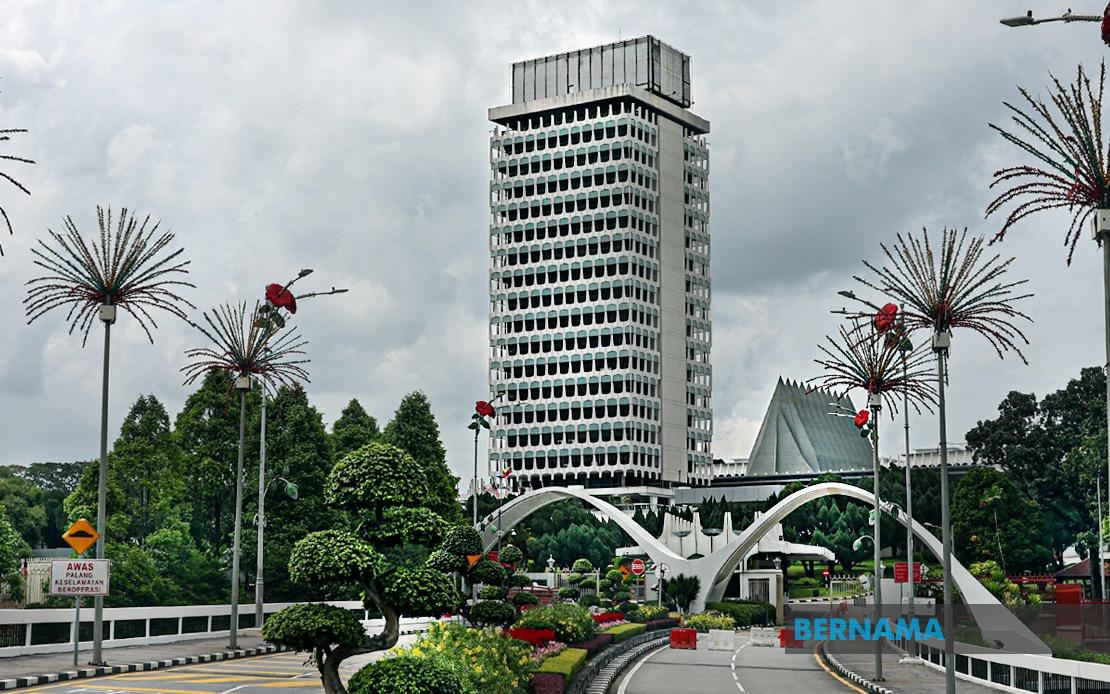
The Dewan Rakyat's third week of sitting concluded with the passage of two significant pieces of legislation aimed at modernising Malaysia's approach to market competition, as lawmakers also grappled with issues ranging from press freedom to the country's mounting 1MDB liabilities. The Competition (Amendment) Bill 2026 and the Competition Commission (Amendment) Bill 2026 represent the government's effort to keep pace with the evolving digital economy by tightening rules against anti-competitive behaviour, reflecting growing concerns about market manipulation in online platforms and e-commerce spaces that have reshaped Malaysian commerce.
Parallel to these enactments, the Control of Padi and Rice (Amendment) Bill 2026 received its first reading, introducing a far more punitive regulatory regime for Malaysia's rice sector. The proposed legislation would raise maximum fines to RM1 million, a dramatic increase designed to deter fraudulent practices and quality violations that have long plagued the industry. For consumers and farmers alike, this signals the government's determination to eliminate malpractices that have historically distorted prices and compromised supply chains in one of Southeast Asia's most essential food categories. The stricter penalties reflect widening recognition that Malaysia's rice security cannot be left to market forces alone, particularly given growing regional competition and supply chain vulnerabilities exposed during recent global disruptions.
Prime Minister Datuk Seri Anwar Ibrahim used his ministerial question time session to address two critical concerns facing Malaysia's business landscape. Regarding the crucial micro, small and medium enterprises (MSME) sector, which employs millions of Malaysians and forms the backbone of local economic activity, Anwar outlined government measures to streamline financial institution approvals and strengthen lending practices. His emphasis on both efficiency and prudent assessment suggests an attempt to balance entrepreneurial ambitions with responsible credit management, a tension that has historically constrained SME access to affordable capital across Southeast Asia.
The pressing matter of press freedom generated considerable parliamentary focus after Malaysia's ranking declined in this year's World Press Freedom Index. Anwar acknowledged the international assessment while reframing enforcement actions not as censorship but as protection of sensitive national domains. His clarification that government action targets content involving religion, race and the royal institution (3R) alongside matters threatening national security represents a significant policy articulation, though the boundaries of such restrictions remain a point of contention among press freedom advocates. The Prime Minister's assurance that complaints against journalists from recognised media organisations will now require Malaysian Media Council (MMC) referral before triggering automatic investigations suggests an attempt to introduce procedural safeguards and institutional separation of powers within the regulatory framework.
Two special select committees presented consequential reports addressing public welfare challenges. The Committee on Health submitted findings on organ donation and transplantation frameworks, areas where Malaysia's centralised systems and cultural considerations require careful policy calibration. Simultaneously, the Committee on Women, Children and Community Development presented alarming data documenting the trajectory of abuse and violence cases over the six-year period from 2020 onwards. This temporal focus captures a concerning era spanning the pandemic, economic disruptions and social fragmentation, suggesting that violence dynamics have fundamentally shifted in ways demanding urgent ministerial response and sociological understanding.
National security discussions centred on military procurement, specifically the selection of replacement systems for the Naval Strike Missile (NSM) aboard Malaysia's Littoral Combat Ships (LCS). This procurement decision carries geopolitical implications extending beyond naval capabilities, touching on regional balance-of-power considerations as Southeast Asian nations upgrade military systems amid great power competition in maritime spaces. The legislative oversight of such acquisitions reflects parliamentary responsibility for defence spending accountability, though technical details typically remain classified.
Less visible but economically significant was the Deputy Finance Minister's revelation regarding 1MDB liabilities. Liew Chin Tong disclosed that cumulative government exposure, encompassing both settled debts and outstanding obligations, totals RM51.4 billion. This staggering figure underscores the enduring financial shadow cast by the sovereign wealth fund scandal that damaged Malaysia's international reputation and consumed enormous fiscal resources. The continued disclosure of 1MDB-related liabilities, even years after the initial eruption, demonstrates how historical governance failures continue constraining budgetary flexibility and competing with essential public investments in healthcare, education and infrastructure.
Parliament also addressed regulatory challenges surrounding recreational substances, with discussions centring on vape product seizures suspected of containing prohibited synthetic drugs. This emerging policy frontier reflects growing tension between consumer autonomy and public health protection, particularly given anecdotal evidence of vape adoption among younger demographics. The legislative attention suggests recognition that unregulated vaping markets create risks parallel to traditional tobacco concerns, yet the regulatory response remains unsettled across Malaysian states and federal jurisdictions.
Public healthcare system digitalisation emerged as another substantive parliamentary concern. Acceleration of digital infrastructure across public healthcare facilities addresses longstanding complaints about administrative inefficiencies, appointment scheduling failures and medical record fragmentation that have frustrated patients and burdened healthcare workers. These systemic modernisations, when effectively implemented, can significantly improve service delivery particularly in rural areas where infrastructure constraints have historically compromised access to quality care.
Health considerations reached parliament in another form when Dewan Rakyat Speaker Tan Sri Dr Johari Abdul addressed a lawmaker's recent admission to the National Heart Institute. The Speaker's public reminder about health screening underscores the physical and psychological demands of parliamentary service, particularly within Malaysia's tropical climate and high-stress political environment. This intervention, while ostensibly procedural, carries symbolic weight regarding institutional care for those in public service.
With one week remaining before the Second Meeting of the Fifth Session of the 15th Parliament concludes on July 16, the legislative schedule still accommodates additional business. The week's concluding period typically addresses remaining priority items, emergency motions or legislative amendments requiring final consideration. The parliamentary calendar itself reflects careful orchestration of government priorities, with competition law modernisation, agricultural sector regulation and press freedom clarifications occupying prominent positions alongside ongoing debates about national security investments and public welfare protection.

