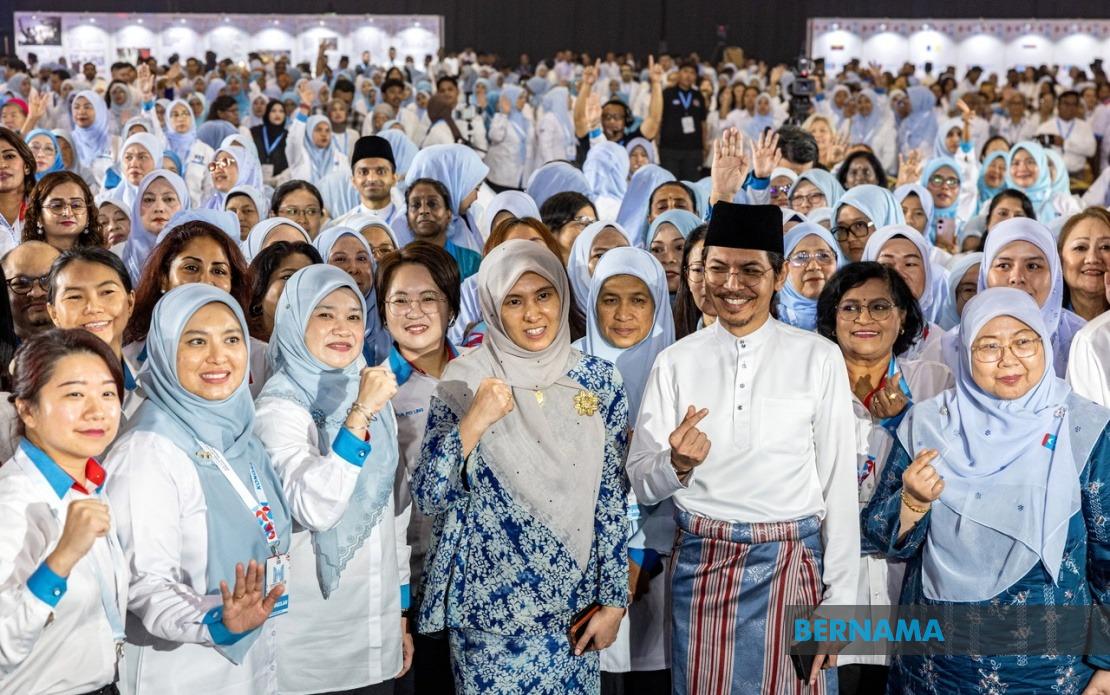
Political leaders cannot afford to operate in isolation from the communities they serve, according to Angkatan Muda Keadilan (AMK) chief Muhammad Kamil Abdul Munim, who has called for a renewed focus on grassroots engagement as the party looks ahead to electoral contests. Speaking during the 2026 AMK National Congress in Melaka, Muhammad Kamil underscored that sustained, meaningful relationships with ordinary citizens form the bedrock of effective political representation and party strength, particularly in an era marked by competing narratives and information overload.
The AMK leader's remarks reflect a broader understanding within Malaysia's political landscape that electoral success increasingly depends not merely on top-down messaging but on the capacity of party machinery to embed itself within local communities and remain responsive to their distinct concerns. By maintaining active presence at the neighbourhood level, party representatives can better understand the lived experiences of constituents, identify emerging issues before they crystallise into broader grievances, and position their party as genuinely invested in local welfare rather than distant national politics.
Muhammad Kamil emphasised that this grassroots engagement serves multiple strategic purposes beyond simple voter contact. When leaders are visible, accessible, and engaged in ongoing dialogue with community members, they create opportunities to articulate their party's policy positions and counter misleading information that opponents may circulate. In Malaysia's competitive political environment, where social media can rapidly amplify misinformation, the ability of party representatives to establish direct, trusted relationships with voters becomes invaluable for shaping public perception and maintaining narrative control.
The communication challenge facing modern political parties extends beyond traditional paid media or controlled messaging channels. Community relations represent an organic means of disseminating information while simultaneously gathering intelligence about voter sentiment, demographic shifts, and emerging policy priorities. This two-way flow of information between leaders and grassroots supporters enables more responsive governance and more targeted electoral strategies tailored to specific constituencies rather than blanket national campaigns.
Crucially, Muhammad Kamil highlighted the importance of integrating new party members into the broader ideological framework and organisational culture of their party. Without sustained mentorship and education about party principles, newly recruited members may lack genuine commitment to the organisation's core mission and values, potentially leading to hollow membership rolls filled with individuals motivated by transactional benefits rather than shared purpose. This risk of ideological dilution becomes particularly acute during election cycles when parties rapidly expand their membership base without adequate mechanisms for cultural assimilation.
The distinction between maintaining party discipline and preventing gradual deviation from foundational principles reflects a persistent tension within political organisations across Southeast Asia. As parties age and adapt to electoral pressures, there exists an inherent risk of mission creep, where pragmatic compromises accumulate until the party's original platform becomes unrecognisable. Muhammad Kamil's warning about members potentially losing sight of their party's raison d'être suggests concern that the AMK and its parent Parti Keadilan Rakyat may face such drift without deliberate countermeasures.
Local-level leadership carries disproportionate importance in this framework since district and divisional leaders serve as the primary conduit through which national party ideology filters down to grassroots members. These intermediate leaders must be equipped, motivated, and properly supported to conduct regular training sessions, organise community activities, and engage in mentoring relationships with newer recruits. Without institutional mechanisms to ensure consistent leadership quality and ideological coherence at the local level, even well-intentioned national directives can fragment or become diluted through inconsistent implementation.
The timing of Muhammad Kamil's address, coming well ahead of the 2026 general elections, suggests that the AMK recognises the need for substantial groundwork before electoral contests materialise. Building genuine community relationships cannot be rushed or improvised during campaign periods; such networks require sustained cultivation over months and years, with consistent demonstration of commitment to local concerns. Parties that attempt to establish grassroots presence only when elections loom inevitably appear opportunistic and fail to develop the trust necessary for sustained political influence.
For Malaysian voters and political observers, these remarks underscore a fundamental reality about the nature of representative democracy: the quality of governance and political accountability ultimately depends on the proximity and responsiveness of elected officials to their constituents. Leaders physically distant from communities, insulated by bureaucratic apparatus and reliant entirely on professional campaigners and media operations, tend to become increasingly unresponsive to legitimate public concerns. Conversely, leaders embedded within communities through regular interaction, participation in local events, and demonstrated understanding of neighbourhood issues can more effectively serve as advocates for constituent interests within higher levels of government.
The emphasis on programme diversity and member engagement also reflects evolving understandings of political party functionality in contemporary Malaysia. Beyond the traditional roles of contesting elections and holding office, modern political parties increasingly serve as community organisations providing social services, skills training, and spaces for civic participation. Members value parties not merely as vehicles for electing preferred candidates but as institutions that contribute directly to community wellbeing and offer opportunities for personal development and social connection.
Muhammad Kamil's call for enhanced grassroots focus carries implications extending beyond the AMK or even Pakatan Harapan. Opposition and ruling coalition parties alike must grapple with similar challenges regarding maintaining grassroots presence, preventing organisational atrophy, and preserving ideological coherence amid electoral pressures. The competitive dynamics of Malaysian politics ensure that whichever coalition more effectively executes grassroots engagement and community relationship-building will likely possess significant electoral advantages in coming contests.
Ultimately, the AMK chief's message reflects recognition that sustainable political power in Malaysia cannot rest indefinitely on media dominance or sophisticated campaign machinery alone. Political parties require genuine social infrastructure—networks of committed local leaders, engaged members, and positive community relationships—to weather electoral challenges and maintain influence across electoral cycles. The investments parties make now in grassroots capacity-building will substantially determine their viability and effectiveness throughout the remainder of this decade.

