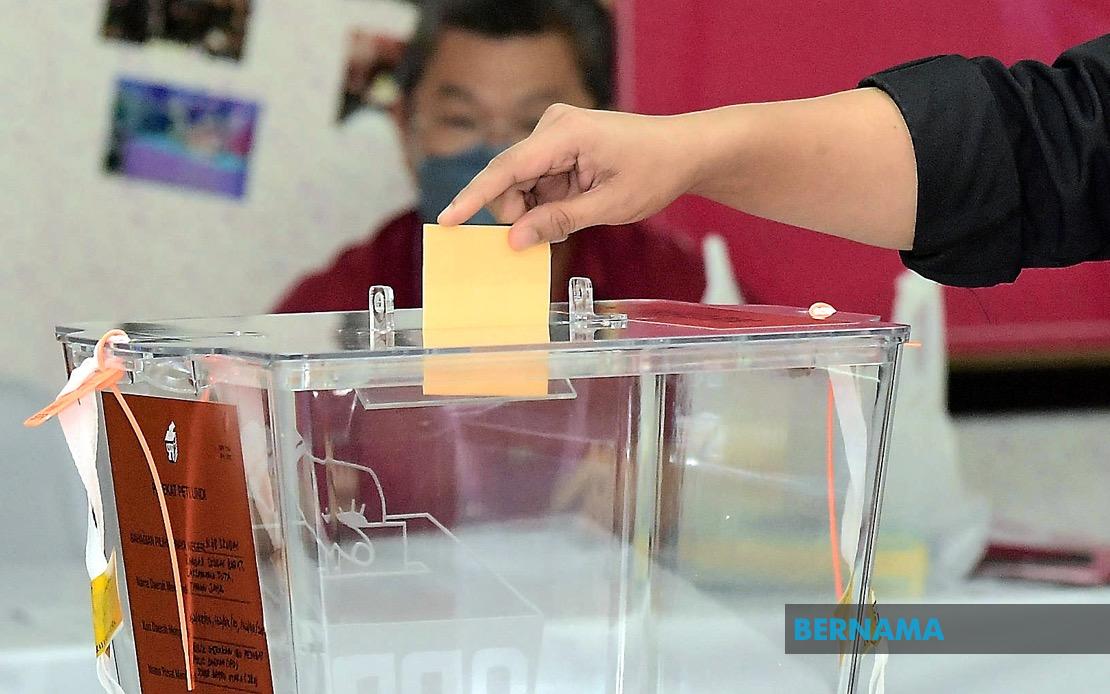
The Johor state election held on July 11 has crystallised the electoral landscape, with Barisan Nasional demonstrating decisive strength by securing 29 of the 56 state assembly seats. Johor PAS commissioner Datuk Dr Mahfodz Mohamed has acknowledged the verdict delivered by voters, framing the outcome as a legitimate expression of the electorate's preference for state leadership. This gracious concession from the Islamic party signals the orderly conclusion of a competitive campaign, with PAS signalling its intention to remain a steadying political force even from opposition benches.
Datak Onn Hafiz Ghazi's BN-led administration now possesses the numerical strength required to govern without external support, a position that provides considerable stability for executive decision-making over the coming term. The coalition's convincing performance across the state demonstrates sustained electoral confidence in its approach to governance, particularly relevant given the political volatility that has characterised Malaysian politics over the preceding years. For Johor, historically one of Malaysia's most politically significant states, this result represents a reaffirmation of moderate, coalition-based governance over more fractious alternatives.
PAS has coupled its acceptance with a reaffirmation of its broader political direction, emphasising that it will maintain its partnership within Perikatan Nasional while channelling its energies toward preparations for the approaching 16th General Election. The party's statement reveals a strategic pivot toward the federal contest, where the dynamics may prove substantially different from state-level contests. By framing its Johor performance within a longer-term narrative of religious advancement and communal welfare, PAS has attempted to convert an electoral setback into motivation for future mobilisation.
Bersatu, the party founded by former Prime Minister Mahathir Mohamad and subsequently evolved under different leadership, has committed to a comprehensive examination of its Johor showing. Party secretary-general Datuk Seri Mohamed Azmin Ali indicated that this analysis would extend beyond simple vote-counting to encompass strategic recalibration of political approaches. Such internal reviews typically examine candidate selection processes, campaign messaging, ground-level organisation, and voter outreach effectiveness. For Bersatu, which has experienced considerable flux in recent years through leadership transitions and coalition repositioning, this election provides crucial data regarding its political sustainability and appeal.
The most striking outcome involves Parti Bersama Malaysia, which fielded candidates across all 15 contested seats yet failed to secure even the minimum vote threshold to retain election deposits. This blanket failure represents a sobering baptism for the fledgling party, which had only recently been established. Bersama leader Datuk Seri Rafizi Ramli, despite the disappointing result, adopted a philosophical stance in publicly acknowledging that his formation—merely 52 days old at the time of voting—had absorbed valuable operational lessons from the campaign experience.
Rafizi's measured response reflects pragmatism about infant political parties navigating Malaysian electoral competition. The loss of deposit across all 15 seats indicates that Bersama failed to establish meaningful traction with voters despite whatever campaign resources and organisational effort it deployed. In Malaysia's first-past-the-post electoral system, where candidates must secure sufficient votes to avoid losing deposits, such wholesale failure signals fundamental obstacles in party positioning, voter recognition, or messaging resonance. Whether Bersama can recover and establish itself as a credible political force will depend significantly on its ability to learn from this experience and rebuild organisational foundations.
Pakatan Harapan managed to secure two seats despite being part of the electoral contest, suggesting that while the opposition coalition faces structural challenges at the state level, it retained capacity to win in specific constituencies where local conditions favoured its candidates. This modest outcome, however, underscores the difficulty opposition coalitions face in challenging BN's entrenched advantages in state administration and local networks. The result reinforces trends visible in other recent state contests where BN has demonstrated renewed electoral competitiveness after earlier setbacks.
Other contesting parties and candidates, including MUDA, Parti Orang Asli Malaysia, Parti Sosialis Malaysia, and independent candidates, drew blanks in the contest. The failure of these diverse alternatives to capture any representation illustrates the considerable barriers facing non-establishment challengers in Malaysian electoral politics. While such parties often serve important functions in articulating specific grievances or representing particular constituencies, converting this representational purpose into actual electoral victory remains formidably difficult.
For Malaysian politics broadly, the Johor outcome carries implications extending beyond state boundaries. As a wealthy, industrialised state that has traditionally served as a political barometer, Johor's preference for BN continuity may influence perceptions regarding federal electoral dynamics as Malaysia approaches the 16th General Election. The result suggests that voter appetite for alternative governance models, which had peaked during the 2018 federal election, may have moderated or at least become more geographically concentrated. The ability of opposition coalitions to regenerate enthusiasm and expand their appeal will prove critical for the federal contest.
The acceptance of electoral outcomes by losing parties, articulated through respectful statements acknowledging voter choice, reflects established conventions in Malaysian democracy. While such statements may sometimes mask internal frustration or strategic recalibration, they serve the essential function of reinforcing democratic norms and the legitimacy of electoral processes. PAS's relatively magnanimous response, particularly given its historical roots as an Islamic party with deep community networks, suggests confidence in its ability to contest future elections and marshal support for different policy frameworks.
Looking ahead, the composition of the new Johor State Government will shape policy priorities and administrative direction for the coming term. BN's mandate provides opportunity to implement substantive initiatives addressing economic development, urban planning, and social provision across the state. Simultaneously, opposition parties will utilise their remaining seats to scrutinise government performance and articulate alternative policy proposals. For Bersatu, the experience will inform its approach to the federal election, where its positioning within the broader coalition architecture remains subject to negotiation and evolution. The next federal contest will ultimately determine whether state-level dynamics presage broader national electoral trends or represent localised phenomena.

