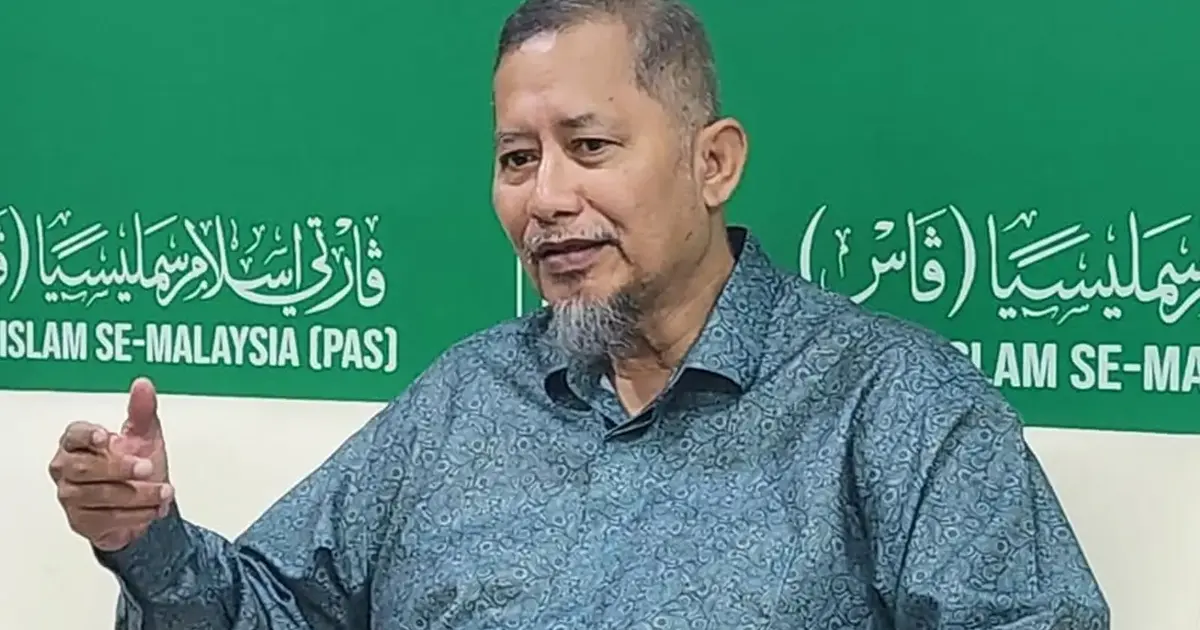
The leadership of PAS has thrown down a gauntlet to its former coalition partner Bersatu, with party treasurer Iskandar Abdul Samad asserting that PAS would handily defeat the rival Islamist outfit should they compete against each other at the ballot box. His remarks underscore the intensifying rivalry between two parties that were once bound by the Perikatan Nasional alliance but have since drifted into increasingly antagonistic positioning ahead of potential electoral contests.
Iskandar's confidence reflects PAS's assessment of its organizational strength and grassroots support within Malay-Muslim constituencies, where both parties have traditionally drawn their voter base. The treasurer's statement carries political weight given that PAS holds significant influence in several states and maintains deep-rooted institutional structures built over decades of activism and electoral competition. This established presence contrasts with Bersatu's more recent formation and smaller parliamentary footprint, factors that PAS strategists believe would prove decisive in any direct confrontation.
The declaration also signals PAS's calculation that dissatisfied Perikatan Nasional supporters would realign themselves with PAS rather than persist with Bersatu. This assessment hinges on the notion that PAS's Islamic credentials and longer history within the Malay-Muslim political ecosystem give it greater legitimacy and appeal among swing voters and party loyalists who might be disillusioned with Bersatu's trajectory. Whether this confidence is justified remains uncertain, particularly given Bersatu's unpredictable political manoeuvres and capacity to forge unexpected alliances.
The Perikatan Nasional coalition, which brought together PAS, Bersatu, and several smaller partners following the 2022 general election, has proven unstable. Tensions between the constituent parties have mounted over ministerial allocations, policy direction, and competing claims to Malay-Muslim representation. This friction has been compounded by broader shifts in Malaysia's political landscape, where coalition mathematics shift rapidly and parties constantly recalibrate their strategic partnerships to maximize electoral prospects.
Bersatu's position has been complicated by internal divisions and its complicated relationship with former Prime Minister Muhyiddin Yassin, whose stewardship of the party has been questioned by rivals and detractors. The party's relatively young voter base and urban-leaning coalition appeal differentiates it from PAS's more rural and religiously conservative support network, though both parties compete fiercely for the same demographic space. Should they separate electorally, their vote-splitting could have unpredictable consequences across multiple constituencies.
For Malaysian observers and political analysts, PAS's belligerent rhetoric serves multiple purposes beyond mere electoral posturing. It reinforces the party's authority within the Muslim-majority heartland while simultaneously testing Bersatu's willingness to maintain coalition discipline. The statement may also be calibrated to influence ongoing negotiations within Perikatan Nasional and to signal to other potential coalition partners that PAS remains the stronger and more reliable political vehicle for advancing Islamist and Malay-centric agendas.
The competitive dynamics between PAS and Bersatu carry implications extending beyond their immediate electoral prospects. Their friction could destabilize the broader Perikatan Nasional framework, potentially forcing realignment with the ruling Pakatan Harapan coalition or prompting formation of entirely new political configurations. Such shifts would reverberate throughout Southeast Asia's largest Muslim-majority democracy, where coalition stability has become central to government formation and legislative effectiveness.
Iskandar's assertion that Perikatan Nasional voters would favour PAS deserves scrutiny, given the complexity of voter preferences and the influence of local factors, candidate quality, and campaign effectiveness. While PAS undoubtedly possesses organizational advantages, Bersatu's relative flexibility and willingness to adopt pragmatic positioning on non-religious issues might appeal to voters seeking moderate alternatives within the conservative Malay-Muslim space. Electoral outcomes depend on multiple variables beyond historical precedent or current organizational metrics.
The rhetoric also reflects deeper ideological and strategic divergences between the parties. PAS has increasingly emphasized its Islamic credentials and positioned itself as the authentic voice of Muslim interests, while Bersatu has attempted to present itself as a more inclusive and developmentally focused alternative capable of attracting younger and urban constituencies. These competing visions create fundamental tensions that coalition arrangement cannot easily reconcile, making electoral separation arguably inevitable at some point.
The timing of Iskandar's comments deserves attention, potentially signalling that serious discussions about the future of Perikatan Nasional are underway behind closed doors. Whether designed to influence those conversations or to prepare party cadres for eventual coalition dissolution, the treasurer's words reflect the fragile state of Malaysian coalition politics. The coming months will reveal whether PAS's confidence proves warranted or whether Bersatu possesses greater electoral resilience than party rivals currently acknowledge.