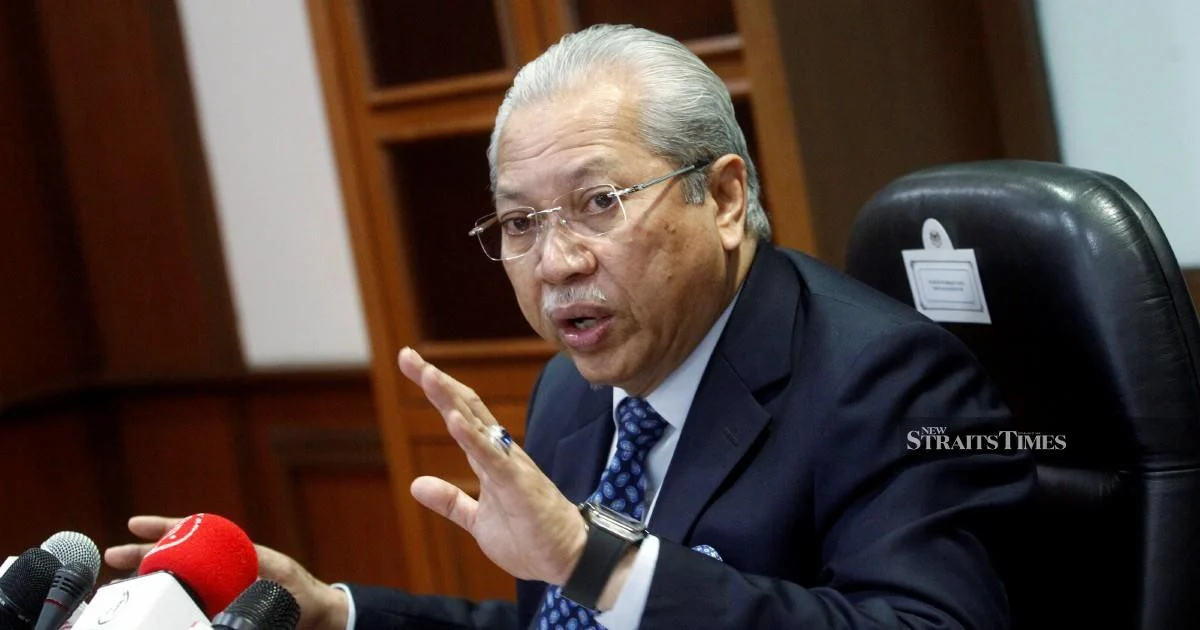
The Islamic Party of Malaysia (PAS) has moved to dispel mounting speculation about its role in fracturing Perikatan Nasional's political unity, with party officials asserting they have never pursued the removal of Bersatu from the coalition despite recent public tensions between the two organisations. Speaking in Kota Baru, leadership within PAS emphasised their commitment to maintaining the partnership that has underpinned PN's position in Malaysian politics since its formation, signalling that reports of deliberate machinations to dislodge their ally lack factual foundation.
The clarification from PAS arrives amid a period of visible strain within the Perikatan Nasional bloc, which has seen friction between its component parties attract significant media attention and public commentary. For Malaysian observers and political analysts tracking coalition dynamics, the statement carries weight in distinguishing between the kind of behind-the-scenes manoeuvring that frequently characterises multi-party alliances and deliberate acts of political sabotage. The timing of PAS's denial suggests the party remains sensitive to perceptions that internal divisions could undermine PN's electoral standing and governing credibility across Malaysia's complex political landscape.
The Perikatan Nasional coalition represents a significant force in Malaysian politics, having emerged from shifts within the broader political ecosystem following the 2018 general election. Understanding the mechanics of inter-party relations within PN requires context about how these alliances function in Malaysia's constitutional framework, where coalition partners must balance competing interests while maintaining unified positioning against rival blocs. The relationship between PAS and Bersatu has historically carried particular strategic importance given their combined electoral influence, particularly in securing rural and semi-urban constituencies where Islamic-oriented politics maintains considerable traction.
Bersatu's uncertain status within PN has become a subject of considerable political speculation, with observers noting that the party founded by former Prime Minister Mahathir Mohamad has occupied an increasingly precarious position within the coalition. The party's trajectory has involved multiple realignments and strategic repositionings, reflecting both internal organisational challenges and shifting calculations about optimal political partnerships. For regional audiences and international observers monitoring Malaysian governance, such coalition instability carries implications extending beyond domestic politics, potentially influencing policy formation and legislative priorities.
PAS's explicit denial that it sought Bersatu's expulsion requires careful examination alongside concrete evidence of friction within the coalition. The statement represents an attempt to establish narrative control during a period when multiple interpretations of PN's internal dynamics compete for public acceptance. Political figures within Malaysia frequently issue clarifications of this nature when they perceive that reputational damage or loss of political leverage might result from unchallenged narratives, suggesting that PAS leadership views the speculation sufficiently serious to warrant public response.
The broader context of Malaysian coalition politics reveals patterns where multi-party alliances often experience tension between their component organisations while formally maintaining unity. Such friction typically reflects disagreements over resource distribution, policy priorities, candidate selection for constituencies, and ministerial positions. The fact that apparent strain exists between PAS and Bersatu does not necessarily validate suggestions of orchestrated expulsion, though it understandably creates space for political commentators and analysts to posit such scenarios as plausible.
For Southeast Asian observers monitoring Malaysia's political evolution, the health of the Perikatan Nasional coalition carries significance beyond domestic considerations. The stability and coherence of major political blocs influences governmental capacity to implement regional commitments, contribute to ASEAN initiatives, and maintain consistent foreign policy orientations. Coalition dysfunction that impairs such capacity ultimately affects the broader regional environment and may necessitate policy adjustments by neighbouring countries responding to potential instability or policy uncertainty emanating from Kuala Lumpur.
The statement from PAS also reflects broader patterns within Malaysian political culture wherein parties frequently face accusations of divisive behaviour or sabotage during periods of visible coalition friction. These allegations, whether well-founded or speculative, become embedded within media narratives and public discourse regardless of their empirical basis. PAS's proactive approach to countering such narratives through explicit denial represents an effort to shape ongoing political conversation and influence how Malaysian voters perceive the coalition's stability heading toward potential electoral contests.
Bersatu's position within PN has evolved considerably since the coalition's formation, reflecting the party's strategic calculations about maximising political influence and electoral viability. The party faces complex pressures in balancing its maintenance within the PN framework against potential alternative alignment scenarios. PAS's insistence that it has not actively sought Bersatu's removal potentially signals an attempt to preserve working relationships within the coalition despite observable strain, suggesting that senior figures across PN parties recognise that public acknowledgement of deliberate exclusionary tactics could further damage the alliance's cohesion.
Moving forward, the trajectory of Perikatan Nasional's internal dynamics will likely depend on PAS and Bersatu's ability to manage concrete disagreements around policy, resources, and electoral strategy without permitting friction to deteriorate into open conflict. Malaysia's political history demonstrates that coalitions can persist despite significant internal tension provided that component parties perceive greater advantage in maintaining partnership than pursuing alternatives. PAS's statement, while addressing immediate speculation, ultimately reflects the ongoing negotiations and accommodations required to sustain complex multi-party alliances within Malaysia's competitive political system.

