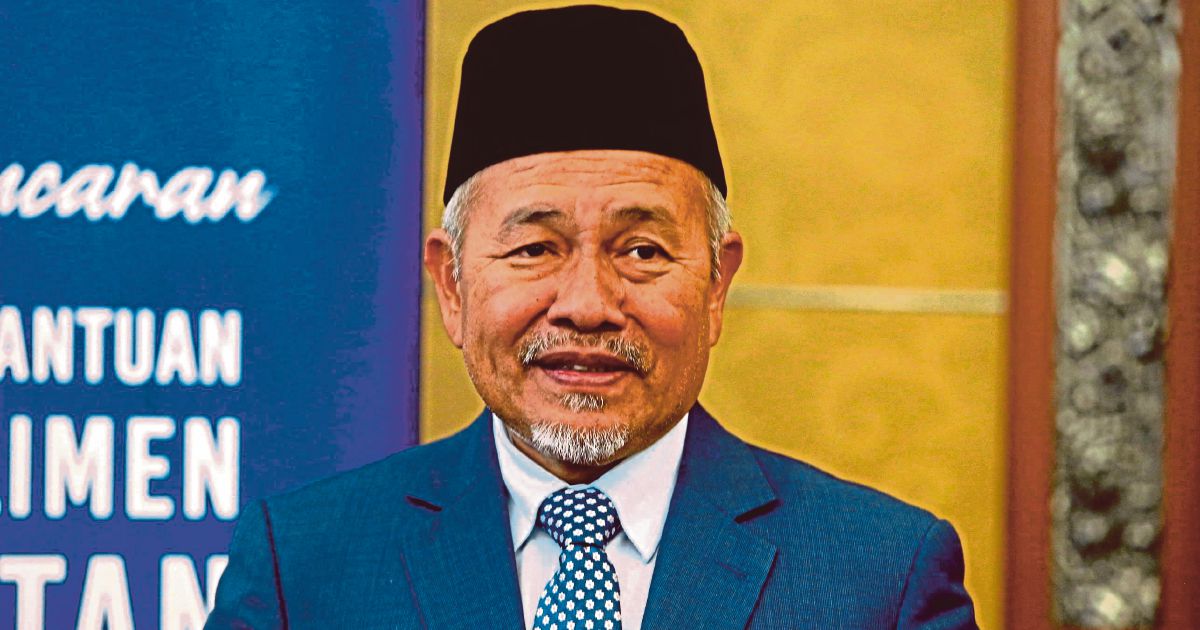
Datuk Seri Tuan Ibrahim Tuan Man, the deputy president of the Pan-Malaysian Islamic Party, has publicly commended the United Malays National Organisation's unexpected withdrawal of support for the Negeri Sembilan state administration. Speaking in Seremban, Tuan Ibrahim framed Umno's decision as a demonstration of political fortitude that fundamentally alters the electoral landscape ahead of the state election.
The timing of Umno's departure from the ruling coalition carries considerable significance in Malaysian politics. By relinquishing its backing for the state government, Umno signals a willingness to challenge the existing power arrangement and potentially reshape alliances at the state level. This move creates strategic uncertainty that could benefit multiple political actors, depending on how the fallout unfolds. For voters in Negeri Sembilan, the withdrawal removes the appearance of a consolidated Barisan Nasional bloc and introduces genuine political choice where previously the ruling coalition dominated state affairs.
Tuan Ibrahim's endorsement of Umno's action suggests that PAS, despite its national cooperation with Umno through the PN alliance, recognises the value of competitive politics at the state level. His characterisation of the decision as "bold" implies that Umno faced internal pressure or principled reasons to break ranks, and that such a move required overcoming institutional inertia within one of Malaysia's most established parties. The PAS deputy president's public acknowledgement underscores that even coalition partners can appreciate each other's independent political manoeuvres when they serve broader democratic principles.
Umno's withdrawal from the Negeri Sembilan government partnership creates immediate practical complications for state administration. The ruling coalition loses the parliamentary or assemblyperson seats that Umno previously contributed, reducing its majority and making governance substantially more challenging. Any legislative initiative now requires either securing independents, shifting allegiances from other parties, or negotiating with opposition blocks. Such arrangements are inherently unstable and can collapse suddenly if arithmetic-dependent alliances fracture further.
The withdrawal also reflects deeper fissures within Malaysian coalition politics. State-level dynamics do not always align with national partnerships, and Umno's decision demonstrates that pragmatic state interests can override larger political alignments. For Negeri Sembilan specifically, this means that the state election, when called, will be fought on considerably more competitive terrain. Voters cannot assume that any single coalition will dominate, and multiple political formations will possess genuine prospects of forming government.
From PAS's perspective, Umno's move creates opportunities even if PAS itself is not directly a member of the Negeri Sembilan state government. Opposition-minded voters who view the state administration as either stagnant or unaccountable now see pathways for political change materialising. Tuan Ibrahim's praise suggests that PAS anticipates electoral benefit from a more open political environment, and that the party sees value in supporting broader democratic contestation rather than entrenching any particular ruling bloc.
The strategic implications extend across the entire peninsula. State governments function as testing grounds for political alliances, policy approaches, and electoral viability. When a major party like Umno shifts its position at state level, it sends signals to party members, rival organisations, and voters about acceptable political behaviour and the fluidity of coalition arrangements. If Umno can credibly withdraw support and survive the decision, other parties may calculate that similar moves are feasible under appropriate circumstances.
Negeri Sembilan voters face an election landscape considerably more fluid than it was weeks earlier. The state's relatively small population means that electoral outcomes can shift substantially based on modest shifts in voter preference or tactical voting calculations. With Umno no longer automatically supporting the state administration, candidates from various parties will campaign with genuine prospects of success. This heightened competition typically encourages greater electoral participation and forces ruling parties to engage more substantively with voter concerns rather than relying on institutional advantages.
Tuan Ibrahim's public appreciation for Umno's decision also serves an important function within PAS. By acknowledging Umno's move positively, the PAS deputy president frames coalition politics as compatible with state-level independence. This messaging matters for PAS members and supporters, particularly in states where PAS holds influence and might consider withdrawing from state governments or opposing state-level partners when circumstances warrant. The implicit message is that such actions need not signal coalition breakup at the national level.
The withdrawal raises questions about the stability of state governments reliant on narrow majorties and tacit understandings between coalition partners. Umno's action, regardless of its tactical merit, demonstrates that state administrations cannot assume partner parties will indefinitely provide backing without conditions. Negeri Sembilan's state government now operates within a diminished parliamentary position where every vote matters and where previously routine legislative business might become contested.
Longer term, Tuan Ibrahim's response illustrates how Malaysian state politics maintains relative autonomy from national political calculations. While peninsular states remain constitutionally subordinate to federal authority in many respects, state governments and state elections occupy important political terrain where parties test new strategies and build local legitimacy. Umno's withdrawal, whatever its ultimate electoral consequences, demonstrates that this terrain remains genuinely competitive and that political outcomes remain undetermined until voters formally decide.

