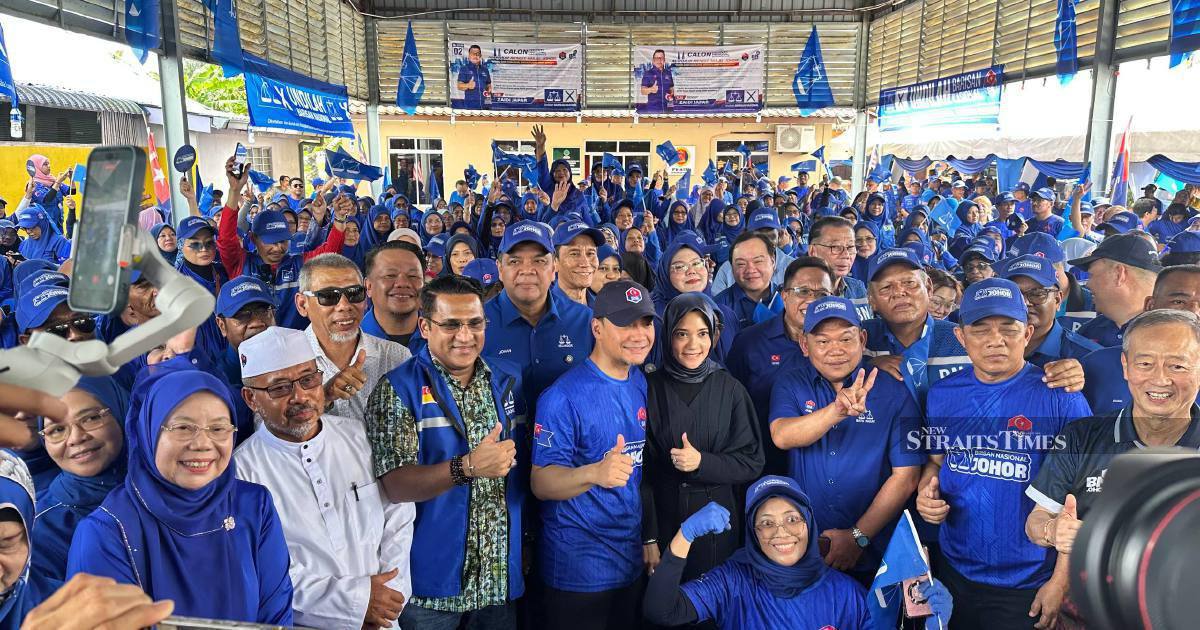
The appearance of two PAS division chiefs at a Barisan Nasional gathering in Batu Pahat underscores the ongoing effort to deepen ties between Umno and other Malay-centred political organisations as Johor prepares for its state election scheduled for next month. The joint appearance represents a visible show of unity among parties competing for Malay Muslim support, a traditionally significant bloc in state electoral contests.
The event, held in the southern Johor town, comes at a critical moment for the political landscape in Malaysia's southernmost state. Johor has long been considered a bastion of Barisan Nasional strength, though recent national political shifts have introduced new complexities into state-level contests. The gathering provides a platform for party leaders to articulate a coordinated message to voters across constituencies in the region, particularly in areas where PAS maintains substantial grassroots presence.
PAS, formally the Malaysian Islamic Party, has expanded its influence significantly across Malaysia over the past decade, establishing strong organisations in numerous state and parliamentary constituencies. The party's involvement in Barisan Nasional structures varies by state and has been subject to strategic recalibration depending on electoral circumstances and internal party considerations. In Johor, PAS maintains meaningful organisational capacity, particularly in rural and semi-urban areas where Islamic-focused messaging resonates with voters seeking alternative representations of Malay-Muslim interests.
Umno's leadership has demonstrated interest in coordinating with allied Malay-based parties to consolidate votes across the state and prevent fragmentation that could benefit opposition coalitions. Such coordination efforts typically involve campaign collaboration, resource sharing, and messaging alignment aimed at presenting a unified front to voters. The Batu Pahat event appears consistent with these broader strategic objectives, demonstrating that both Umno and PAS view cooperation as advantageous for their respective electoral prospects in the coming contest.
Batu Pahat, a constituency with a substantial Malay-Muslim population concentrated in both urban commercial areas and surrounding rural districts, represents the type of territory where Barisan Nasional typically aims to perform strongly. The town has historically been competitive, with representation shifting between parties during various electoral cycles. Events held in such locations carry symbolic weight, signalling to residents that major coalition partners consider the area important enough to gather their senior leadership for high-profile engagements.
The visible cooperation between PAS and Umno leaders carries implications for understanding the current state of Malaysian coalition politics more broadly. While Umno and PAS have competed intensely during certain periods, their relationship has also demonstrated flexibility and capacity for tactical accommodation when electoral circumstances encourage such arrangements. The Batu Pahat gathering illustrates that both parties see value in at least appearing coordinated on shared objectives, even if their underlying strategic interests may differ on particular issues.
For voters in Johor, these inter-party developments influence the choices available during state elections. The strength of cooperation or tension between Barisan Nasional components affects campaign intensity, resource deployment, and ultimately the competitiveness of individual contests. When allied parties demonstrate unity, campaigns often reflect more consistent messaging and coordinated ground operations. Conversely, friction between partners can create confusion among supporters and potentially split votes in ways neither party intends.
The timing of this gathering, occurring a month before the state election, reflects standard campaign preparation cycles in Malaysian electoral practice. Parties typically intensify organizational activities during this period, conducting leadership meetings, finalizing candidate selections, and organising public events designed to energize supporters and attract undecided voters. The participation of PAS division leaders suggests the party has committed resources and senior attention to the Johor contest, indicating they view it as strategically significant for their national positioning.
Regional political observers have noted that Johor elections frequently carry consequences beyond the state itself, influencing perceptions of ruling coalition strength and affecting momentum heading into subsequent national contests. A successful coordinated campaign in Johor could demonstrate that Barisan Nasional retains capacity to manage complex inter-party relationships effectively. Such demonstrations of organisational competence carry value beyond immediate electoral outcomes, as they signal to other political actors and voters that the coalition remains a functional vehicle for advancing shared interests.
The event also provides opportunities for PAS and Umno to address local issues affecting Batu Pahat and surrounding areas. Joint appearances allow parties to discuss economic development priorities, infrastructure improvements, and social programmes that resonate with residents. By presenting coordinated positions on such matters, allied parties aim to appear serious about addressing constituent concerns and capable of delivering improvements should they maintain control of state government.
Moving forward, the Johor state election will test whether visible coordination between PAS and Umno translates into electoral success. Voters will ultimately determine whether the cooperation demonstrated at events like the Batu Pahat gathering reflects genuine shared vision or merely tactical convenience. The results will provide insights into whether Barisan Nasional's approach to managing multiple Malay-based parties remains effective in the current Malaysian political environment, where voter preferences have demonstrated increasing volatility and reduced automatic loyalty to traditional coalitions.

