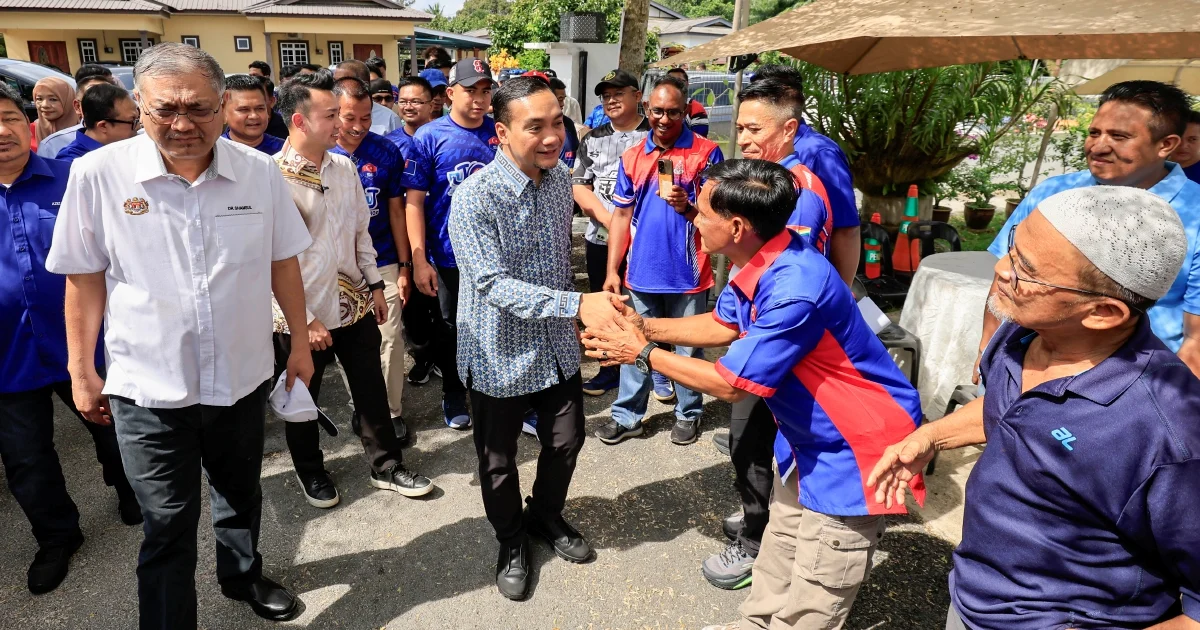
In a measured response to mounting scrutiny over Pas' recent directive, Perikatan Nasional deputy chairman Onn Hafiz has reasserted that individual parties retain the right to shape their own electoral strategies without external interference. Speaking in Simpang Renggam, Onn Hafiz acknowledged the sensitive nature of Pas' guidance to its members to support Barisan Nasional candidates in constituencies where PN fielded no nominees, positioning the matter as a pragmatic calculation rooted in Malaysia's competitive multi-party landscape rather than a fundamental realignment.
The statement arrives as Malaysian politics continues to navigate the fractious terrain following the 2022 general election, which fractured the opposition into rival camps and reshaped coalition dynamics across federal and state levels. PN, the faction anchored by former Prime Minister Muhyiddin Yassin, has been seeking to consolidate influence while managing internal tensions within its components—particularly the Islamic party Pas, which wields significant grassroots machinery in rural constituencies. The Pas directive, which emerged without prior coordination with PN leadership, has underscored the delicate balance between formal coalition membership and autonomous party decision-making.
Onn Hafiz's framing suggests PN's institutional acceptance of such moves, even when they might complicate coalition coherence. His argument rests on a foundational principle of Malaysian electoral politics: no party operates in a vacuum, and each must weigh local circumstances, candidate viability, and electoral geometry when determining where to contest or support. In constituencies where PN chose not to field candidates—a deliberate strategy to avoid three-way splits that historically favor incumbents—Pas' decision to direct members toward BN nominees reflects calculations about vote efficiency and preventing opposition fragmentation from weakening anti-government alternatives.
The broader implication of this stance reveals how PN itself remains a coalition of convenience rather than a rigidly unified bloc. Pas, as the dominant component in terms of parliamentary seats and organizational capacity, possesses considerable leverage in determining collective strategy. By allowing Pas autonomy in such decisions, PN sidesteps public conflict while tacitly endorsing tactical flexibility that might ultimately serve the coalition's electoral interests, even if it creates short-term perceptions of disarray or inconsistency.
For Malaysian voters and political observers, this development highlights the pragmatism underlying seemingly rigid coalition structures. The distinction between formal membership in a coalition and supporting specific candidates in individual contests has become increasingly blurred in post-2022 Malaysian politics. PN's acceptance of Pas' move signals that coalitions will tolerate considerable strategic variance at ground level, provided the broader partnership framework remains intact. This flexibility, however, also introduces uncertainty for voters seeking to understand each coalition's true boundaries and commitments.
The timing of Onn Hafiz's comment matters significantly within the Southeast Asian context. Malaysia's political landscape continues to influence regional perceptions of democratic competition and institutional stability. The willingness of PN's leadership to publicly justify rather than condemn Pas' independent action suggests a maturing acceptance of the new political order post-2022, where rigid bloc voting and monolithic party discipline have given way to more fluid arrangements. This evolution reflects global trends toward coalition governments requiring constant renegotiation and tactical adjustment.
For BN, the recipient of Pas' endorsement in uncontested seats, the arrangement presents tactical advantages without formal costs. The ruling coalition avoids appearing to seek Pas' support directly while benefiting from its grassroots mobilization capacity. Such indirect cooperation has become a feature of Malaysian politics where parties maintain formal separation while cooperating functionally on specific contests. This pattern mirrors dynamics in other Southeast Asian democracies where coalition governments require constant calibration between unity and autonomy.
Within PN itself, the statement may also serve to reassure Pas of the larger coalition's commitment to respecting component parties' autonomy. With Perikatan comprising diverse elements including PKR, Bersatu, and Amanah alongside Pas, the leadership must frequently demonstrate that no single party's interests dominate decision-making. By framing Pas' decision as legitimate, Onn Hafiz preempts potential grievances from other components that might otherwise perceive favoritism or unequal treatment in strategy formulation.
The substantive question underlying this episode concerns whether Malaysian politics is moving toward a more pragmatic, less ideologically polarized future, or whether apparent flexibility masks deeper instability. Onn Hafiz's comments suggest the former interpretation—that parties increasingly recognize the need for tactical cooperation transcending formal coalition boundaries when electoral mathematics demand it. Whether this represents healthy democratic adaptation or symptoms of institutional erosion remains contested among analysts.
Looking forward, this stance establishes an important precedent for how PN will handle similar situations involving other component parties. If Bersatu, PKR, or Amanah seek equivalent autonomy in endorsing candidates from rival coalitions, the Pas precedent now makes resistance more difficult to justify. The challenge for PN leadership will be managing these individual party strategies to prevent their cumulative effect from undermining the coalition's overall electoral competitiveness or message coherence. Onn Hafiz's measured response suggests PN is attempting to navigate this complexity through acceptance rather than prohibition, a strategy that may reflect realistic understanding of where power actually resides in coalition politics.

