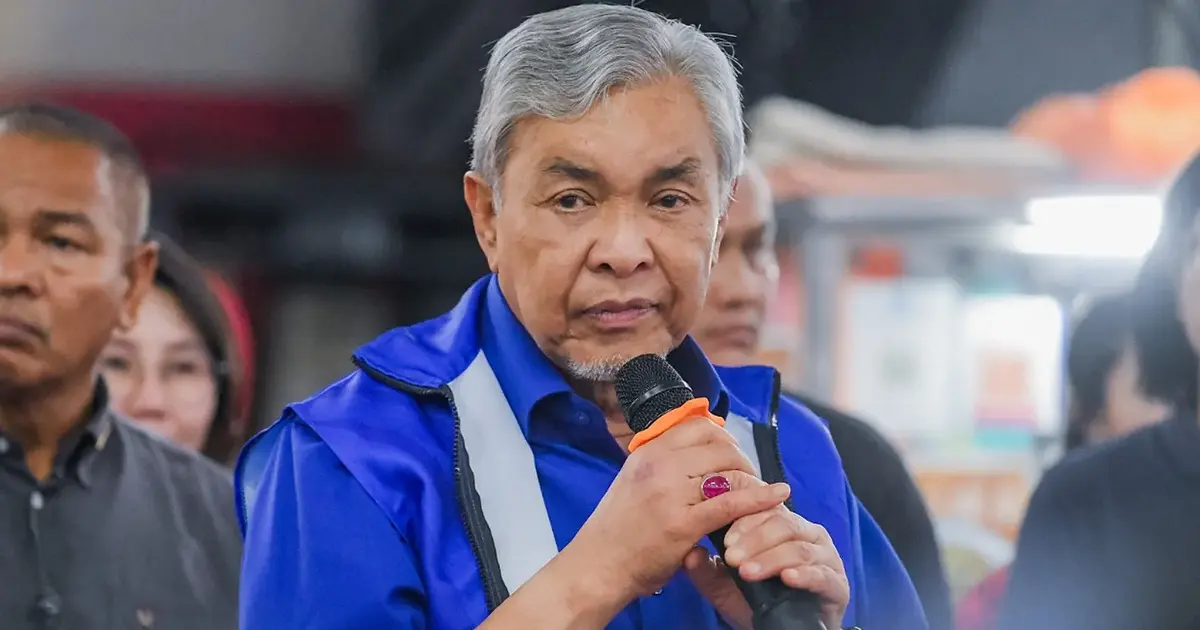
Umno leader Zahid Hamidi has moved to temper expectations surrounding PAS's backing of Barisan Nasional candidates in the upcoming Johor state election, emphasizing that such electoral cooperation does not predetermine the shape of future political alliances. The Barisan Nasional chairman's statement comes as speculation swirls about the implications of PAS lending its organizational machinery to support BN candidates across the southern state, with some observers reading the gesture as a harbinger of deeper coalition realignment.
Zahid's clarification addresses a delicate political reality: while PAS and Barisan Nasional have found common cause on specific electoral contests, the two political blocs maintain fundamentally distinct organizational structures and strategic objectives. The statement effectively draws a boundary between tactical cooperation on individual elections and strategic partnerships that would reshape Malaysia's broader political architecture. This distinction matters because it prevents either coalition from claiming that temporary electoral arrangements carry binding implications for subsequent government formation or policy collaboration.
The dynamics surrounding PAS's participation in the Johor contest reflect the fluid nature of Malaysian coalition politics. Permatang Pauh-based PAS has demonstrated a pragmatic willingness to coordinate with different political partners depending on electoral circumstances and state-level conditions. However, Zahid's intervention signals that Umno leadership views such cooperation as fundamentally provisional and contingent upon specific circumstances rather than indicative of a wholesale merger of political interests.
For Malaysian voters and political observers, the distinction carries substantial weight. Coalition arrangements determine not merely which candidates contest elections, but which parties will ultimately hold executive power and shape policy direction. A fusion between Barisan Nasional and PAS would represent a significant reconfiguration of post-2018 political alignments, potentially displacing the current governing framework. By explicitly rejecting the notion that Johor-level cooperation implies such a merger, Zahid preserves Umno's negotiating flexibility while avoiding commitments that might alienate coalition partners or constrain future government-formation strategies.
The timing of Zahid's statement also reflects calculations about managing expectations among BN's constituent parties. Gerakan, MCA, and other Barisan Nasional components maintain their own political interests and constituencies. These parties might view PAS integration with suspicion, particularly given the ideological distance between secular-oriented BN parties and PAS's Islamist platform. By emphasizing that the Johor arrangement carries no deeper meaning, Zahid seeks to reassure these partners that their positions within Barisan Nasional remain secure regardless of PAS's electoral assistance.
Such clarifications have become increasingly necessary in Malaysia's contemporary political landscape, where coalition flexibility and electoral pragmatism sometimes blur the distinction between temporary cooperation and strategic partnership. Voters and party members frequently struggle to distinguish between isolated electoral pacts and more substantial realignments. Media commentary often amplifies suggestions of impending mergers whenever different political entities coordinate on specific contests. Zahid's explicit statement attempts to cut through such speculation and establish clear parameters for how different political actors should interpret intercoalition cooperation.
From a Southeast Asian perspective, Malaysia's coalition dynamics reflect broader regional patterns wherein political parties frequently shift alignments based on electoral circumstances and power-distribution calculations. Indonesia, Thailand, and the Philippines have all witnessed similar phenomena where rival political forces temporarily cooperate on specific contests before reverting to opposition. The Malaysian instance demonstrates how sophisticated political actors manage such temporary alliances while preserving strategic autonomy and avoiding commitments that might compromise their long-term positioning.
The PAS-Barisan Nasional dynamic also touches upon questions about Islamist party integration into mainstream coalition politics. PAS's decision to cooperate with BN candidates represents a departure from its historical positioning as an opposition force and reflects its own strategic recalculation following the 2022 general election results. However, Zahid's statement suggests that Barisan Nasional continues to view PAS primarily as a tactical ally rather than a genuine long-term partner, maintaining reservations about the depth of potential collaboration.
Looking forward, the Johor state election will provide crucial evidence about whether PAS-BN cooperation translates into electoral success or represents merely symbolic coordination. If such cooperation yields tangible results—improving BN's performance relative to expectations or expanding PAS's footprint—both parties may find themselves under pressure to formalize arrangements. Conversely, if the cooperation produces disappointing outcomes, both entities will likely retreat to previous positions, rendering Zahid's clarification moot. The actual electoral dynamics in Johor will ultimately determine whether today's tactical coordination presages more substantial political realignment or remains an isolated episode in Malaysia's perpetually shifting coalition landscape.

