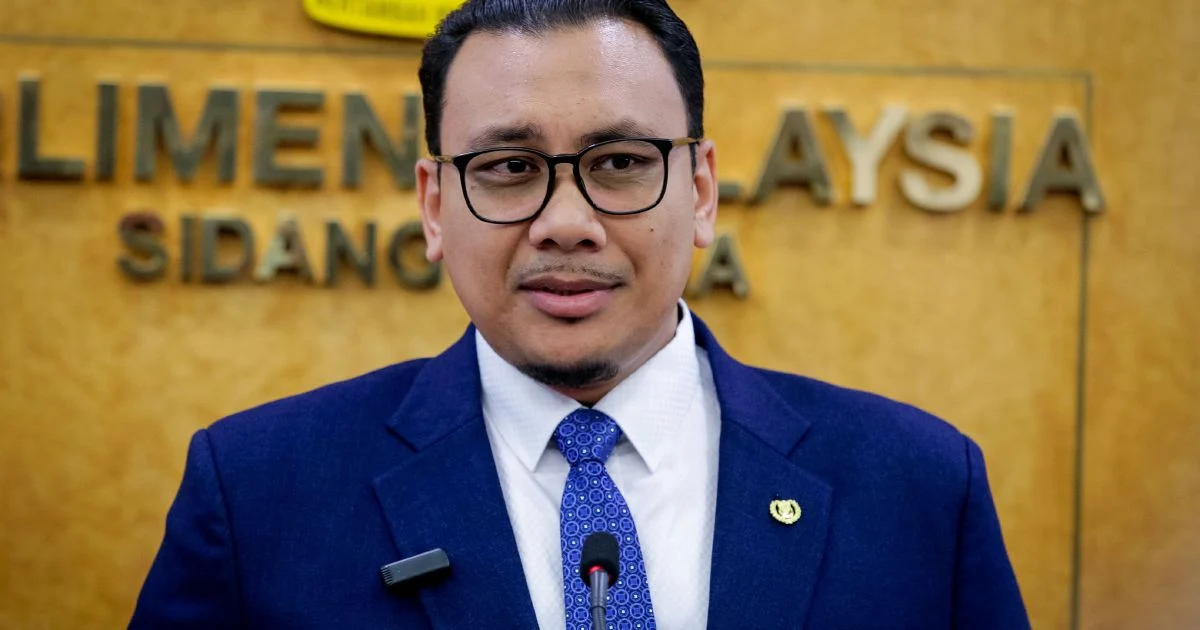
The political dispute between rival coalition partners has escalated into legal territory, with Pas Youth chief Afnan Hamimi Taib Azamudden instructing his lawyers to pursue formal action against a Bersatu leader over a Facebook post that he claims insulted his father and family members. The incident underscores growing tensions within Malaysia's multiparty political landscape, where social media has become an increasingly contentious arena for political exchanges and personal attacks.
The Facebook post in question, attributed to a Bersatu party figure, reportedly contained statements that Afnan Hamimi deemed defamatory and offensive toward his father. Rather than engaging in public back-and-forth on social media platforms, the PAS Youth leader has opted for the formal legal route, a decision that signals the seriousness with which he views the allegations. This approach reflects a broader trend among Malaysian political figures to weaponise defamation laws when faced with allegedly damaging online statements.
PAS and Bersatu occupy different positions within Malaysia's complex political architecture, though they have occasionally found common ground on certain policy matters. However, the relationship between the two parties has frequently been strained by ideological differences and competition for support among their respective voter bases. The emergence of this personal dispute highlights how friction at the grassroots or youth wing level can quickly escalate into broader inter-party conflicts.
Social media has fundamentally altered the nature of Malaysian political discourse over the past decade, enabling rapid dissemination of information but also facilitating the spread of unverified claims and inflammatory rhetoric. Political figures increasingly find themselves navigating a minefield of potential legal exposure when they post online, as statements that might once have been confined to private conversations now reach thousands instantaneously. The question of what constitutes defamation in the digital age remains actively contested in Malaysian courts and among legal practitioners.
The decision to pursue legal action rather than engage in public dispute management reflects calculated political strategy. By moving the matter into the legal system, Afnan Hamimi effectively removes the narrative from the social media sphere, where Bersatu's communications machinery might otherwise gain momentum. Legal proceedings tend to be slower and more deliberate than the rapid-fire exchanges typical of online platforms, potentially dampening the immediate political damage.
Defamation cases involving public figures in Malaysia occupy a complex legal space where courts must balance free speech considerations against protection of individual reputation. The plaintiff bears the burden of establishing that the statements in question were false, published to third parties, and caused reputational harm. However, Malaysian courts have generally been receptive to defamation claims brought by political figures, and successful cases have resulted in substantial monetary damages.
The involvement of Afnan Hamimi's family members in this dispute adds another dimension to the controversy. In Malaysian politics, attacks on politicians' family members, particularly parents, are widely regarded as crossing unwritten lines of acceptable discourse. Such tactics tend to generate considerable public sympathy for the targeted individual, regardless of the underlying political merits of the dispute. The framing of this incident as an attack on his father rather than on Afnan Hamimi himself may prove strategically advantageous in shaping public perception.
Bersatu, as a relatively younger political entity compared to established parties like PAS, has cultivated an image as a reform-minded alternative in Malaysian politics. However, the party has also faced persistent criticism over discipline and control of its members' online behaviour. The alleged Facebook post, if confirmed to have been made by a party member, raises questions about internal communication standards and whether party leadership adequately monitors or restricts the political activities of officials on social media.
This legal action may have broader implications for online political discourse in Malaysia. If Afnan Hamimi's case succeeds, it could embolden other political figures to pursue similar legal remedies against allegedly defamatory posts. Conversely, a defeat might establish important precedent for defending online political speech, even when it ventures into personal territory. The case will likely attract attention from free speech advocates and media freedom organisations monitoring the state of political expression in the country.
The timing and circumstances of this dispute also warrant examination within the context of Malaysia's current political landscape. Inter-coalition tensions often intensify during periods when electoral contests loom or when broader realignments are under discussion. The escalation from social media dispute to formal legal action suggests that underlying political grievances between PAS and Bersatu extend beyond this single incident.
For Malaysian readers following political developments, this case illustrates how traditional legal frameworks are being applied to novel circumstances created by digital communication technologies. The precedents established through cases like Afnan Hamimi's will shape the boundaries of acceptable online political discourse for years to come. Both the outcome of the legal proceedings and the broader political ramifications deserve careful monitoring as the situation develops.