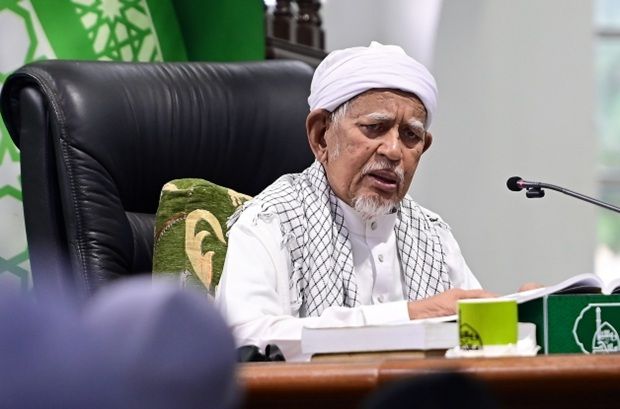
Abdul Hadi Awang's declaration that PAS proved instrumental in Barisan Nasional's Johor state election triumph has ignited a wider conversation about Malaysia's political trajectory that extends far beyond the peninsula. The ramifications touch on coalition dynamics, regional power balances, and the fundamental character of governing alliances that have long held the federation together. Yet the celebrations in Johor are prompting careful scrutiny in boardrooms and state capitals elsewhere, particularly in regions where political culture has evolved along markedly different lines.
The mechanics of Barisan's manoeuvring in Johor hint at structural shifts that alarm observers across East Malaysia. Menteri Besar Hafiz Onn now possesses the power to appoint five additional state representatives, potentially swelling Barisan's majority from 46 to 51 seats in the State Assembly. This consolidation of power, achieved through working arrangements between UMNO, PAS, MCA and MIC, represents precisely the kind of political architecture that unnerves leaders in Sabah and Sarawak. These two Borneo states collectively command 56 parliamentary seats—a decisive bloc capable of determining national government formation. Their cooperation with Barisan cannot be taken for granted, and recent events suggest their confidence in the coalition may be wavering.
Within Negri Sembilan itself, disquiet runs deep. The state's paramount ruler, Tuanku Muhriz, has long positioned himself as an advocate for constitutional propriety and integrity in governance, famously referring to himself as "Boss Ku" in reference to his commitment to fighting corruption. Questions linger about whether a PAS-backed Barisan configuration aligns with the institutional values the ruler has consistently championed. The fact that Barisan has agreed to contest 26 of Negri Sembilan's 36 state seats whilst working alongside PAS, Wawasan and Gerakan signals a challenge not merely to the local balance of power but to Prime Minister Anwar Ibrahim and cabinet colleagues who have invested political capital in rehabilitating Barisan's image.
What distinguishes East Malaysia's perspective is rooted in historical experience and social composition. Sabah and Sarawak evolved politically within societies where religious and ethnic pluralism is not merely tolerated but woven into the everyday fabric of governance. Unlike certain peninsular territories, these states developed political traditions anchored in pragmatism, inter-community accommodation, and moderation. Parties operating in Borneo have consequently grown circumspect about political movements perceived as ideologically rigid or dependent on religious mobilisation as their primary organising principle. The spectacle of PAS openly celebrating its partnership with UMNO-led Barisan, coupled with the rebranding of Bersatu remnants into Wawasan under Hamzah Zainuddin's leadership, registers as a seismic disturbance in the relatively equilibrated politics of East Malaysia.
The constitutional architecture established at Malaysia's formation in 1963 remains a touchstone for Borneo leaders. State autonomy, federal-state relations, and the preservation of Malaysia's multicultural constitutional framework occupy a higher priority in their political calculus than ideological contests that dominate peninsular discourse. When PAS asserts itself as an indispensable force within Barisan's electoral machinery, East Malaysian observers interpret this through the lens of national cohesion and the carefully maintained balance among Malaysia's diverse regions and communities. Any narrative suggesting that a single ideology or party has become essential to Barisan's viability carries profound implications for how Sabah and Sarawak leadership evaluate their continued participation in national coalitions.
Coalition politics in Malaysia has historically functioned not simply through electoral arithmetic but through mutual confidence and shared understanding among partners. This confidence erodes when one component party claims disproportionate credit for success or when its ascendancy appears to shift the coalition's fundamental character. Leaders in East Malaysia, seasoned by decades of managing their own multi-ethnic societies, recognise that political legitimacy emanates not merely from ballot box victories but from demonstrated sensitivity to the broader composition of the federation. A PAS triumph in Johor, while entirely legitimate, does not automatically confer acceptance across the entire nation if it signals a directional shift away from the accommodative politics that have held Malaysia together.
The constitutional importance of Tuanku Muhriz's position and the ruler's historically consistent advocacy for governance standards add another layer of complexity. Negri Sembilan's paramount ruler carries weight not simply in state affairs but as a voice within the Conference of Rulers—an institution with constitutional standing in matters affecting the federation. His concerns about political directions and developments cannot be dismissed as provincial commentary. Similarly, leaders in Sabah and Sarawak, drawing on their own experience of managing societies where no single community dominates, view peninsular developments through a security lens: developments that stabilise or destabilise Malaysia's delicate equilibrium matter to them regardless of where they originate geographically.
It would be inaccurate and undemocratic to suggest that PAS lacks legitimate standing within Malaysia's political system. Every registered political party possesses the constitutional right to contest elections, articulate policy alternatives, and seek public support through lawful means. Democratic competition forms an essential pillar of Malaysia's parliamentary architecture. However, democratic legitimacy also encompasses responsibility towards the broader federation's composition and historical character. Political success concentrated in particular regions does not automatically secure acceptance nationwide, particularly when that success appears to reshape coalition character in directions inconsistent with the accommodative traditions that have anchored Malaysian stability.
The enduring strength of Malaysian coalition politics has resided in its capacity to construct broad-based governing arrangements despite substantial programmatic and ideological differences among participating parties. This flexibility enabled governments of varying compositions to maintain national stability whilst accommodating profound regional diversity. The question now being quietly raised in state capitals across East Malaysia is whether recent developments signal a departure from this flexibility towards a more ideologically coherent but potentially less accommodative model. If so, the implications extend beyond electoral mathematics into fundamental questions about how Malaysia's federation functions and how diverse regions and communities maintain confidence in their continued place within the national arrangement.
For Barisan Nasional leadership, managing these regional anxieties becomes as strategically important as consolidating peninsular victories. Sabah and Sarawak have demonstrated repeatedly that their political priorities—development allocation, resource distribution, religious harmony, and federalism—diverge substantially from peninsular preoccupations. Leaders in East Malaysia evaluate political narratives through this distinctive prism, and they remain alert to any developments suggesting that Malaysia's carefully maintained regional and communal balance faces disruption. The celebration in Johor, however justified by electoral success, must be tempered by recognition that Malaysian politics operates across multiple contexts simultaneously, each with its own imperatives and sensitivities.

