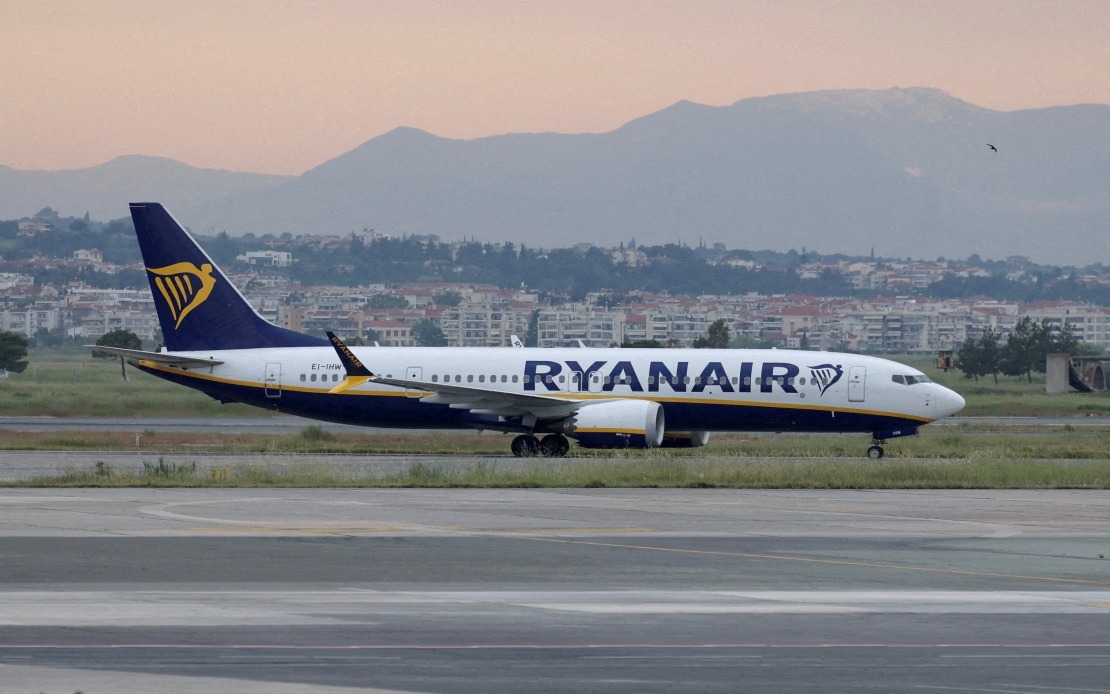
Terrifying moments unfolded aboard a Ryanair aircraft on Friday when a window panel abruptly fractured during its ascent from Thessaloniki, Greece, forcing an immediate diversion back to the departure airport. The incident aboard the flight bound for Memmingen in Bavaria brought sudden panic to passengers and crew as the structural failure exposed the vulnerability of aircraft cabins at altitude, highlighting rare but catastrophic risks inherent in modern commercial aviation.
Eyewitness accounts paint a disturbing picture of the moment the emergency unfolded. Travellers on the aircraft reported hearing a sudden, loud bang before witnessing the window pane disintegrate. The passenger positioned nearest to the damaged window suffered injuries in the incident, with one observer describing to Greek broadcaster ERT how the man's head and shoulders were protruding through the gaping opening, a scenario that would alarm any air traveller. The dramatic nature of the situation triggered immediate survival instincts among nearby passengers, who managed to physically extract their fellow traveller from the fractured aperture and pull him back into the cabin before the situation could deteriorate further.
The cabin environment transformed into chaos as standard emergency protocols activated automatically. Oxygen masks descended throughout the aircraft's interior as the pressurisation system responded to the structural breach, a visual signal that typically accompanied serious in-flight emergencies. Passenger testimonies captured the fear permeating the cabin, with many screaming as they grappled with the realisation that their aircraft had suffered a significant structural failure. Videos circulated on social media platforms documented the deployment of emergency equipment, providing rare visual documentation of the event as it unfolded.
Pilot professionalism proved instrumental in managing the crisis. Upon recognising the severity of the window fracture and its implications for aircraft integrity, the flight crew made the immediate decision to abort the journey towards Memmingen and initiate a return course to Thessaloniki Airport. This command decision prioritised passenger safety above all other considerations, despite the complications that an emergency return would entail for operations and the broader flight schedule. The return flight from the point of the incident back to the airport consumed approximately twenty minutes, suggesting the window failure occurred relatively soon after the aircraft achieved cruising altitude.
Emergency response teams mobilised rapidly upon the aircraft's return to Thessaloniki Airport. Medical personnel attended to the Serbian national who had sustained injuries from the window failure, transporting him immediately to a hospital facility in Thessaloniki for comprehensive medical assessment and treatment. The specific nature and severity of his injuries remained undisclosed in initial reports, though his condition appeared stable enough to facilitate ground transfer rather than requiring mid-flight medical diversion.
The aviation industry treats window failures as serious anomalies requiring thorough investigation. Aircraft windows consist of multiple panes designed with redundancy specifically to prevent situations where a single structural failure compromises cabin pressurisation. The fact that a single pane shattered represents a notable departure from normal operational parameters. Greek authorities initiated a formal investigation into the root cause of the fracture, an essential step in identifying whether the incident resulted from manufacturing defects, maintenance oversights, undetected material fatigue, or external damage accumulated during previous operations.
Ryanair and European aviation authorities maintained an initial public silence regarding the technical details and preliminary findings. Such measured communication reflects standard practice when incidents remain under investigation, preventing speculation that could prejudice the formal inquiry process. However, the absence of immediate official statements also left a communication vacuum, allowing passenger accounts and social media documentation to shape public perception of the emergency in real time.
For Malaysian and Southeast Asian travellers, incidents of this nature prompt consideration of broader aviation safety frameworks. European carriers and regulators operate under stringent oversight protocols, with mandatory maintenance schedules, component inspections, and certification requirements that exceed standards in many developing aviation markets. The Ryanair incident, despite its alarming appearance, demonstrates that even within highly regulated systems, anomalies can manifest. Pressure window components undergo accelerated ageing through repeated pressurisation and depressurisation cycles, particularly on aircraft operating high-frequency short-haul routes typical of Ryanair's business model.
The incident raises questions about maintenance intervals and component lifecycle management within the low-cost carrier sector. Budget airlines operate on compressed profit margins that incentivise operational efficiency, though European Union regulations prevent cost-cutting from extending to essential safety maintenance. The investigation findings will likely focus on whether the particular window installation had completed its approved service life or whether manufacturing defects existed that escaped quality control procedures during production.
Passenger behaviour during the emergency merits recognition, as the coordinated action by nearby travellers in physically retrieving their fellow passenger from the window opening almost certainly prevented a catastrophic outcome. Had the injured passenger fallen through the window opening or become further entangled, the consequences would have been irreversible. This incident underscores how trained crew response combined with passenger awareness and decisive action can mitigate outcomes when mechanical failures occur.
The broader implications for aircraft window design and inspection protocols will likely emerge as investigation findings surface. Modern aircraft windows employ laminated and tempered glass technology with pressure-resistant characteristics far exceeding what early aviation designs required. The Thessaloniki incident suggests that even contemporary engineering solutions may warrant additional scrutiny regarding failure modes that could create rapid decompression scenarios. European regulators will evaluate whether existing inspection intervals adequately detect material degradation or surface stress concentrations that could precipitate catastrophic fracture during flight operations.

