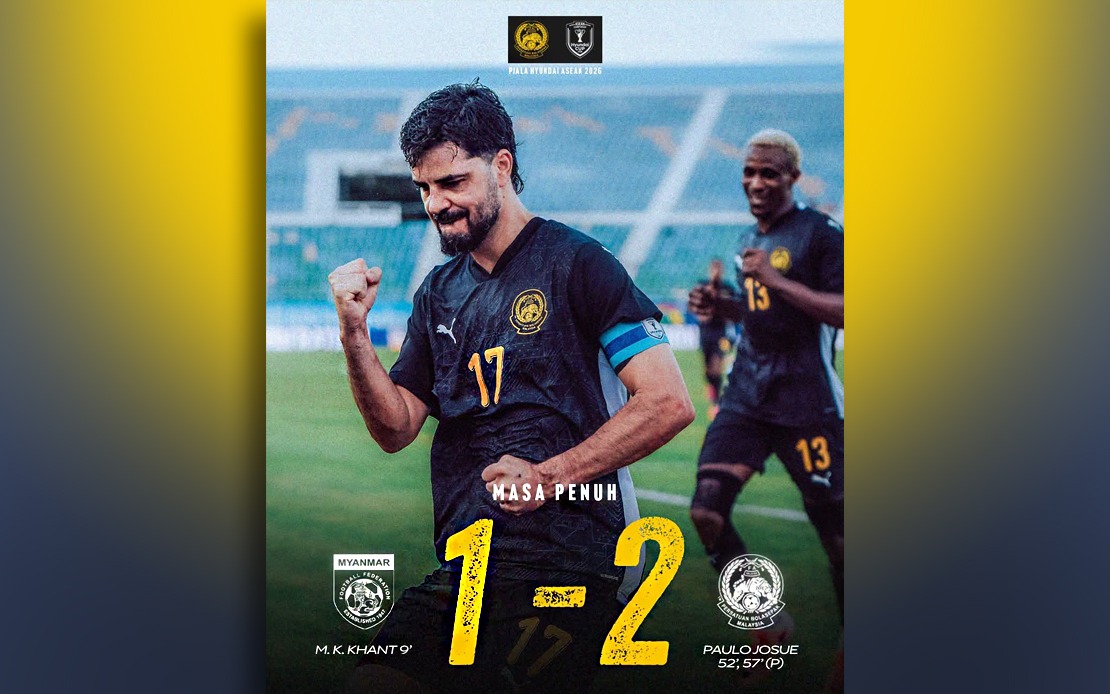
Malaysia has begun their quest to reclaim ASEAN Cup glory with an emphatic 2-1 victory over Myanmar in the Group B opener of the 2026 tournament, with captain Paulo Josue delivering a match-winning performance in Yangon. The result marks a promising start for Harimau Malaya under interim head coach Tan Cheng Hoe, positioning the team atop their group with maximum points and building momentum as the competition unfolds across Southeast Asia.
Played at the Thuwunna Stadium in Myanmar's capital, the encounter saw the hosts establish an early advantage when Myat Kaung Khant broke the deadlock in the 10th minute, handing Myanmar an unexpected lead. The goal forced Malaysia's coaching staff to recalibrate their tactical approach, prompting a reassessment of their midfield structure and defensive positioning. What followed was a determined Malaysian response, as the team worked methodically to regain control of the game's tempo and create meaningful opportunities in the attacking third.
Endrick Dos Santos, the naturalised player who has become central to Malaysia's attacking strategy, came closest to restoring parity as the first half progressed. In the 40th minute, the winger fashioned a clear opening but saw his effort thwarted by Myanmar goalkeeper Zin Nyi Nyi, who produced a crucial save to maintain his side's narrow advantage heading into the interval. The moment represented a turning point in Malaysia's attacking intent, demonstrating their capacity to generate chances against a resolute Myanmar defence.
The tactical adjustments made during the halftime break proved decisive, as Malaysia emerged for the second period with renewed purpose and greater attacking cohesion. The breakthrough arrived in the 52nd minute when Josue, combining technical prowess with composure, executed a left-footed strike that found the back of the net to equalise the contest at 1-1. The goal represented not merely a levelling of the scoreline but a psychological shift, injecting confidence into Malaysian ranks while simultaneously unsettling Myanmar's previously stable defensive structure.
Momentum swung decisively Malaysia's way five minutes later when Harimau Malaya winger Mohamadou Sumareh was brought down inside the penalty area, presenting an opportunity to seize the advantage. Josue accepted the responsibility from the spot with trademark composure, converting the penalty with precision to give Malaysia a 2-1 lead. The captain's second goal of the match underscored his importance to the team's attacking philosophy and his reliability in high-pressure situations, qualities essential for success in knockout football.
Myanmar mounted an aggressive response in the final stages, orchestrating wave after wave of attacking moves in search of an equaliser that would salvage a point from the contest. However, Malaysia's defensive organisation proved sufficiently resilient to withstand the onslaught, with the backline executing their assignments with discipline and tactical awareness. The visitors' ability to maintain their advantage under sustained pressure illustrated a maturity of approach that bodes well for deeper tournament progression.
The victory places Malaysia at the summit of Group B with three points and positions them favourably for advancement from what remains a competitive pool. Their upcoming fixtures include a meeting with Laos on July 28, followed by a pivotal encounter against Thailand on August 1, before concluding group-stage obligations against the Philippines on August 8. Each of these matches carries weight, as the tournament format rewards only the top two teams from each group with progression to the semi-finals.
The stakes surrounding this campaign are particularly acute given Malaysia's underwhelming performance in the previous ASEAN Cup edition, when the team exited prematurely during the group stage. That disappointment has created internal pressure to deliver silverware, a hunger accentuated by the absence of a championship triumph since 2010, a sixteen-year drought that has frustrated supporters and stakeholders alike. A strong showing across the group stage is therefore essential groundwork for any realistic push toward the tournament's latter stages.
For Malaysian football, this opening victory represents validation of the interim coaching arrangement and the players' commitment to the programme. The balance struck between defending resolutely and attacking purposefully demonstrated a tactical maturity that will be tested against more accomplished opponents in subsequent matches. As Harimau Malaya prepares for the rigours ahead, the captain's performance provides both confidence and a clear standard by which teammates must measure their individual contributions.

