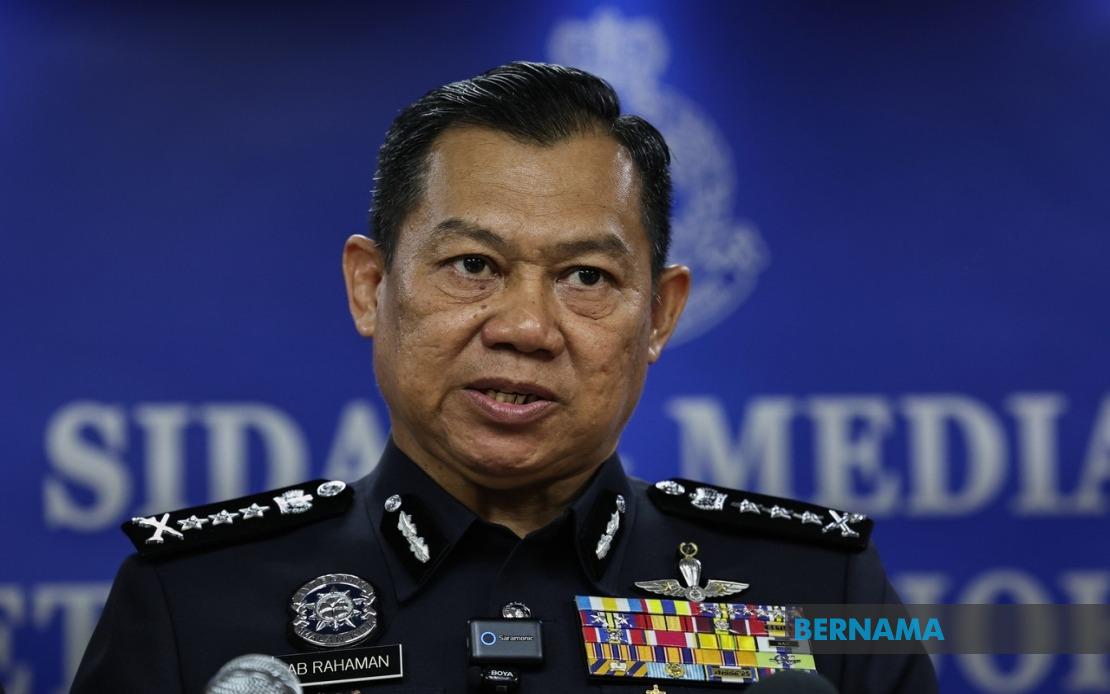
The Royal Malaysia Police has committed substantial resources to secure the forthcoming Johor State Election, announcing a deployment of 11,926 officers and personnel to manage security operations throughout the electoral process. Johor Police Chief Datuk Ab Rahaman Arsad outlined the comprehensive mobilisation strategy during a media briefing at the Johor Police Contingent Headquarters, underscoring the force's commitment to protecting both voters and the integrity of the democratic exercise.
The security operation will unfold across five distinct phases, each calibrated to address different challenges as the election progresses from nomination through polling day and result announcement. This phased deployment model allows the police to concentrate resources where they are most needed at each stage, optimising operational efficiency while maintaining readiness across the state. The Johor Police Contingent will continuously assess conditions on the ground and adjust personnel distribution according to emerging security requirements.
Beyond the core police establishment, the election security framework incorporates reinforcement from specialist units operating under the Internal Security and Public Order Department. These additional forces bring expertise in crowd management, rapid response capabilities, and tactical operations that complement regular police work. The coordination between different security agencies reflects growing sophistication in Malaysia's approach to election management, recognising that maintaining order during polls demands diverse skill sets and equipment.
The reinforcement contingent comprises 54 officers and 701 personnel drawn from the General Operations Force, a unit trained in rapid deployment and tactical interventions. The Federal Reserve Unit contributes specialised personnel for enhanced security tasks, while the PDRM Air Unit and Marine Police Force extend coverage to inaccessible or vulnerable locations. This multi-agency approach demonstrates how elections in Malaysia increasingly depend on integrated security frameworks rather than single-agency operations.
Johor's electoral significance warrants this scale of deployment. As one of Malaysia's largest and most economically important states, Johor elections carry substantial political weight and attract heightened public attention. The state's geographic diversity—spanning urban centres, rural constituencies, and coastal areas—necessitates flexible security arrangements capable of rapid redeployment. Election day itself typically witnesses peak security requirements, particularly in hotly contested constituencies where tensions may run higher.
The five-phase structure likely reflects standard election timelines in Malaysian practice. The early phases probably cover the nomination and campaign periods, when political rallies and public gatherings require monitoring. Middle phases address pre-election day preparations, including training for poll workers and securing voting premises. Final phases concentrate on election day itself and the immediate aftermath, when results announcement can occasionally spark unexpected security challenges. Each phase transition triggers reassessment of resource allocation.
The announcement reflects lessons learned from previous elections and evolving security challenges. Malaysian election management has progressively incorporated international best practices while adapting to local conditions. The scale of personnel deployment suggests police leadership views election security not merely as crowd control but as a comprehensive exercise encompassing prevention of electoral fraud, protection of polling stations, response to potential civil disorder, and safeguarding vulnerable groups.
For Malaysian voters, this deployment sends important signals about institutional readiness to protect democratic participation. The visible police presence around polling stations, while sometimes controversial, provides many citizens with confidence that their votes will be counted fairly and their safety ensured. However, election security deployments also raise questions about police impartiality and whether such visible force might inadvertently intimidate certain voter groups or serve partisan interests—concerns that election observers typically monitor closely.
Regionally, Malaysia's election security protocols receive attention from other Southeast Asian democracies navigating similar challenges. The coordination between police and specialist paramilitary units offers a model for nations struggling with election-related violence or instability. The emphasis on phased deployment and flexible resource management reflects contemporary understanding that electoral crises are rarely uniform but instead evolve and mutate across different stages.
The police commitment to operational flexibility, with explicit acknowledgment that deployments will adjust according to needs, suggests confidence in their intelligence-gathering capacity and field command structures. This approach contrasts with rigidly predetermined security plans that cannot adapt to unexpected developments. Johor police appear positioned to respond rapidly to emerging problems without requiring high-level central approval for tactical adjustments.
Implementation success will depend substantially on coordination quality between the Johor Police Contingent and the visiting units from federal agencies. Clear command structures, regular joint training, and pre-election rehearsals become essential when different agencies with varying standard operating procedures must function as integrated teams. Communication systems and shared operational protocols across the five phases require careful attention.
The 11,926-person deployment reflects investment levels that Malaysian authorities evidently consider necessary for elections in major states. This scale suggests recognition that credible elections demand adequate resourcing—an increasingly important consideration as electoral competition intensifies and stakes rise for competing political parties. The announcement also implicitly commits substantial police resources away from routine law enforcement, a tradeoff that state leadership has evidently deemed worthwhile for election integrity.

