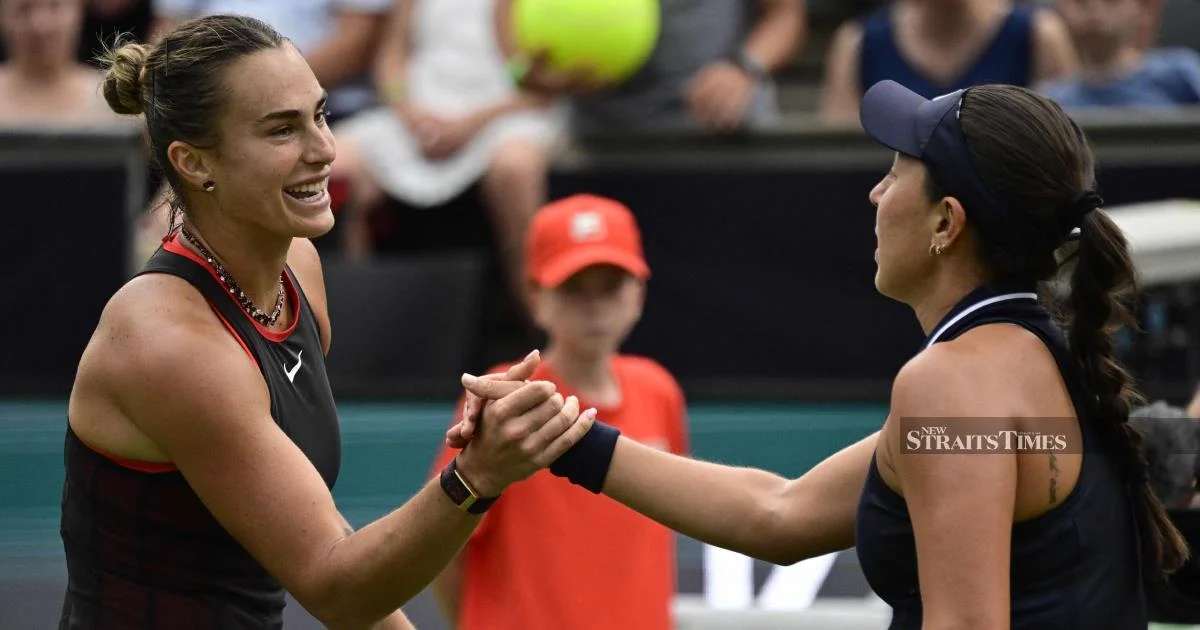
Jessica Pegula delivered a masterclass in grass-court tennis at Berlin's prestigious WTA tournament, dispatching world number one Aryna Sabalenka 6-2, 6-7 (4-7), 6-0 in a semifinal performance that showcased her capacity to compete against the tour's elite. The American's hard-fought victory represents a significant achievement, propelling her to the final of this venerable grass tournament for only the second time in her career.
Pegula's pathway through the opening set demonstrated her command of the grass surface, where serve-and-volley tactics and punishing groundstrokes proved devastatingly effective. She seized the advantage early and converted it into a one-set lead with clinical precision, suggesting she had identified crucial weaknesses in the reigning world champion's approach to play on grass. The 6-2 scoreline flattered neither player in particular but rather reflected Pegula's superior execution during pivotal moments when the stakes escalated.
The second set evolved into a tighter affair, with both competitors elevating their intensity and refining their tactical approach. Sabalenka, accustomed to dictating play through her powerful baseline game, found herself constrained by the quick surface and Pegula's intelligent shot placement. Though Sabalenka pushed the set toward a tiebreaker, Pegula maintained her composure under pressure, ultimately securing the set through the decisive points in the tiebreak competition where she prevailed 7-4.
The narrative shifted dramatically in the third and final set, where Pegula's confidence appeared to reach its zenith. Her opponent appeared to retreat mentally following the contested second set, unable to recover the rhythm and aggression required to challenge the American's sustained dominance. A shutout 6-0 third set sent Pegula toward the final while leaving observers with questions about Sabalenka's readiness on grass courts, a surface that seemingly neutralises her considerable advantages elsewhere on the professional calendar.
For Pegula, this triumph carries deeper significance beyond the immediate tournament implications. The 30-year-old American has worked deliberately to establish herself as a credible contender on grass, a surface historically dominated by players with distinctive baseline styles or aggressive serve-first approaches. Her success against the sport's most dominant player suggests the tactical evolution in her game is bearing fruit, particularly her willingness to attack aggressively rather than relying on defensive solidity.
Sabalenka's defeat serves as a reminder that dominance on hard courts and clay surfaces does not automatically translate to success on grass, where the ball skids through lower, serves gain less purchase, and extended rallies punish heavy-spin techniques. The Belarusian champion's struggles here continue a pattern observed across multiple grass-court seasons, indicating structural challenges in her play rather than temporary lapses in form or concentration.
The Berlin tournament itself holds significant standing within the women's professional circuit, offering ranking points and prize money that reflect its elite status. Reaching the final strengthens Pegula's positioning ahead of Wimbledon, grass-court tennis's most prestigious championship held at All England Club. A strong showing in Berlin could provide the momentum and confidence necessary to challenge established grass-court specialists when the circuit shifts to London later in the season.
Pegula's opponent in the final will emerge from the other semifinal, with implications for how the American approaches her tactical preparation. Whether facing another top-ranked player or a lower-seeded competitor, Pegula has demonstrated sufficient versatility and mental fortitude to mount a credible title challenge. Her improved grass-court credentials could reshape perceptions of her ceiling as a complete player rather than someone primarily effective on hard courts.
From a Southeast Asian perspective, Pegula's ascent within the women's game reflects the diversification of elite tennis talent beyond traditional powerhouses. The American represents a cohort of players whose success has been built through systematic improvement and adaptation rather than inherent physiological advantages. Her Berlin performance exemplifies how technical refinement and tactical innovation can overcome seemingly insurmountable differences in ranking and current form.

