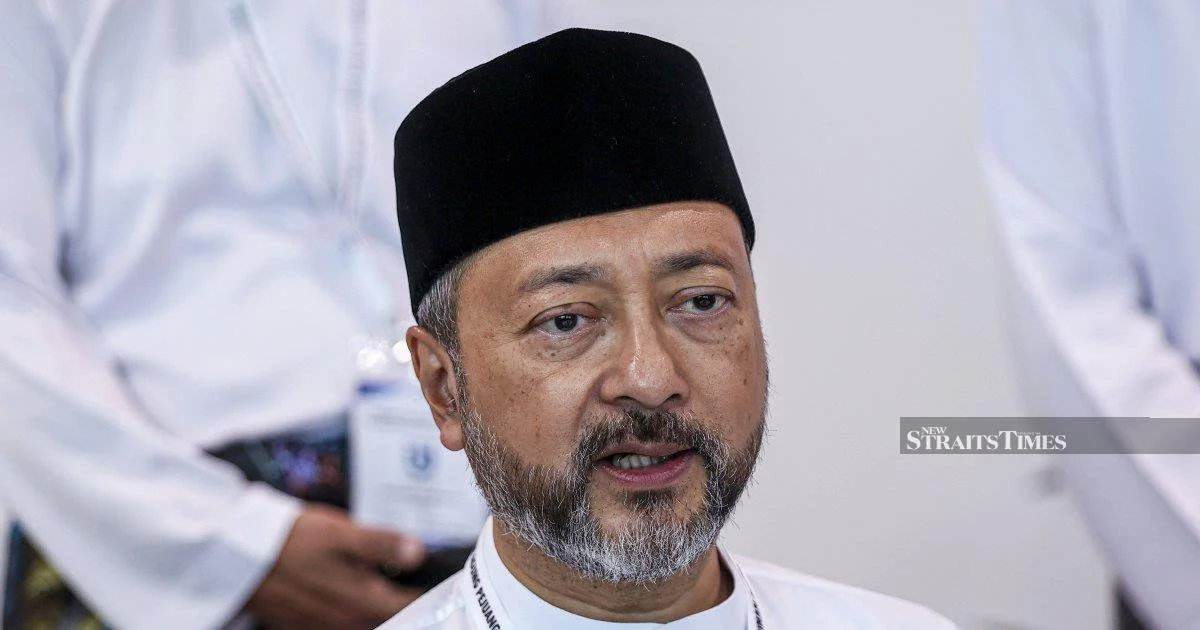
Parti Pejuang Tanah Air's formal admission into Perikatan Nasional represents far more than a simple merger of two political entities, according to the party's president Datuk Seri Mukhriz Mahathir. Rather, he characterised the development as the opening gambit in a significantly more ambitious undertaking to consolidate opposition forces and forge a coherent alternative to address the country's mounting institutional and economic difficulties.
The integration of Pejuang, which has been a marginal force in Malaysian politics despite its heavyweight backing and contemporary relevance, into the PN coalition signals a deliberate recalibration of opposition strategy. With PN already constituting the primary challenge to the federal government, the addition of Pejuang—though numerically modest in parliamentary terms—brings ideological diversity and renewed momentum to the bloc. Mukhriz's framing of the move as merely preliminary underscores the possibility of further political realignments in coming months.
Malaysia's political landscape has undergone dramatic shifts in recent years, with the 2022 emergence of PN under Muhyiddin Yassin fundamentally altering the traditional binary between Umno-led Barisan Nasional and the Pakatan Harapan opposition. The subsequent collapse of Pakatan unity after 2023's general election left the PN increasingly positioned as the main opposition force, though it has struggled to present a cohesive national vision. By welcoming Pejuang, the coalition seeks to broaden its appeal and demonstrate capacity for flexible coalition-building.
The timing of Pejuang's entry carries particular significance given Malaysia's escalating governance challenges. Rising cost of living pressures, perceived corruption within government institutions, and economic sluggishness have created space for opposition movements to gain traction. A consolidated opposition with clearer ideological positioning and broader demographic appeal could substantially complicate the government's strategic planning for the next electoral cycle. For Southeast Asian observers, such political consolidation typically precedes either transformative electoral outcomes or prolonged parliamentary gridlock.
Pejuang's own trajectory merits examination. Founded in 2020 by Mahathir and allies including Mukhriz himself as a vehicle for reformist politics, the party has never achieved breakthrough electoral success, winning only a handful of parliamentary seats. Its integration into PN therefore represents a pragmatic acknowledgment that independent viability remains elusive for smaller opposition parties competing against entrenched machines. This reflects broader regional trends wherein traditional party structures increasingly fragment, forcing politicians to seek protective coalitions.
For Malaysian business communities and foreign investors, political consolidation of this nature creates both opportunities and uncertainties. A stronger, more coherent opposition could potentially force the government to implement more transparent governance standards and economic reforms to retain voter confidence. Conversely, if opposition unity translates into a genuine electoral threat, incumbent forces may attempt legislative manoeuvres that increase short-term political tension. Regional economies typically benefit from stable, predictable governance rather than heightened partisan competition.
Mukhriz's invocation of addressing "growing national challenges" rather than purely partisan advantage suggests Pejuang and PN are attempting to frame their union in programmatic rather than merely opportunistic terms. This rhetorical approach matters significantly for attracting moderate voters fatigued by traditional Malaysian politics. Whether the coalition can sustain such messaging while managing inherent factional tensions within a multi-party structure remains an open question that will likely determine the coalition's electoral effectiveness.
The PN's composition has historically included ideologically heterogeneous components, from Muhyiddin's Bersatu to PAS with its religious conservatism to Sabah and Sarawak's regional parties. Pejuang's addition complicates this further, introducing explicitly technocratic and reformist elements. Managing such diversity while projecting unified governance capability represents PN's central strategic challenge. Whether Mukhriz's faction genuinely shapes coalition policy or remains peripheral will become evident through subsequent announcements regarding leadership roles and policy committees.
Regionally, Malaysia's opposition dynamics carry implications for ASEAN's largest opposition movement. Should PN successfully consolidate and present credible electoral challenge, it would parallel similar opposition realignments across Southeast Asia, from Thailand's fragmented pro-democracy coalitions to Indonesia's complex opposition dynamics. The success or failure of such consolidations influences democratic vitality across the broader region.
The practical implications for ordinary Malaysians extend beyond parliamentary arithmetic. A more unified opposition with clearer policy platforms might facilitate more substantive election-period discourse around specific economic remedies, anti-corruption commitments, and welfare provisions. Current Malaysian politics often devolves into personality-driven narratives rather than programmatic competition. If Pejuang's entry catalyses more policy-focused opposition positioning, the electorate arguably gains from heightened democratic contestation.
Moving forward, observers should monitor whether Mukhriz's broader unity rhetoric translates into concrete coalition expansion. The statement's carefully calibrated language—suggesting additional alignments remain possible—indicates PN leadership recognises that political mathematics still favour consolidated opposition in a fragmented electoral environment. Further high-profile party admissions or coordination agreements would confirm whether this represents genuine structural realignment or merely tactical repositioning before an anticipated electoral contest that likely remains several years distant.

