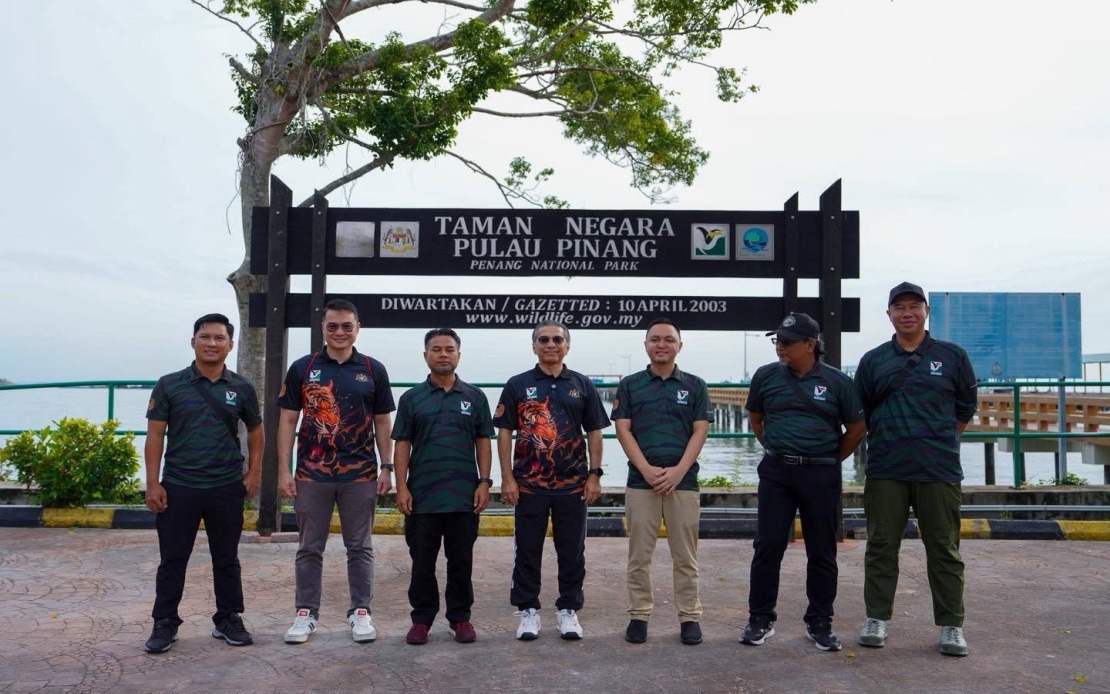
Penang's approach to protecting one of Malaysia's most ecologically significant sites is undergoing a transformation that places communities at the centre of biodiversity conservation, according to visiting federal officials. Deputy Minister of Natural Resources and Environmental Sustainability Syed Ibrahim Syed Noh stressed that preserving the distinctive natural environment of Penang National Park in Teluk Bahang extends far beyond fencing off forests and wildlife; instead, it demands that ordinary Malaysians become active custodians of their own ecological heritage. This philosophical shift marks a broader recognition that conservation cannot succeed through top-down mandates alone, but requires grassroots participation and genuine public investment in nature's survival.
The 2,560-hectare Penang National Park represents a microcosm of Southeast Asian biodiversity, combining terrestrial rainforests, mangrove-fringed coastlines, native wildlife sanctuaries and the unusual meromictic lake—a body of water that maintains distinct saltwater and freshwater layers without mixing. During a recent inspection tour, Syed Ibrahim walked through the various zones of the park to assess how the Penang Department of Wildlife and National Parks (PERHILITAN) is managing these interconnected ecosystems. The meromictic lake alone illustrates why the park demands sophisticated management; its unusual chemistry creates microhabitats that support species found nowhere else in Malaysia, making its preservation a national scientific priority. Yet the mere existence of protective regulations means little if communities nearby view the park as an off-limits wilderness or as an obstacle to their livelihoods.
One of the most visible conservation efforts on Penang's coast involves marine turtle protection, a cause with immediate relevance to Southeast Asian environmental concerns. At Kerachut Beach, the Turtle Conservation Centre—operated jointly with the Department of Fisheries Malaysia—manages breeding and nesting programmes for Green Turtles and Olive Ridley Turtles, both species under severe pressure from illegal poaching, coastal development and fishing nets across the region. These turtles migrate thousands of kilometres across Southeast Asian waters, meaning that conservation success at Kerachut ultimately depends on coordinated efforts across multiple countries and fishing communities. The centre demonstrates that protection cannot remain isolated; it must connect local actions to regional migration patterns and international marine conservation standards.
Beyond species-specific programmes, Syed Ibrahim identified education as the cornerstone of sustainable conservation in the modern era. He observed interactive biodiversity learning initiatives at Entopia Penang, where visitors encounter living butterflies and insects within a controlled environment designed to illustrate ecological relationships. These educational centres serve a psychological function that traditional nature reserves sometimes miss: they transform biodiversity from an abstract concept into something tangible and personally meaningful. When schoolchildren and families witness the intricate life cycles of butterflies or understand how forest structure supports wildlife diversity, they develop emotional connections to conservation that transcend arguments about environmental policy or governmental mandates.
The integration of responsible ecotourism into conservation strategy represents another critical dimension of Penang's evolving approach. Rather than viewing tourism as an inherent threat to nature, authorities are exploring how well-regulated visitor access can become a financial incentive for protection. Ecotourism generates income that can fund park management, provide employment to local communities and create constituencies invested in the park's long-term viability. This is particularly important in Malaysian contexts where rural populations depend on natural resources; conservation becomes economically viable only when it offers tangible benefits beyond enforcement and restrictions. A farmer or fisherman living adjacent to Penang National Park is more likely to support its protection if ecotourism brings direct income or employment opportunities than if the park is perceived solely as a government-imposed limitation.
Syed Ibrahim's emphasis on grounding conservation in "realities on the ground" reflects frustration that sometimes accompanies well-intentioned but disconnected environmental policy. Federal conservation strategies can fail when they neglect local knowledge, overlook community concerns or impose solutions without understanding the socio-economic dynamics of particular areas. Penang's situation involves balancing the commercial pressures of a densely populated, economically dynamic state with the ecological imperative to preserve globally significant ecosystems. This tension is not unique to Penang; it mirrors challenges across Southeast Asia where rapid urbanisation and development compete with conservation imperatives.
The concept of ecological heritage also carries temporal significance beyond individual lifespans. Syed Ibrahim articulated a guardianship philosophy—that present generations hold natural assets in trust for future Malaysians who have no voice in current decisions. This framing shifts conservation from a charitable undertaking into a moral obligation, one rooted in recognising that today's species losses and ecosystem degradation impose irreversible costs on descendant generations. This is especially consequential in Malaysia, where rapid habitat conversion over recent decades has already eliminated populations of large mammals and transformed entire forest ecosystems into plantations or urban zones.
Penang National Park's combination of features—the intact rainforest, meromictic lake, turtle nesting beaches and accessible educational facilities—creates unusual opportunities for demonstrating integrated conservation. Few Malaysian protected areas simultaneously offer such scientific, ecological and educational value in proximity to a major population centre. The park therefore serves as a living classroom for broader Southeast Asian conservation philosophy, testing whether communities can genuinely embrace biodiversity protection when education and economic benefits are built into the conservation framework.
For Malaysian and regional policymakers observing Penang's initiatives, the underlying lesson involves recognising that conservation success increasingly depends on social factors as much as biological ones. Protected areas fail when communities view them as external impositions; they thrive when local residents develop genuine stakes in their preservation. This requires investments in education, equitable benefit-sharing from ecotourism, meaningful community consultation in management decisions and recognition that the knowledge of indigenous and long-resident communities often holds practical conservation insights that external experts lack. Penang's approach of combining hands-on field conservation, public education and regulated tourism access offers a replicable model for other Southeast Asian states facing similar pressures between development and preservation.

