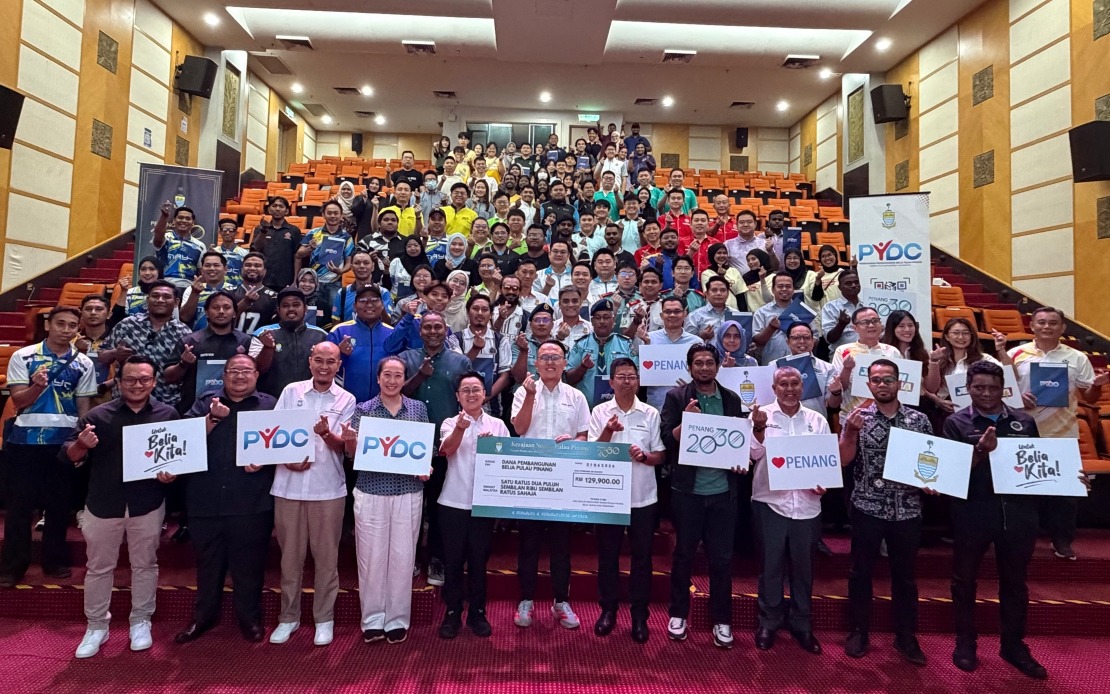
The Penang state government has greenlit financial support totalling RM129,900 for youth-led initiatives this year, marking a significant commitment to nurturing the next generation of community leaders and innovators. This allocation represents part of a broader RM200,000 youth development strategy approved during a State Executive Council meeting, demonstrating the state's recognition that investing in young people yields tangible returns for social cohesion and economic dynamism.
Chairman of the Penang Youth, Sports and Health Committee Daniel Gooi Zi Sen outlined the breadth of this initiative, revealing that the funds will enable 48 youth associations to roll out 68 distinct programmes across the state. Rather than scattering resources thinly, the selection process appears to have prioritised projects with clear objectives spanning multiple dimensions of youth development, from vocational skills acquisition to civic engagement and personal transformation.
The thematic focus of these programmes underscores a nuanced understanding of youth aspirations in contemporary Malaysia. By concentrating on skills development, marketability, volunteerism, and leadership training, Penang is tackling the persistent gap between what young people learn in formal education and what employers and civil society actually require. This alignment with real-world needs makes the fund more than symbolic; it addresses bottlenecks that keep talented youth from reaching their potential.
Gooi's framing of the allocation as "a form of trust" rather than mere financial aid carries important psychological weight. By positioning participating associations as stewards of a shared vision rather than passive recipients of patronage, the Penang government establishes a relationship built on mutual accountability. This approach encourages organisations to think beyond disbursing money and towards catalysing genuine behavioural and social change within their constituencies.
The emphasis on integrity, transparency, and efficient management in fund utilisation reflects lessons learned from previous development initiatives across Malaysia and the region. Youth programmes frequently struggle when governance structures are weak or when organisers prioritise activity counts over quality outcomes. By setting clear expectations upfront, Penang is attempting to circumvent such pitfalls and ensure that every ringgit translates into measurable benefits.
What distinguishes this funding model is its insistence that success transcends mere programme completion. Gooi explicitly cautioned against measuring impact solely by the number of workshops held or participants enrolled; instead, he advocated for assessing the lasting influence on individual participants and their broader communities. This reflects growing recognition among Malaysian policymakers that youth development is not a checkbox exercise but an investment in social capital that compounds over years and decades.
For organisations across Malaysia looking to strengthen youth initiatives, Penang's framework offers a template worth studying. By coupling financial support with clear evaluation metrics, the state creates incentive structures that reward genuine impact rather than superficial activity. This approach could serve as a model for other states seeking to maximise the effectiveness of their own youth budgets, particularly in an era when resources remain constrained and accountability demands are rising.
The 48 associations selected to benefit from this allocation likely represent a cross-section of Penang's youth sector, spanning student bodies, sports clubs, community development NGOs, and skills-training organisations. The diversity of organisational types suggests that the fund is designed to catalyse activity across multiple pathways, allowing young people to find entry points that match their interests and circumstances. This pluralistic approach avoids concentrating influence in any single type of organisation, thereby democratising access to development resources.
From a regional perspective, Penang's investment in youth development aligns with broader Southeast Asian trends emphasising human capital as a competitive advantage. As economies across the region grapple with automation and changing labour markets, programmes that equip young people with adaptability, technical competence, and civic consciousness become increasingly vital. States that lead in this arena position themselves to retain talented youth and foster resilient communities less vulnerable to social fragmentation.
The timing of this allocation, announced mid-year, allows organisations to plan and launch programmes while still capturing meaningful participant cohorts before year-end. This pragmatic scheduling suggests that the Penang government understands the operational realities facing youth organisations and has designed the fund cycle to maximise actual implementation rather than creating artificial deadlines that force rushed execution.
Moving forward, the real measure of this initiative's success will emerge not in press releases but in the stories of young people whose lives are tangibly altered by the programmes these 48 associations deliver. Whether a participant gains a marketable skill, develops leadership confidence, or discovers a passion for community service, these individual transformations will collectively determine whether Penang's RM129,900 investment yields the social returns the state envisages. As other Malaysian jurisdictions monitor outcomes, this fund may well become a reference point in debates about how to optimally deploy limited resources to unlock youth potential.

