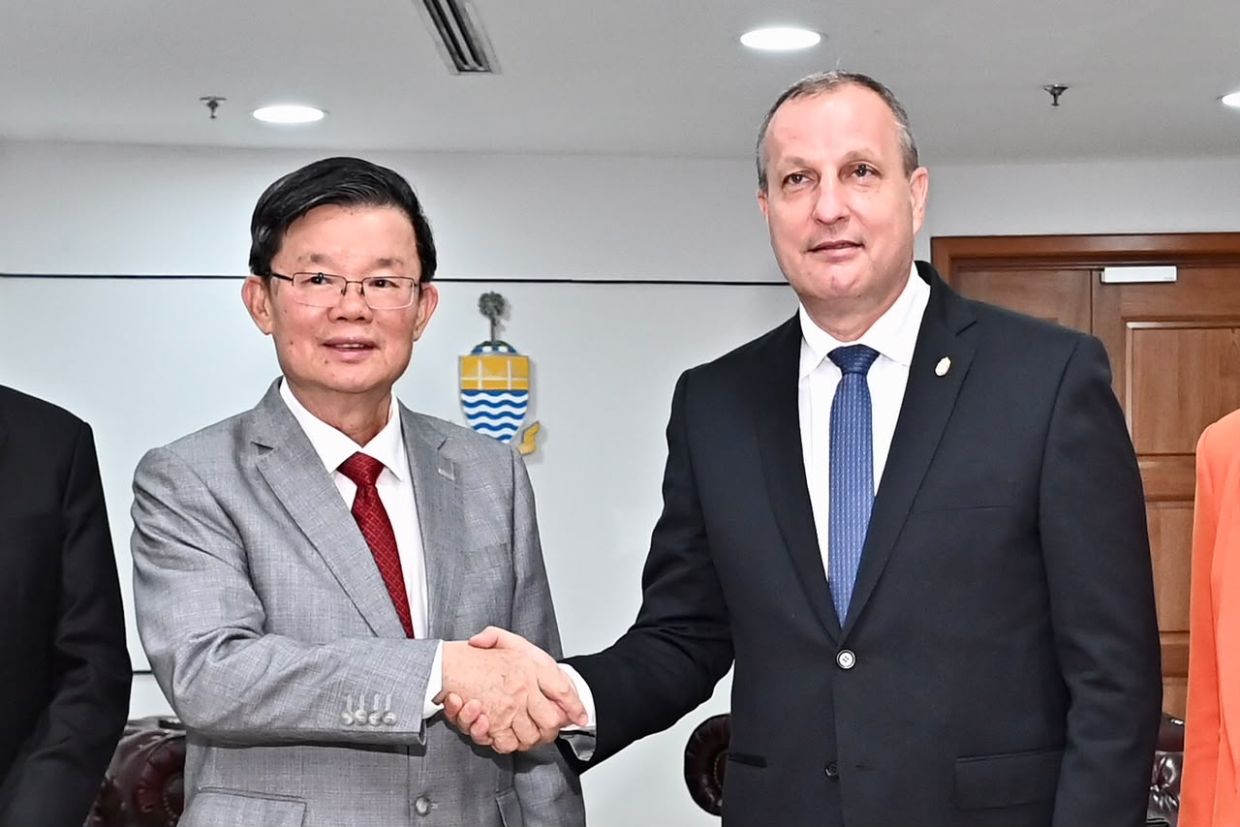
Penang's leadership has signalled its intention to establish a comprehensive partnership with Hungary, covering sectors ranging from higher education and technological advancement to environmental sustainability and cultural preservation. The commitment emerged from discussions between state officials and a delegation led by Hungarian Ambassador to Malaysia Dr Sándor Sipos, representing a deliberate effort to tap European expertise in areas where both regions face common challenges and opportunities.
Chief Minister Chow Kon Yeow characterised Hungary as a significant European nation with deep knowledge and proven capabilities across multiple domains relevant to Penang's development priorities. His remarks underscored a strategic calculus: by engaging with established European players, Penang can access technical knowledge, research partnerships and talent pools that complement domestic capabilities. The breadth of topics explored during the visit—encompassing heritage conservation, higher education, trade, water management, renewable energy, tourism and cultural dialogue—suggests an attempt to move beyond traditional bilateral relationships toward an integrated economic and social partnership.
Water security and management emerged as a particular area of interest. Hungary's experience in managing water resources across Central Europe, including challenges related to shared river systems and changing precipitation patterns, holds relevance for a Malaysian state increasingly conscious of urban water demand and climate variability. Similarly, green technology cooperation taps into Hungary's renewable energy sector and environmental innovation capabilities, aligning with Penang's own sustainability commitments and Southeast Asia's broader energy transition agenda.
The education dimension carries immediate practical significance. Hungary currently makes available 40 fully funded scholarship places annually for Malaysian students, a programme that Chow acknowledged as valuable for nurturing talent and creating human bridges between nations. For Penang specifically, these scholarships represent opportunities for young people to gain exposure to European research practices and bring those insights back to the state. The ambassador indicated enthusiasm for increasing Penang's share of these awards, suggesting room for expansion if demand and applications justify additional places.
Higher education cooperation extends beyond individual scholarships. The discussions explicitly explored opportunities for institutional linkages between Hungarian and Penang-based universities, joint research initiatives, and knowledge transfer in fields where Hungarian expertise is recognised. Central Europe's strong traditions in mathematics, engineering and environmental sciences could particularly benefit Malaysian institutions seeking to strengthen research outputs and international rankings. Such arrangements often create feedback loops, wherein collaborative research attracts further investment and talent to partner institutions.
State executive councillors Goh Choon Aik and Gooi Zi Sen engaged separately with the Hungarian delegation on complementary issues. Their discussions broadened the scope beyond government-to-government dialogue to encompass community engagement, youth development and sports cooperation. The interest in sports collaboration reflects a broader recognition that athletic exchange programmes can serve diplomatic and soft-power functions whilst developing local sporting talent. Gooi's proposal to have the Penang State Sports Council investigate suitable disciplines for bilateral sporting cooperation suggests a methodical approach, avoiding commitments in areas where cultural fit or mutual advantage is unclear.
From Hungary's perspective, deepening engagement with Penang and Malaysia more broadly reflects strategic positioning in Southeast Asia. As European nations compete for influence in the region, fostering educational and economic ties creates constituencies favouring closer relations. For a Central European country seeking to diversify partnerships beyond the European Union, Malaysia represents access to ASEAN markets and networks. The scholarship programme, whilst modest in absolute numbers, serves as a soft-power instrument generating goodwill and familiarising future Malaysian leaders with Hungarian perspectives.
For Penang, the partnership aligns with the state's positioning as a technology and innovation hub. The mention of technological innovation cooperation suggests potential collaboration in sectors where Hungary has competitive strengths—manufacturing, information technology, renewable energy equipment—that could complement Penang's existing industrial base. Such partnerships can attract foreign investment, as companies seeking regional bases often prefer locations with established networks and talent pipelines to their home countries.
The emphasis on heritage conservation indicates mutual recognition of shared challenges in balancing development with cultural preservation. Penang's Georgetown heritage area and Hungary's historic cities face similar pressures from modernisation and tourism. Technical exchanges on heritage management, restoration techniques and tourism development that respects historical integrity could benefit both regions. This dimension also appeals to cultural pride and local community stakeholders often influential in state-level politics.
Chow's optimism about translating discussions into concrete projects reflects the iterative nature of bilateral relations. Initial high-level meetings establish political will and broad frameworks; subsequent technical-level discussions identify specific collaboration mechanisms. Success depends on identifying projects with clear mutual benefit, sufficient financing, and institutional champions on both sides willing to navigate bureaucratic and logistical complexities.
For Malaysian policymakers, the Penang-Hungary partnership exemplifies a pragmatic approach to international engagement: identifying specific European nations with relevant expertise, establishing multiple channels of contact beyond traditional diplomatic routes, and seeking partnerships that simultaneously serve economic development, talent development and soft-power objectives. As Southeast Asia navigates competing influences from major powers, smaller partnerships with medium-sized nations like Hungary can provide technical benefits without the geopolitical complications of great-power alignments.
The partnership's longer-term implications depend on implementation capacity and commitment from both sides. Early successes in education exchange and research cooperation could build momentum for larger initiatives. Conversely, if discussions remain largely ceremonial without translating into funded projects and sustained institutional engagement, enthusiasm may fade. The involvement of state-level councillors alongside the chief minister suggests broad-based support, improving prospects for follow-through, though execution ultimately requires dedicated resources and sustained political attention.

