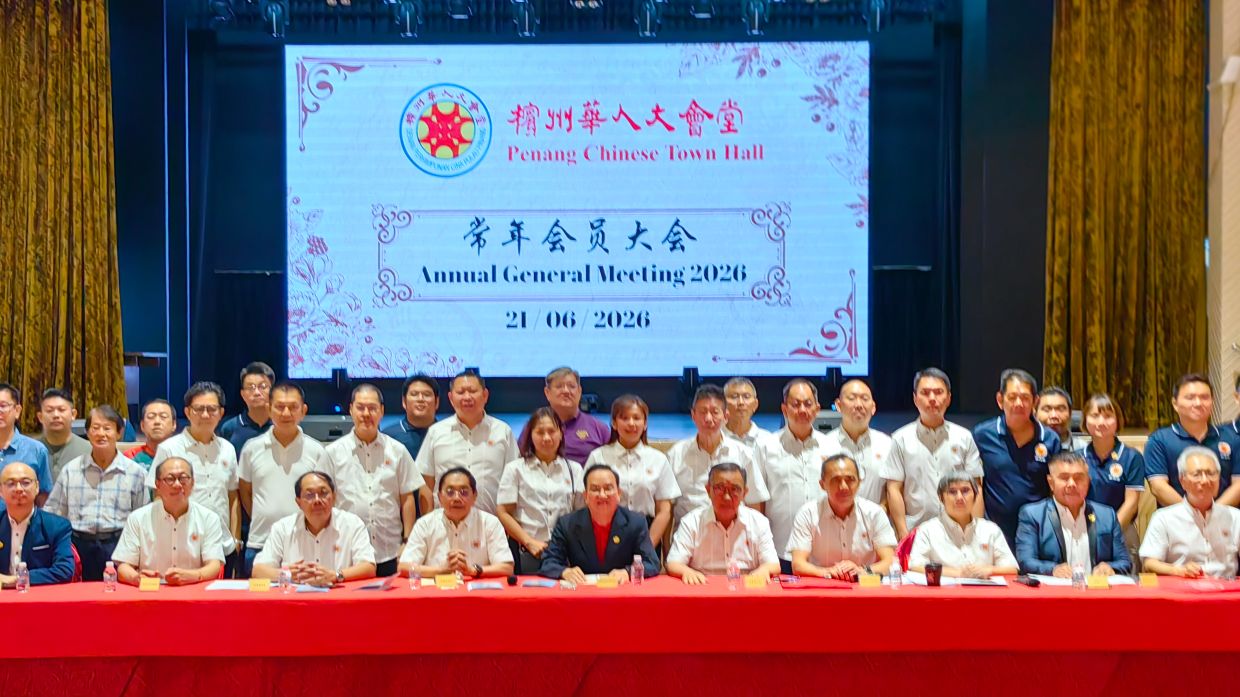
Penang Chinese Town Hall has concluded its 2025 financial year in modest positive territory, tallying RM12.61mil in total revenue against expenditure of RM12.55mil to produce a surplus of RM59,191. The outcome, revealed at the organisation's annual general meeting on June 21 and attended by approximately 200 members, underscores PCTH's continued role as a significant community institution in Malaysia's northern region.
Donations represent the lifeblood of PCTH's operations, furnishing RM11.24mil of the year's total intake—nearly 89 percent of revenues. Supplementing this core income stream are rental and maintenance fees contributing RM439,671, auditorium rental generating RM361,245, and anniversary-related income of RM222,498. This composition reveals how community organisations in Malaysia often depend substantially on philanthropic support alongside modest revenue from facilities and events.
On the expenditure side, donations distributed to charitable causes and community initiatives commanded the largest share at RM11.12mil, representing approximately 88.6 percent of total spending. This figure marks a notable decline from RM12.35mil in the prior year, suggesting either stricter allocation discipline or reduced external demands for support during 2025. Personnel costs increased marginally, with salaries and allowances rising to RM502,625 from RM452,761 in 2024—a roughly 11 percent increase that reflects wage adjustments and possibly expanded staffing.
Tan Sri Prof Tan Khoon Hai, PCTH's chairman, leveraged the gathering to address broader civic concerns, particularly the electoral landscape facing Malaysia this year. With Johor and Negri Sembilan scheduled to conduct state elections, Tan emphasised the necessity for voters to approach the ballot box with careful deliberation rather than reflexive loyalty. His remarks carry particular resonance given Malaysia's ongoing efforts to strengthen democratic participation and institutional trust, especially among younger voters who remain critical to electoral outcomes across the country.
Tan's message centred on the interconnection between local elections and national trajectory. Rather than viewing state polls as isolated contests over parochial interests, he characterised electoral decisions as foundational moments shaping the nation's economic trajectory, social cohesion and unity among its diverse communities. This framing aligns with contemporary debates across Southeast Asia regarding the stakes inherent in regional electoral processes and the consequences of voter apathy or uninformed choices.
Beyond electoral advocacy, Tan highlighted PCTH's substantial capital investment in upgrading its Ping Zhang Hall. The renovated facility now incorporates professional-grade sound, lighting and LED infrastructure alongside expanded spatial capacity and modern amenities. These enhancements position the venue competitively within Penang's events market, addressing demand from corporate clients, professional associations and charitable organisations seeking sophisticated settings for functions ranging from dinners to conferences.
More significantly, PCTH is positioning itself at the forefront of regional technology cooperation by co-organising the 2026 China-Asean Artificial Intelligence Cooperation Forum scheduled for Penang in November. This initiative capitalises on Penang's established credentials as a high-technology manufacturing hub—a status earned through decades of semiconductor, electronics and electrical goods production that earned the state comparisons to Silicon Valley. The forum will convene artificial intelligence experts, industry leaders and business representatives from across China and Asean nations to examine emerging AI technologies, sectoral applications and commercial opportunities.
The timing and venue selection underscore Penang's strategic positioning within Asia's technology ecosystem. As AI applications proliferate across manufacturing, finance, logistics and public administration throughout Southeast Asia, jurisdictions that establish themselves as regional knowledge centres and networking hubs gain competitive advantages in attracting talent, investment and high-value enterprises. For Malaysia specifically, Penang's involvement in such forums strengthens the nation's profile within broader Asian technology governance discussions and creates platforms for Malaysian experts and entrepreneurs to engage with regional counterparts.
Tan's invitation for PCTH members with relevant expertise to participate in the AI forum reflects recognition that regional technological advancement increasingly depends on decentralised networks of skilled professionals rather than top-down government initiatives alone. Community organisations, business associations and cultural institutions increasingly serve as convening spaces where cross-border collaboration germinating at grassroots levels generates momentum that eventually attracts formal attention from policymakers and investors.
The combination of modest financial stability, infrastructure modernisation and technological engagement evident in PCTH's 2025 report illustrates how established Malaysian community institutions are adapting to contemporary priorities. Rather than remaining static repositories of cultural heritage, organisations like PCTH are integrating technology cooperation, democratic participation and modern facilities management into their mission frameworks. This evolution positions such bodies as bridges between Malaysia's historical institutional structures and its emerging role in regional innovation ecosystems.
For stakeholders monitoring Penang's economic development trajectory, PCTH's activities signal the state's continued commitment to diversifying beyond manufacturing alone. The convergence of legacy industries, tourism infrastructure and emerging technology sectors creates conditions where regional forums on artificial intelligence become catalysts for competitive advantage. As Asean nations race to develop indigenous AI capabilities rather than depending entirely on foreign technological imports, platforms enabling regional knowledge exchange and cross-border partnerships acquire strategic importance extending well beyond their nominal organisational boundaries.

