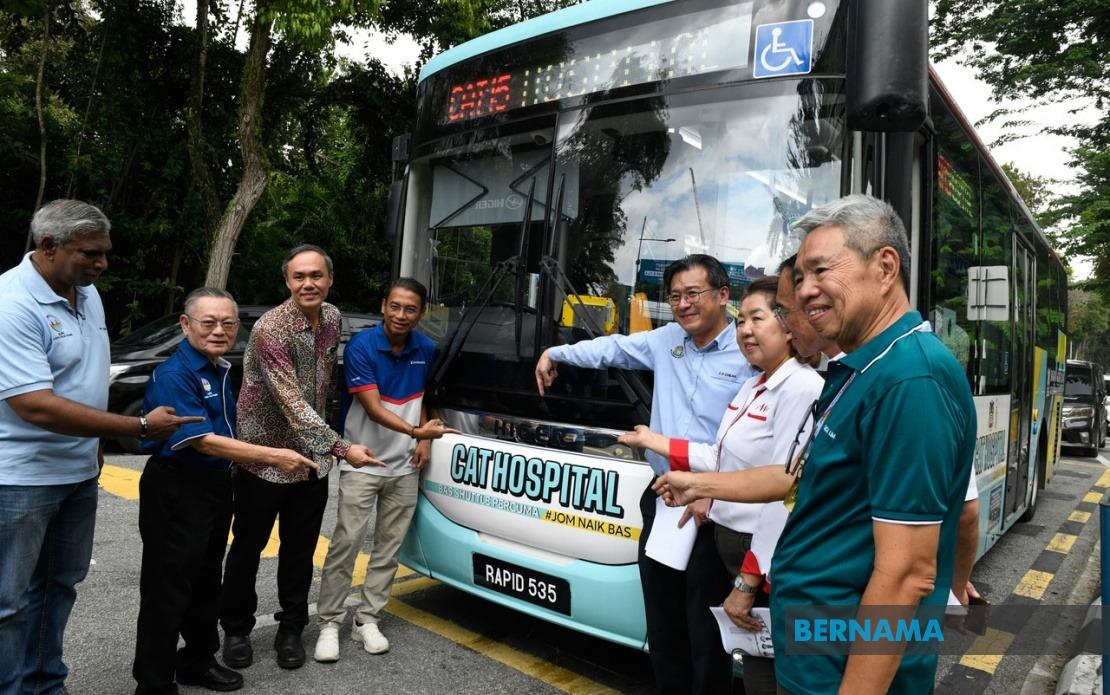
The Penang Island City Council (MBPP) has made a significant investment in public health accessibility by committing RM900,000 annually to operate the Central Area Transit (CAT) shuttle bus service. This initiative connects the administrative hub at Komtar with Penang Hospital, three private medical institutions, and other healthcare facilities concentrated in the city centre, reflecting a strategic approach to integrating public transport with essential services.
The decision to allocate substantial resources to this service emerged from practical concerns identified during Penang Hospital's expansion project. When the hospital undertook its major development work, planners recognised that existing transportation infrastructure would prove inadequate to handle the anticipated increase in patient visits and staff movements. Parking constraints around the hospital area had already become acute, making free public transport an attractive solution to manage traffic flow while simultaneously improving access for vulnerable users including patients, elderly visitors, and family members accompanying those seeking treatment.
Operating under the oversight of MBPP Engineering Director Cheah Chin Kooi, the service launched on January 1 this year and has demonstrated encouraging uptake. The initial passenger count of approximately 300 daily riders has nearly doubled to around 600, indicating that residents genuinely value free, convenient access to healthcare. This growth trajectory suggests that investment in targeted public transport solutions addressing specific mobility challenges can yield measurable behavioural change among urban residents.
The operational mechanics reflect efficient planning. Three Rapid Penang buses service the eight-kilometre route between 6 am and 8 pm daily, departing at 20-minute intervals to ensure reliable frequency. This schedule covers typical hospital visit times while minimising operational inefficiency. The buses make 36 trips daily across the network, transforming what might have been multiple individual private journeys into consolidated public transit movements that reduce overall traffic volume in an already congested area.
Beyond the immediate benefits of improved healthcare access, the MBPP initiative addresses several interconnected urban planning challenges. Traffic congestion around the hospital disrupts broader city centre circulation patterns, affecting commercial activity and resident quality of life. By channelling visitors toward designated bus stops rather than individual vehicles, the council reduces competition for limited parking spaces and smooths traffic flow for emergency vehicles requiring rapid hospital access. These operational improvements carry measurable economic value even before considering health equity benefits.
The service design demonstrates thoughtful integration with existing city infrastructure. The route deliberately connects to Komtar, Penang's central administrative and commercial landmark, leveraging an established transit hub. This positioning allows potential passengers already accessing other Komtar services to seamlessly extend their journey to healthcare facilities without additional inconvenience. The walkway improvements along Jalan Residensi and ongoing enhancements to the main entrance on Jalan Utama signal coordinated infrastructure development supporting the bus service's effectiveness.
From a regional perspective, Penang's initiative warrants attention from other Malaysian municipal authorities managing similar challenges. As healthcare facilities expand and urban populations age, demand for accessible medical services rises inexorably. The Penang example demonstrates that targeted subsidisation of public transport addressing healthcare accessibility can be cost-effective compared to alternative interventions. The RM900,000 annual expenditure represents a deliberate policy choice prioritising equity and congestion management over revenue maximisation, a stance increasingly necessary as cities balance competing demands on scarce public space.
The involvement of Rapid Bus Sdn Bhd Northern Region head Mohd Amir Abd Halim alongside hospital leadership and development authorities underscores the cross-sector coordination required for such services. Public transport operators, healthcare administrators, and municipal authorities must align operational requirements and financial arrangements. The presence of Penang Women's Development Corporation chief executive officer Datuk Ong Bee Leng hints at deliberate attention to gender considerations in transport accessibility, reflecting recognition that women disproportionately use public transport and often provide unpaid care responsibilities requiring flexible healthcare access.
The service launch timing on January 1 appears deliberately symbolic, marking a fresh institutional commitment to integrated urban planning. Penang Hospital director Dr Goh Hin Kwang's engagement with complementary infrastructure improvements suggests hospital management views accessibility as central to institutional mission beyond clinical service delivery. This alignment between healthcare institutions and municipal transport planning represents sophisticated urban governance, though such coordination remains comparatively rare across Malaysian cities.
Looking forward, the sustained patronage trajectory will determine whether this funding commitment expands or stabilises. If ridership continues rising at current rates, capacity constraints may necessitate additional buses or adjusted schedules. Conversely, if growth plateaus, the service may achieve operational equilibrium at current resource levels. Either scenario validates the initial decision to invest, as the service has demonstrably moved from aspirational planning to functional implementation serving real transportation demand.
For Malaysian policymakers observing this initiative, the Penang case illustrates how municipal innovation in public health access need not await federal coordination. Operating within their jurisdictional remit, local councils can identify specific accessibility barriers and deploy targeted solutions. This bottom-up approach allows experimentation and rapid iteration impossible in more centralised planning frameworks. As healthcare systems across Malaysia experience similar pressures from ageing populations and expanding hospital capacity, other regions may profitably examine the CAT model's applicability within their own geographic and budgetary contexts.

