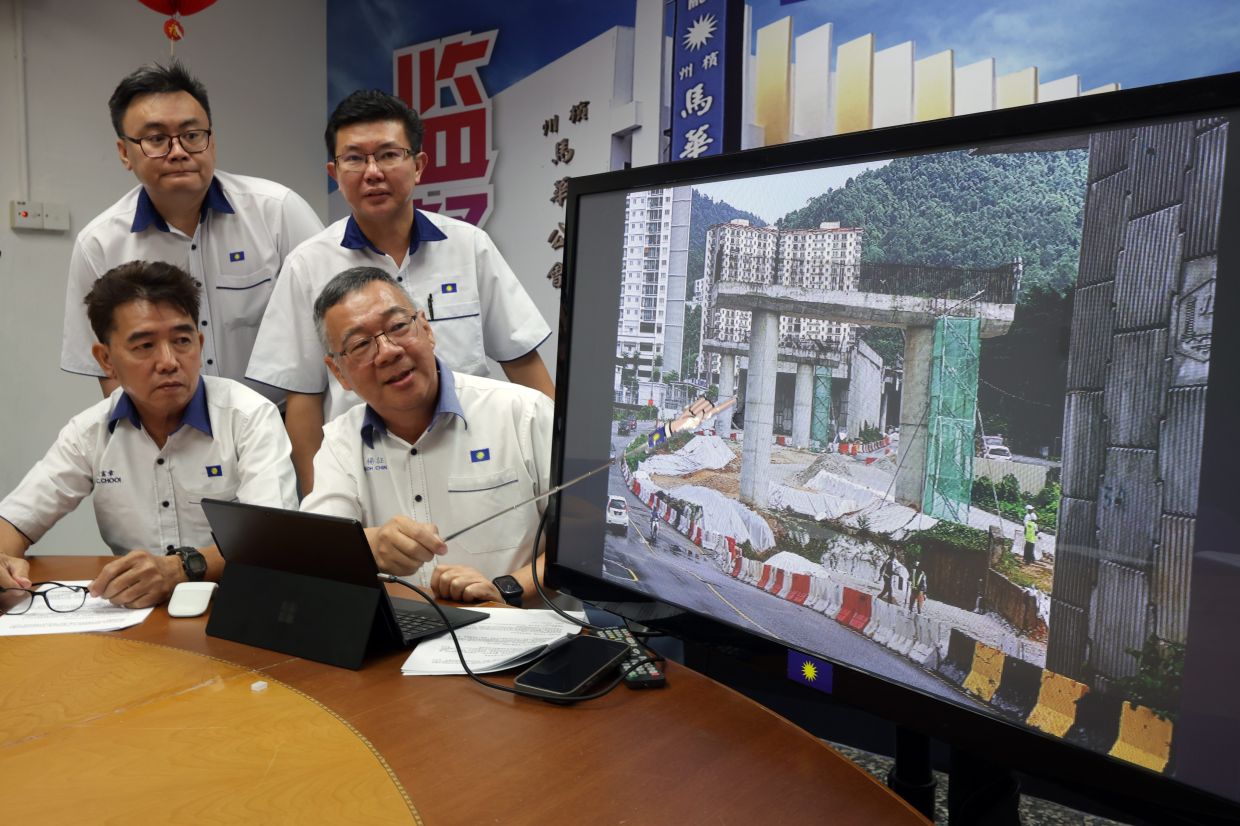
The Penang chapter of the Malaysian Chinese Association has escalated pressure on the state government over the troubled Air Itam-Tun Dr Lim Chong Eu Expressway bypass project, asserting that public accountability rather than excuses about construction delays should be the primary concern. The call comes as completion claims by authorities face mounting contradiction from ground inspections, with the opposition party demanding immediate disclosure of payment records, consultant certification reports, and comprehensive project assessment documents.
Penang MCA secretary Yeoh Chin Kah framed the dispute as fundamentally about restoring public trust in governance rather than merely addressing schedule slippages. The party's inspection conducted on July 1 documented significant incomplete work across multiple critical sections, including Valley Road, Changkat Tembaga, and Jalan Thean Teik. The findings paint a picture at odds with official progress claims, revealing exposed bridge piers without decking structures, unfinished road surfacing, and missing safety infrastructure such as guardrails and noise barriers across numerous segments.
The discrepancy between reported completion levels and actual on-site conditions has created a credibility gap. The state government previously characterised the project as entering its "final sprint" phase, yet quantifiable progress figures tell a more modest story—advancing from 80% in May to 89% in December. Yeoh contended that these incremental gains, when measured against the substantial outstanding construction work visible to independent observers, do not logically support the stated completion percentage. The absence of bridge beams and deck structures, combined with incomplete mechanical and electrical installations, suggests completion timelines may require further extension beyond official expectations.
The 6-kilometre toll-free bypass represents a crucial component of Penang's broader infrastructure modernisation strategy, specifically forming Package Two of the undersea tunnel and paired roads initiative. Once operational, the expressway is projected to serve approximately 300,000 residents across Air Itam, Bandar Baru Air Itam, and Paya Terubong by providing direct connectivity between Lebuhraya Thean Teik and the main expressway through a combination of elevated viaducts, tunnels, and surface roads. The project's prolonged timeline carries real implications for regional traffic patterns and economic productivity in these densely populated constituencies.
The bypass has already experienced two deadline extensions since its original 2024 completion target, with authorities now setting April 12, 2027 as the revised opening date. This trajectory raises questions about project management oversight and contractor accountability mechanisms that have proven inadequate in preventing successive delays. For Malaysian readers familiar with similar infrastructure undertakings across the country, the pattern reflects broader structural challenges in large-scale construction project delivery, where initial schedules frequently underestimate complexity and cost implications.
Yeoh has issued an ultimatum requiring response within seven days, with escalation procedures already prepared. Should the state government decline to provide the requested documentation, Penang MCA intends to lodge formal complaints with both the National Audit Department and the Malaysian Anti-Corruption Commission. Additionally, the party will establish a dedicated monitoring committee to track future progress claims and payment transactions, effectively placing independent oversight mechanisms alongside official project management. This institutional response signals that the dispute extends beyond partisan political scoring to systemic governance concerns.
Contradicting MCA's assessment, Paya Terubong assemblyman Wong Hon Wai maintains that current progress stands at 91% and construction remains aligned with the April 2027 deadline. Wong claims the contractor provided assurances during a June 30 construction team meeting, with specific milestones identified for the coming months. According to his account, twelve bridge beams on the Gelugor side are scheduled for launching between July and August, while six additional beams will follow in the fourth quarter. This detailed timeline contrasts sharply with the incomplete conditions documented during the MCA inspection, suggesting either significant work acceleration has occurred since early July or substantial disagreement exists regarding what constitutes genuine project advancement.
Wong acknowledged that bridge beams on the Bandar Baru Air Itam side have already been installed, but importantly clarified that roadway activation would not automatically follow construction completion. The actual public opening date depends on completion of deck slab and parapet works, followed by mandatory Road Safety Audits conducted by relevant government agencies. The Public Works Department will subsequently determine the opening timeline based on audit findings. This explanation addresses part of the apparent contradiction, as structural completion and public accessibility represent distinct phases, though it does not fully reconcile the visual evidence of incomplete work against stated percentage figures.
The bypass project's troubled history reflects broader infrastructure delivery challenges affecting Southeast Asian countries attempting rapid urban modernisation. Malaysia, alongside regional peers, has grappled with cost overruns, schedule slippages, and accountability gaps in major construction initiatives. The Penang case gains particular significance as an example of how political stakeholders can effectively challenge official narratives through documented site investigations and transparent escalation procedures. This pattern may influence how state governments and federal agencies approach project transparency in future infrastructure announcements.
For Malaysian citizens and investors monitoring Penang's development trajectory, the standoff highlights the importance of independent verification mechanisms for major public works claims. The state's infrastructure competitiveness depends not merely on project completion but on demonstrated governance capacity to deliver transparent, accountable, and timely project execution. As Southeast Asia competes for regional economic positioning, public confidence in infrastructure quality and management becomes increasingly central to attracting investment and human capital.
The broader context includes Penang's ambitious transportation network expansion intended to address chronic congestion affecting the northern corridor's economic productivity. The undersea tunnel project represents a marquee initiative, making transparency regarding its component projects essential for maintaining public support for future infrastructure bonds and development expenditures. Both the state government and opposition parties recognise that credibility surrounding project costs, timelines, and actual progress determines whether citizens will accept toll mechanisms, congestion pricing, or additional funding mechanisms needed for subsequent phases of regional development.

