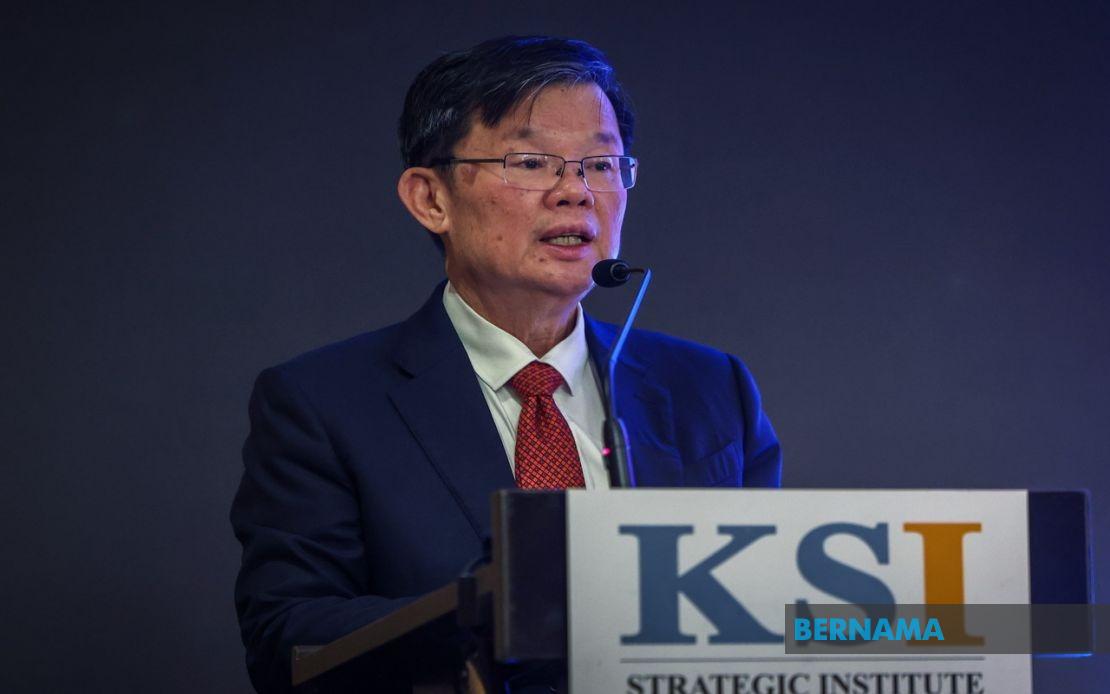
Penang Pakatan Harapan intends to increase the number of women candidates contesting in its next state election, yet party leadership acknowledges a fundamental obstacle: identifying and securing enough qualified women willing to stand for office. Chow Kon Yeow, who chairs the coalition and serves as Chief Minister, outlined this ambition while addressing the World Women Economic and Business Summit 2026 in George Town on June 15, emphasising that while the aspiration remains firm, practical constraints will determine actual candidate numbers.
The 30 per cent representation target, established nationally in 2009, remains unfulfilled across Malaysia nearly two decades later. Current statistics underscore the persistent gender gap in elected office: women make up only 13.5 per cent of Members of Parliament and 12 per cent of state assemblypersons nationwide. These figures highlight how far the country lags from its stated objective, a reality that extends to Penang despite the state's relative economic development and educational advancement. For Malaysian readers watching gender parity debates, these numbers demonstrate the structural nature of the problem rather than individual limitations.
Chow acknowledged that women have made substantial inroads in numerous professional spheres—education, business, engineering, and civil service roles demonstrate female capability and ambition. Yet political participation operates under different pressures. The transition from professional success to electoral candidacy involves distinct challenges that deter qualified women from entering the political arena. These pressures range from heightened public scrutiny, family considerations, and the demanding nature of campaign activities to perceptions about viability and voter receptiveness. Understanding these barriers matters for Southeast Asian nations grappling with similar representation gaps.
Penang Pakatan Harapan claims proactive commitment to the 30 per cent goal, yet the party faces a critical pipeline problem. During candidate selection processes, insufficient numbers of women come forward, limiting the coalition's ability to choose among candidates. This supply-side issue proves more intractable than simple policy directives. Party officials must work upstream—not merely at the selection stage but in cultivating political interest, confidence, and readiness among potential female candidates long before nomination windows open. The shortage reflects broader cultural attitudes toward women's political participation rather than deficiencies in female capability.
Chow pressed for institutional solutions that might address these constraints. He urged political parties to embed the 30 per cent target into formal candidate selection procedures, transforming aspirational rhetoric into binding protocol. Institutionalisation creates accountability: rather than treating women's candidacy as an optional consideration, parties would operate under structured requirements. This approach has proven effective in other democracies where legislative or party-level quotas have accelerated female representation. For Malaysia's political parties, adopting such mechanisms would signal genuine commitment beyond ceremonial statements.
Beyond candidate selection itself, Chow identified several complementary measures necessary for meaningful progress. Political parties should ensure women receive equitable representation on decision-making committees—the forums where strategy, policy, and resource allocation occur. Female participation in these spaces matters not only for symbolic inclusion but because women's perspectives on policy priorities and implementation often differ from male-dominated committees. Additionally, emerging women leaders require strengthened access to mentoring and institutional resources. These investments build political confidence and competence, making candidacy more feasible for women who might otherwise view political entry as prohibitively risky.
The timing of this discourse coincides with Malaysian politics navigating broader debates about representation and institutional reform. Penang, as a state governed by Pakatan Harapan and home to relatively progressive constituencies, carries significance as a testing ground for women's political advancement. How successfully Penang increases female candidacy and subsequently female representation will influence whether other state-level coalitions adopt similar strategies. The state's experience could offer practical lessons about whether institutional changes genuinely expand female participation or merely shuffle existing candidates.
Chow's framing reveals tensions within contemporary Malaysian political discourse. Party leaders articulate commitment to the 30 per cent target while simultaneously emphasising that structural constraints—insufficient willing candidates—impede rapid progress. This narrative, while containing truth, also reflects the reality that political parties have thus far invested limited resources into systematically developing and encouraging women candidates. If parties made cultivation of female political talent a strategic priority equivalent to other organisational objectives, the supply of suitable candidates would likely increase substantially.
For Malaysian women considering political involvement, Penang Pakatan Harapan's transparent acknowledgement of challenges carries mixed implications. On one hand, the party's honesty about selection difficulties suggests realistic assessment rather than manufactured promises. On the other hand, insufficient action to develop candidate pipelines means interested women may continue encountering barriers. The gap between 13.5 per cent national female parliamentary representation and the 30 per cent target requires not only rhetorical commitment but sustained investment in women's political development across all major coalitions.
The broader Southeast Asian context matters here. Several regional democracies have implemented quota systems with measurable success in advancing female representation. Thailand, for instance, introduced constitutional requirements affecting women's candidacy. Indonesia's 30 per cent quota, legislated in 2008, drove increased female parliamentary numbers, though implementation challenges persist. Malaysia's reliance on voluntary party commitments rather than legal requirements places responsibility on individual coalitions to prioritise women's advancement. Whether Penang Pakatan Harapan and competing coalitions accept this responsibility will determine whether Malaysia finally closes the representation gap established over a decade ago.