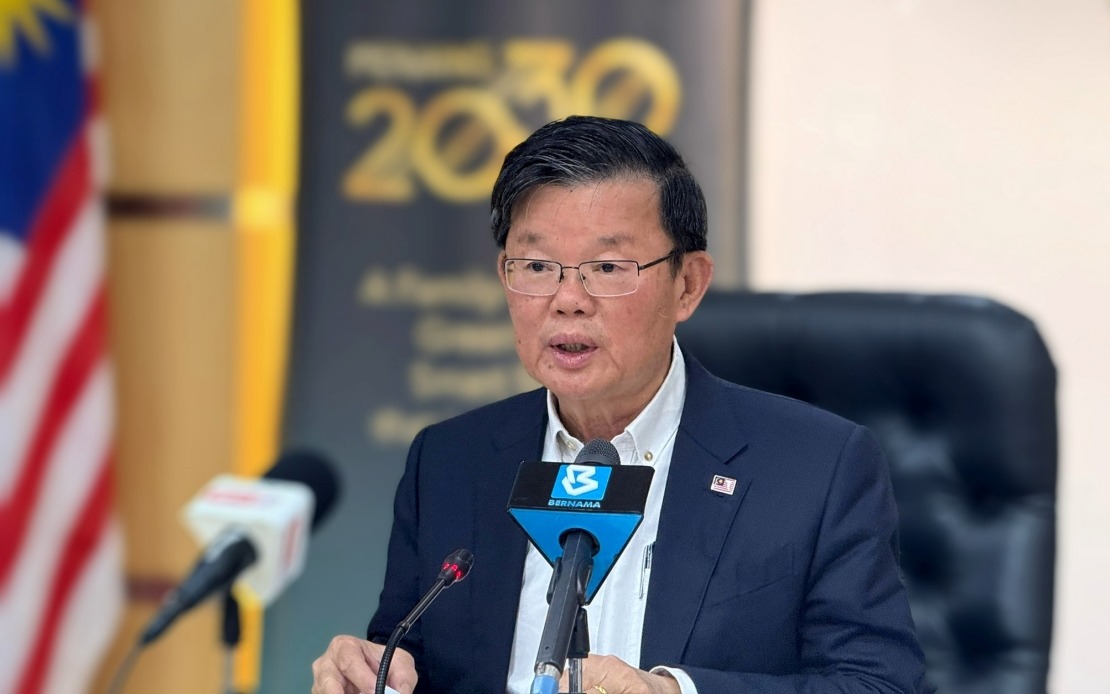
Pakatan Harapan's Penang chapter is moving into high gear with preparations for the next general election, with party chairman Chow Kon Yeow directing all subcommittees to hold meetings and submit detailed progress reports by early August. The comprehensive review signals the coalition's determination to refine its political machinery and respond to evolving electoral dynamics in the state, following its dominant performance in the 2023 Penang state election.
Chow, who simultaneously serves as Penang Chief Minister, outlined an ambitious approach to strengthening the coalition's competitive position. The process will involve systematic examination of multiple operational dimensions, from grassroots organisation to policy messaging, with explicit attention to correcting deficiencies while capitalising on proven advantages. This methodical self-assessment reflects mature coalition governance and suggests internal confidence despite the fluid nature of Malaysian politics.
The coalition leadership is actively soliciting external input to complement internal analysis. Chow emphasised that Pakatan Harapan welcomes constructive criticism and suggestions from various quarters, recognising that electoral success depends on continuously refining campaign approaches and organisational capacity. This openness to feedback distinguishes the party's current phase from more rigid political operations, potentially signalling a commitment to responsive governance and voter engagement.
The 2023 Penang state election results provide substantial foundation for the coalition's confidence. Pakatan Harapan and Barisan Nasional jointly secured 29 of the 40 contested seats through their Unity Government arrangement, a supermajority that gave the coalition comfortable control of state governance. Within this framework, the Democratic Action Party dominated with all 19 of its contested seats, while Parti Keadilan Rakyat captured seven seats and Amanah secured one, demonstrating strong performance across the coalition's component parties.
Barisan Nasional's two seats within the Unity Government arrangement added further stability to the state administration. This power-sharing structure between historically opposed political blocs represented a significant shift in Malaysian political architecture, particularly relevant for Penang given its traditionally competitive electoral landscape. The continued cohesion of this arrangement remains strategically important for both coalitions operating within it.
Chow's assurance regarding Unity Government stability carries significant weight for state administration and investor confidence. He reported that inter-party cooperation remains smooth, with no substantive friction emerging between coalition partners or signals of major strategic repositioning. Maintaining this equilibrium becomes increasingly important as national political manoeuvres intensify and individual parties contemplate their positioning for federal-level contests.
The timing of August reporting reflects strategic calculation about election readiness. By establishing concrete progress benchmarks three to four months before potential election announcements, the coalition creates accountability mechanisms within party structures while maintaining flexibility regarding actual election timing. This approach balances preparation momentum with organisational agility, acknowledging that Malaysian elections operate within constitutional timeframes that allow for late scheduling decisions.
For Malaysian and Southeast Asian political observers, Penang represents a crucial test case for unity government effectiveness. The state's history as a competitive battleground between different political forces makes its current governance arrangement noteworthy. Success in maintaining both internal coalition stability and external electoral competitiveness would provide valuable lessons about whether Malaysia's recent unity government experiments constitute durable political innovation or temporary arrangements of convenience.
Penang's strategic importance extends beyond state boundaries. As the most developed state on the western peninsula's coast and a major economic contributor, political instability or governance failures would carry broader ramifications. The coalition's attention to systematic preparation reflects understanding that complacency could jeopardise the 2023 election mandate, particularly given how Malaysian electoral dynamics can shift rapidly through political realignment.
The emphasis on strategy refinement also addresses emerging voter sentiments that appear more demanding of performance-based governance than previously observed. Coalition parties recognise that maintaining voter confidence requires demonstrable improvements in service delivery, anti-corruption efforts, and economic management. Generic campaigns focused purely on coalition loyalty prove increasingly insufficient in contexts where electorate expectations have evolved.
Chow's leadership in coordinating this preparatory process reinforces his position as the coalition's Penang anchor. His dual role as party chairman and state chief executive provides unified direction across political and administrative functions, potentially reducing coordination difficulties that plague multi-party arrangements. However, this concentration also creates accountability pressures, as coalition performance becomes increasingly attributable to his stewardship.
The subcommittee reporting framework suggests sophisticated internal organisation. Rather than monolithic decision-making, the coalition appears to operate through specialised units addressing different electoral, organisational, and policy dimensions. This structural approach enables more granular assessment of strengths and weaknesses than broad-brush evaluations permit, potentially allowing more targeted resource allocation and strategic adjustment.
As general election timing remains uncertain but approaches, Penang's coalition demonstrates the practical work underlying electoral preparation. Beyond public rallies and campaign announcements, sustained attention to organisational capacity, strategic coherence, and inter-party coordination determines whether political coalitions effectively translate existing advantages into electoral success. The August reporting deadline establishes concrete accountability for these essential groundwork activities.

