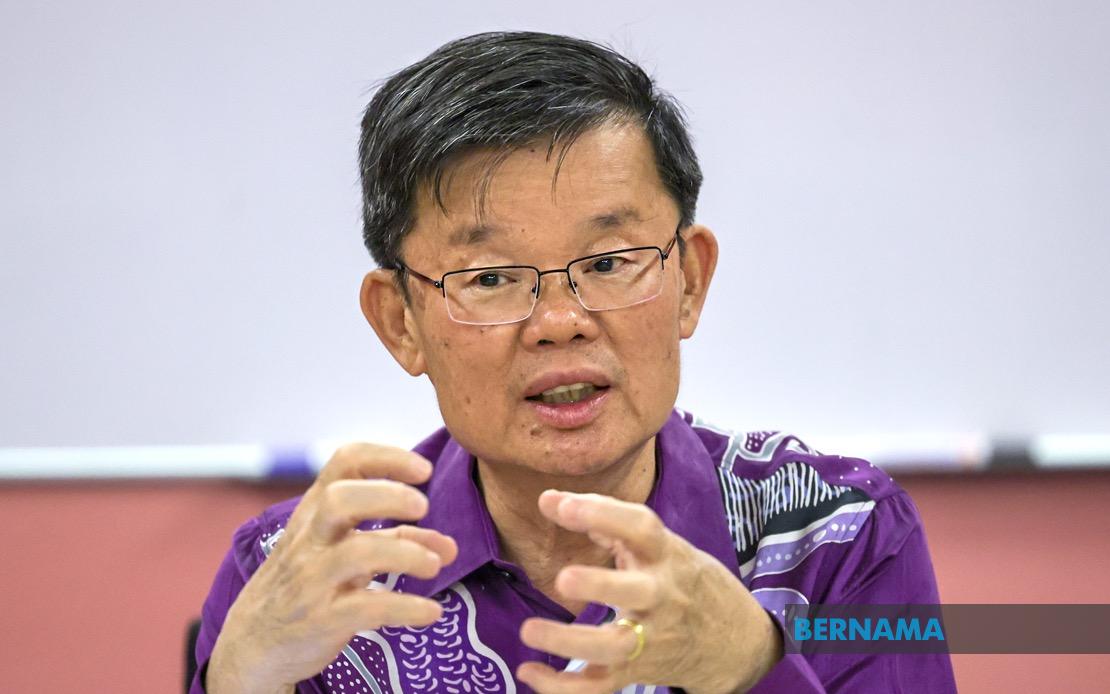
Penang Pakatan Harapan has affirmed its decision to maintain the Barisan Nasional state executive councillor as part of the administration through the next general election. Chief Minister Chow Kon Yeow announced the commitment following a coalition meeting in George Town, explaining that the decision flows directly from the electoral pact forged between PH and BN during the 2023 state election.
The retained position belongs to Datuk Rashidi Zinol, who chairs the State Rural Development, Agrotechnology and Food Security Committee. His continuation in the exco signals that despite broader political shifts at the national level, Penang's government remains structured around the Unity Government framework that emerged from the last state polls. This arrangement provides institutional stability at a time when coalitions across Malaysia face constant internal pressure and realignment.
Chow emphasised that the decision reflects confidence in the current cooperative arrangement and desire to strengthen it further. He told reporters that the PH leadership believes adequate scope exists to deepen coordination among coalition partners and push forward the reform initiatives that form the philosophical core of PH's political project. The statement suggests that far from being a temporary or grudging concession, the BN presence in the exco is viewed as a positive feature of the administration.
The Penang PH meeting also reflected on recent electoral contests in other states to extract lessons applicable to the upcoming general election. Results from Johor and Negeri Sembilan state polls apparently prompted serious internal analysis, with the coalition committing to granular examination of every state seat before the general election campaign intensifies. This methodical approach indicates recognition that complacency poses genuine risks to PH's Penang stronghold.
Chow acknowledged that the coalition must actively strengthen its political messaging by candidly confronting its own shortcomings rather than relying solely on its achievements. The administration intends to amplify its presence on digital platforms where electoral narratives increasingly take shape, recognising that traditional media outreach alone no longer suffices in contemporary politics. The coalition has also identified the Undi18 voter segment—citizens who came of age after the 2018 watershed election—as a demographic requiring targeted engagement and policy attention.
The Penang administration points to several governance achievements underpinning its electoral case. State stability, administrative integrity, economic expansion, successful foreign investment attraction, job creation, and people-centric policy implementation form the centrepiece of PH's pitch to voters. These tangible outputs represent the actual substance behind coalition claims, distinguishing rhetorical appeals from demonstrated capacity to govern effectively.
Yet Chow tempered optimism with a realistic assessment of political dynamics. He cautioned that public sentiment shifts at velocities often disconnected from factual changes, meaning even genuine accomplishments may fail to translate into political capital if poorly communicated or overshadowed by external events. This observation reflects hard-won understanding that governance competence, while necessary, remains insufficient without effective persuasion.
The 2023 state election established the current configuration decisively. Pakatan Harapan and Barisan Nasional together secured 29 of 40 contested seats, creating the supermajority required for the Unity Government arrangement. DAP's sweep of all 19 seats it contested provided PH's foundation, supplemented by PKR's seven wins and Amanah's single seat, while BN contributed two additional members. This distribution explains both PH's dominance in the administration and the political rationale for retaining BN representation.
Retaining the BN executive councillor until the 16th general election carries strategic implications for Southeast Asian coalition politics. Malaysia's complex multi-level federalism means state governments function as testing grounds for national political arrangements. Penang's sustained PH-BN cooperation, despite national-level tensions, demonstrates that pragmatic alliances can endure when grounded in clear electoral mandates and shared governance objectives. This model, whether successful or ultimately strained, informs how other Malaysian states and regional democracies approach post-election coalition building.
The decision also reflects calculus about electoral competition at the state level versus national politics. Chow's emphasis on coalition strengthening suggests that PH leadership views maintaining BN goodwill in Penang as worthwhile insurance against unpredictable national political developments. Should the national landscape shift dramatically before the general election, a stable state government providing experienced administration becomes valuable regardless of which coalition emerges nationally dominant.
For Malaysian voters, particularly in Penang, the commitment to retain the BN councillor signals institutional continuity. Administrative disruption from ministerial reshuffles creates inefficiency and can damage development initiatives, so maintaining experienced exco members—even from different parties—may provide genuine governance benefits. The PH coalition appears betting that voters will reward administrative stability and policy outcomes more than they punish cross-party cooperation at state level.
Moving forward, Penang PH faces the genuine challenge of translating stated commitments into electoral performance. The coalition's frank acknowledgment of potential complacency and need for stronger digital engagement suggests awareness that maintaining dominance requires active effort. How effectively the administration executes its reform agenda and communicates achievements to voters—particularly Undi18 groups unfamiliar with pre-2018 Malaysian politics—will determine whether the current arrangement survives the 16th general election intact.

