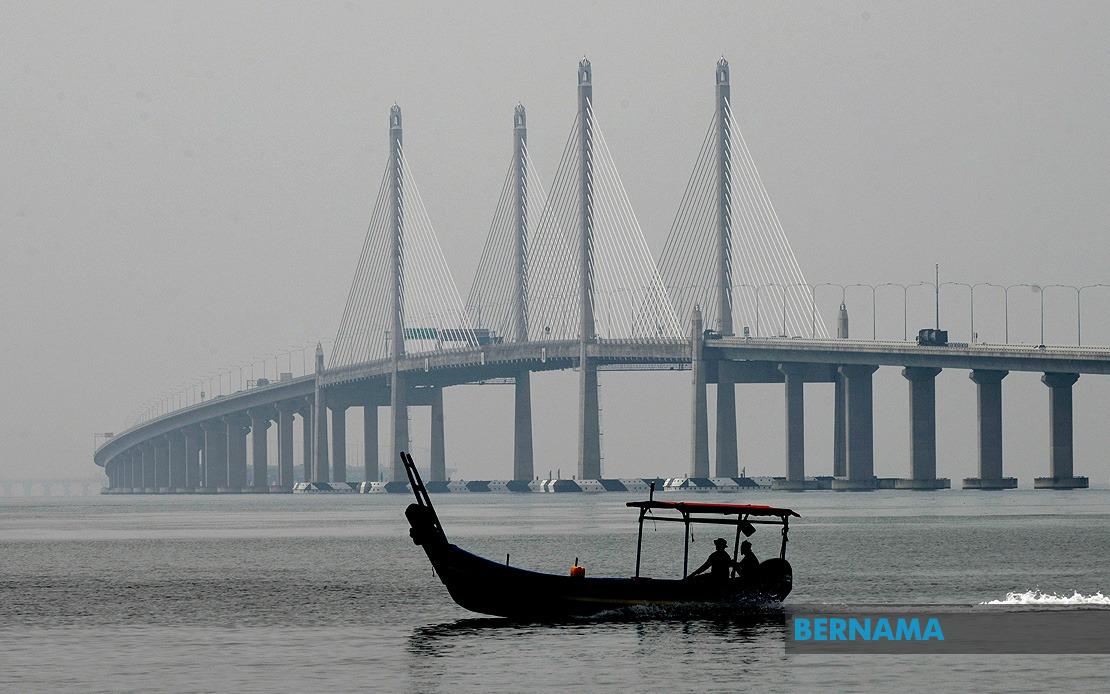
Penang authorities are preparing for next week's consultation with stakeholders to determine how best to implement restrictions on fishing activity beneath the state's two major bridge crossings while minimizing disruption to local livelihoods and economic activity. Datuk Rashidi Zinol, chairman of Penang's Rural Development, Agro-technology and Food Security and Entrepreneurship Committee, confirmed the discussions after receiving representations from boat operators concerned about the enforcement of the newly gazetted fishing ban.
The prohibition applies to waters beneath both the Penang Bridge and the Sultan Abdul Halim Mu'adzam Shah Bridge, known colloquially as the Second Penang Bridge. These strategic locations were formally designated as restricted areas and prohibited places under the Protected Areas and Protected Places Act 1959, with both also classified as National Key Points due to their critical infrastructure status. The regulatory framework reflects heightened security considerations surrounding these major transport arteries connecting Penang Island to the mainland.
Fishing and tourist boat operators have raised substantial concerns following implementation of the restrictions, arguing the measures have directly curtailed fishing activities and reduced demand for their services. The economic fallout extends well beyond the vessel operators themselves, creating a ripple effect through interconnected supply chains. Small businesses providing fishing equipment, supplies, ice, and food products to fishing communities have experienced corresponding declines in trade, compounding the broader economic challenge facing the sector.
Rashidi acknowledged during conversations with Bernama that the operational constraints imposed by the fishing ban represent a serious challenge requiring careful navigation between competing public interests. On one hand, the restrictions serve legitimate security and safety objectives tied to protecting critical national infrastructure and preventing unauthorized access to sensitive bridge areas. On the other hand, the livelihoods of fishing communities and related service providers depend on maintaining access to traditional fishing grounds that now fall within prohibited zones.
The affected boat operators represent a diverse constituency with varying degrees of economic vulnerability. Tourist boat enterprises that rely on access to these waters for scenic cruises and sightseeing tours have seen bookings decline, while commercial fishing operations face loss of productive fishing grounds. The interconnected nature of maritime economies means that ice suppliers, equipment manufacturers, food distributors, and retailers who depend on steady demand from the fishing sector have also felt the impact of reduced activity.
For Malaysian policymakers, the Penang situation illustrates a recurring tension in balancing security imperatives with economic considerations in developing countries. The designation of the two bridges as National Key Points reflects legitimate concerns about protecting critical infrastructure from potential threats, a consideration that has become increasingly important across Southeast Asia. However, rigid enforcement without accommodation for existing economic activities can create unintended consequences for vulnerable communities whose livelihoods depend on pre-existing patterns of resource use.
Rashidi's proposed approach of seeking a "balanced solution" suggests willingness to explore alternatives that might satisfy both security requirements and economic needs. Such solutions could potentially include designated fishing zones at specific times, permit systems for approved operators, or modified access arrangements that maintain safety protocols while allowing limited economic activity. The coming discussions will likely explore whether the current blanket prohibition represents the only viable approach or whether more nuanced management could achieve security objectives while reducing economic harm.
The timing of these consultations reflects broader governance trends in Malaysia toward greater stakeholder engagement on policy implementation. Rather than simply enforcing restrictions top-down, authorities are acknowledging the importance of understanding ground-level impacts and incorporating affected communities' perspectives into policy refinement. This consultative approach can enhance compliance and legitimacy, particularly when restrictions affect established economic practices.
The broader context matters significantly for understanding this issue. Penang's fishing industry, while smaller than Malaysia's major fishing states, remains culturally significant and provides employment for communities with limited alternative economic opportunities. The state government's commitment to examining the livelihoods question alongside safety and regulatory compliance suggests recognition that sustainable policy implementation requires addressing legitimate economic concerns rather than imposing restrictions without consequence.
For boat operators and fishing communities, next week's discussions represent a critical opportunity to articulate how current restrictions affect their economic viability and to propose workable alternatives that respect security requirements. The specifics of the restrictions—where exactly fishing is prohibited, what activities fall under the ban, whether exemptions or modified access arrangements are feasible—will likely feature prominently in these consultations.
The outcome will have implications beyond Penang. Other Malaysian states with critical bridge infrastructure may face similar tensions between security designations and established economic uses. How Penang authorities resolve this dilemma could inform approaches elsewhere, establishing precedents for managing National Key Point restrictions that affect communities dependent on traditional resource access. Success in finding a balanced approach would demonstrate that security needs and economic protection need not be mutually exclusive when implemented with sufficient flexibility and stakeholder engagement.

