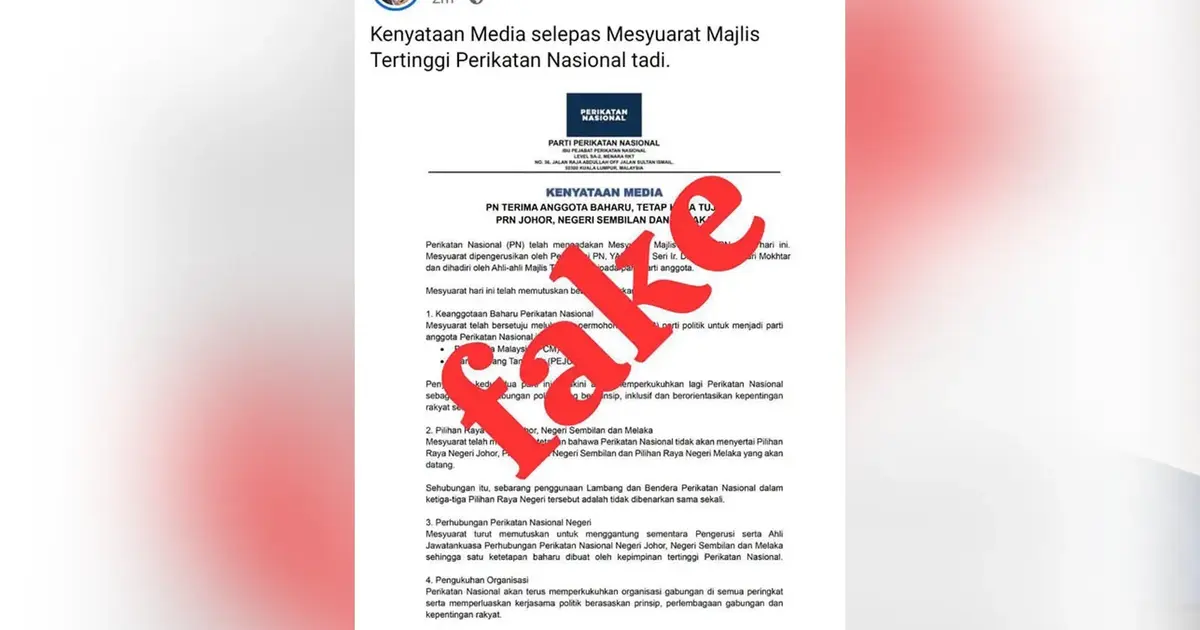
Perikatan Nasional has moved swiftly to shut down a narrative gaining traction that the opposition coalition plans to withdraw from three forthcoming state-level ballot contests. The coalition's leadership characterised the allegation as fundamentally inaccurate and denied any intention to sidestep electoral participation at the state level.
The emergence of such claims underscores the volatile nature of Malaysian political communications, where misinformation can spread rapidly across digital platforms and influence public perception without substantial verification. Coalition spokespersons emphasised that the purported statement did not emanate from official PN channels and cautioned observers against treating unverified claims as factual political positioning. The swift denial reflects broader concerns within the coalition about how false narratives might damage its electoral prospects ahead of anticipated state polls.
For Malaysian voters and political analysts tracking the opposition landscape, clarity regarding coalition strategy remains crucial. State elections carry significant weight in shaping national political dynamics, particularly when they test party cohesion and voter preference between competing alliances. PN's need to publicly reject such allegations suggests the coalition takes seriously both its electoral credibility and the potential for targeted disinformation campaigns to undermine its standing.
The incident highlights how Malaysian political discourse increasingly operates across fragmented information ecosystems where rumours circulate alongside verified reporting. Opposition parties and coalitions face particular vulnerability to such attacks, as they lack the institutional machinery that governing coalitions can deploy to shape media narratives. PN's response demonstrates awareness that silence regarding false claims risks allowing misinformation to calcify into conventional wisdom among certain voter segments.
State elections assume heightened importance within Malaysia's federal structure, as they determine which coalition controls specific territorial administration and can influence which parties gain ground nationally. Perikatan Nasional's commitment to participating fully in these contests signals intent to compete across all available electoral avenues rather than concentrate resources solely on federal politics. Such participation reflects the coalition's broader strategy to expand its footprint beyond its core states and challenge the governing Pakatan Harapan alliance.
The timing of such false claims merits consideration, as speculation about potential boycotts might be designed to sow doubt about PN's strategic coherence or commitment to democratic processes. Coalition partners sometimes face tension regarding resource allocation and campaign priorities, making claims about selective participation particularly potent in shaping perceptions of internal unity. PN's unambiguous public rejection addresses these concerns directly, attempting to project organisational discipline and electoral seriousness.
For Malaysians observing political competition between major coalitions, distinguishing accurate information from fabricated narratives has become essential civic practice. The proliferation of false statements about party intentions underscores why voters must approach claims about political movements with measured scepticism unless validated through established news channels and official party communications. PN's willingness to explicitly deny the charges reflects recognition that passive silence amounts to tacit acceptance among portions of the electorate.
The international context of electoral misinformation provides useful perspective. Numerous democracies have grappled with how false claims about campaign strategies and electoral participation spread and persist. Malaysia's political environment, with its distinctive regional dynamics and multi-coalition structures, faces comparable challenges regarding information integrity and voter confidence in reported political developments. Addressing such misinformation promptly protects the electoral process itself.
Looking forward, PN faces the substantive challenge of converting credibility-building statements into demonstrated electoral commitment. Voters ultimately evaluate coalitions not through denials of false claims but through actual participation, resource deployment, and campaign vigour across contested states. The coalition's explicit rejection of boycott allegations sets baseline expectations for forthcoming electoral seasons when PN will need to substantiate its commitment through concrete electoral engagement.
The broader implications extend beyond PN specifically. Malaysian political culture benefits when coalitions and parties rapidly address misinformation, thereby establishing information-sharing norms that elevate national discourse quality. Allowing false narratives to circulate unchallenged enables similar claims to proliferate regarding other parties and reduces overall confidence in understanding what political movements actually intend. PN's response contributes modestly to establishing standards where accuracy receives priority over strategic narrative management.
As anticipated state elections approach, Malaysian voters warrant expecting both clarity from political leaders about genuine strategic positions and collective vigilance against accepting unverified claims. PN's emphatic rejection of the boycott allegation provides one data point, but sustained electoral participation across competitive state contests will ultimately constitute the party's most persuasive response to doubts about its commitment to democratic engagement across Malaysia's federal landscape.

