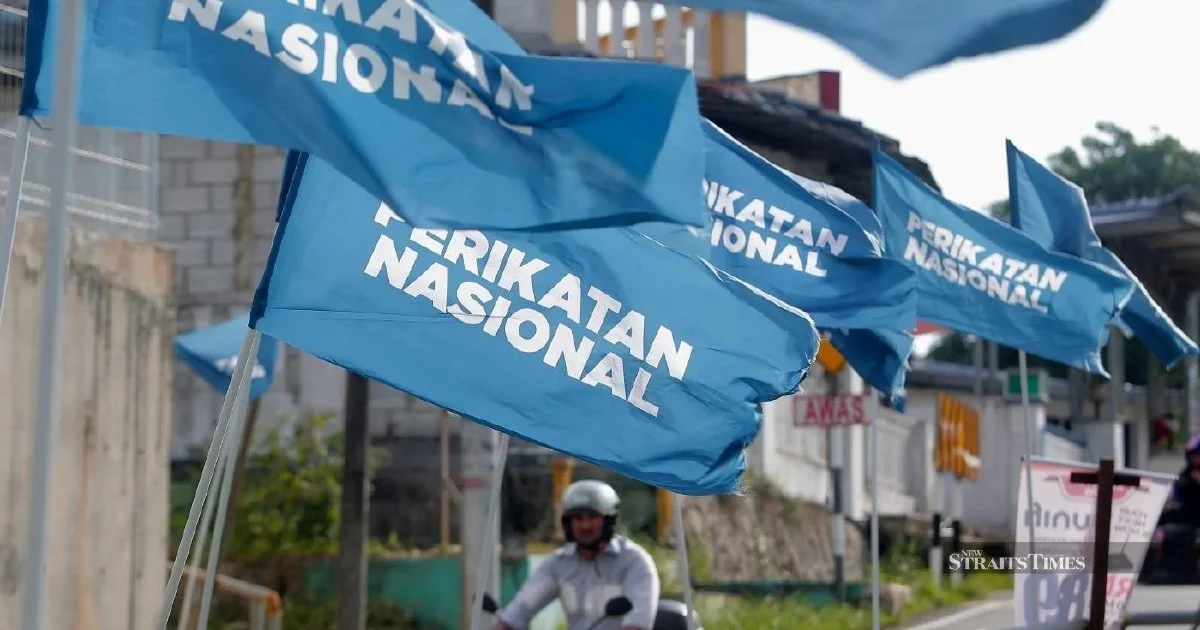
Perikatan Nasional has moved swiftly to quash a viral claim circulating on social media that the political coalition intends to withdraw from the forthcoming Johor state election. Deputy chairman P. Punithan issued a categorical denial, describing the rumour as completely fabricated and emphasising the coalition's firm commitment to electoral participation in the state.
The emergence of such unverified claims highlights the persistent challenge of combating misinformation during election cycles across Malaysia. Social media platforms have become breeding grounds for speculation about electoral strategies and political alliances, often without credible sources or official verification. For voters and political observers, distinguishing between authoritative statements and opportunistic rumour-mongering has become increasingly difficult in an environment saturated with claims and counter-claims.
PN's swift and direct response suggests the coalition views this particular rumour with enough seriousness to warrant immediate clarification. The timing of such claims, whether intentionally timed to sow confusion or coincidental, underscores the volatile nature of political communication in the digital age. By publicly addressing the speculation, PN has attempted to control the narrative and prevent the false narrative from gaining further traction among supporters and undecided voters.
The Johor state election holds particular significance for Malaysian politics given the state's economic importance and its historical role as a bellwether for national political trends. Any coalition's participation or withdrawal would carry implications far beyond Johor's borders, affecting calculations at federal level and potentially influencing other state-level contests. PN's active involvement in Johor therefore carries weight that extends across the political landscape.
For voters in Johor, the clarity provided by PN's denial offers reassurance about electoral choices and the full spectrum of options they will face at the ballot box. A reduced field of contenders would narrow voter choices and potentially affect campaign dynamics and resource allocation by competing coalitions. The presence of PN on the ballot represents a three-cornered contest framework that shapes how political strategies unfold across the state.
The incident also raises broader questions about information governance and responsibility during electoral periods. Political parties and election commissions face mounting pressure to combat false narratives that could undermine public confidence in the democratic process. In Malaysia, where previous elections have occasionally witnessed misinformation campaigns, proactive denial and clarification have become standard practice for major political actors seeking to maintain credibility.
PN's position in Malaysian politics has evolved considerably over recent years, particularly following shifts in federal government composition and realignments of political coalitions. The coalition's active stance toward state-level contests reflects its broader ambition to expand influence beyond its traditional strongholds. Johor represents a strategically important battleground where PN seeks to demonstrate electoral viability and challenge incumbent forces.
The viral claim likely originated from unverified sources attempting to speculate on PN's electoral strategy or intentions. Without official confirmation or credible sourcing, such claims spread rapidly through social networks where verification mechanisms remain weak. P. Punithan's intervention aims to create a clear record that contradicts the false narrative before it becomes entrenched in public perception.
Electoral participation decisions by major coalitions typically involve careful deliberation regarding resource allocation, candidate viability, and strategic positioning. Any formal decision by PN to contest or withdraw would come through official channels and established party procedures, not through viral social media posts. The contrast between unverified rumours and formal party communication underscores the importance of relying on authoritative sources for political information.
For media consumers and political observers monitoring Malaysian elections, this episode serves as a reminder of the need for critical engagement with online political claims. Verification through multiple credible sources and attention to official party statements provide firmer ground than unattributed social media circulation. As election cycles intensify, distinguishing between genuine political developments and fabricated rumours becomes essential for informed participation in democratic processes.
The broader context of misinformation in electoral campaigns extends beyond individual state contests to affect the overall health of democratic discourse. When false claims circulate unchecked, they erode public trust and create confusion about genuine political intentions and capabilities. PN's response exemplifies the reactive approach parties must increasingly adopt to protect their reputations and ensure voters receive accurate information about their electoral involvement.

