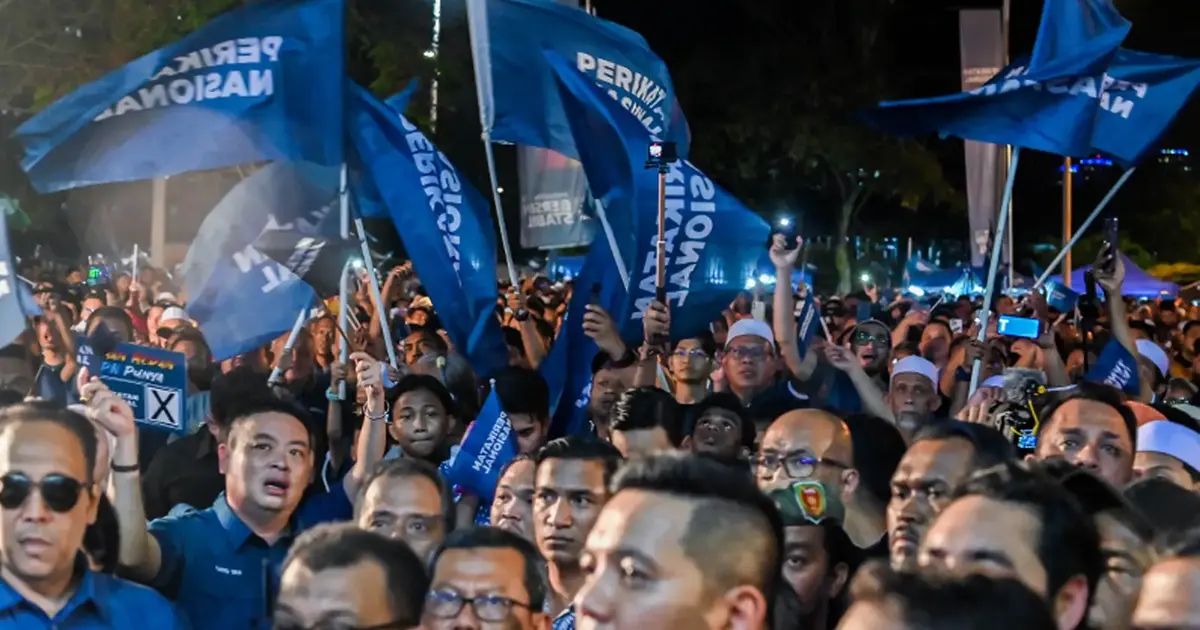
The Perikatan Nasional coalition confronts a deepening crisis that threatens its cohesion, with mounting tensions between PAS and Bersatu now resembling a protracted conflict rather than containable disagreements. According to Yusri Ibrahim, chief researcher at the Ilham Centre, the relationship between Malaysia's two largest Islamist parties has deteriorated beyond conventional political rivalry and entered what he characterises as a 'guerrilla war' phase, signalling a qualitatively more damaging phase of intra-coalition hostility.
This characterisation reflects the reality that the coalition's internal dynamics have shifted from negotiable disputes over policy and portfolio distribution toward something more corrosive: a struggle for ideological dominance and control of the Islamist political constituency. When political alliances move from contractual disagreement to what observers describe using military metaphors, it suggests the underlying institutional frameworks designed to manage conflict have either failed or been deliberately circumvented by one or both parties.
The implications for Perikatan Nasional extend beyond immediate factional posturing. As Malaysia's principal opposition coalition at federal level and a governing force in several states, internal fracturing would reshape the nation's political landscape considerably. The coalition's capacity to function as a unified alternative to the ruling Pakatan Harapan depends on maintaining sufficient cohesion around core objectives, even when member parties disagree on secondary matters. When that cohesion erodes, the coalition's strategic effectiveness diminishes correspondingly.
PAS and Bersatu entered their formal alliance with fundamentally different organisational cultures and constituencies. PAS, established as a platform for explicitly Islamic governance and social policy, draws support predominantly from rural and semi-urban Malay-Muslim communities where religious identity dominates political preference. Bersatu, by contrast, emerged more recently as a vehicle for factional interests within the ruling Malay establishment, retaining stronger connections to federal administrative machinery and urban professional networks. These structural differences create persistent tension even when leadership publicly commits to unity.
The 'guerrilla war' analogy suggests conflict now occurs through indirect channels rather than formal institutional mechanisms. Rather than disputes being resolved through coalition councils or mediation by neutral arbiters, grievances manifest through media statements, strategic leaks, and coordinated mobilisation of grassroots supporters. This decentralised form of conflict proves more difficult to contain because it operates below the threshold of official rupture whilst simultaneously inflicting cumulative damage on the coalition's public image and internal morale.
For Malaysian observers, the fragmentation risk within Perikatan Nasional should be contextualised against the broader trajectory of coalition politics in the country since 2018. The collapse of the Barisan Nasional majority government demonstrated that even ostensibly stable coalitions can unravel when internal tensions overcome institutional adhesives. Pakatan Harapan itself experienced severe strains before reaching its current configuration with Bersatu's departure and subsequent realignment. These patterns suggest Malaysian coalitions require continuous active management and reciprocal concessions to maintain viability.
The deterioration between PAS and Bersatu reflects genuine incompatibilities that extend beyond personality conflicts between leaders. Both parties contest for dominance within the conservative Malay-Muslim political space, viewing each other as competitors for the same voter base rather than natural allies with complementary strengths. Bersatu's willingness to work with Umno at state and federal levels creates additional friction with PAS, which maintains more ideological rigidity regarding coalition partners and policy direction. These substantive differences resist easy resolution through diplomatic gestures.
From a Southeast Asian perspective, Malaysia's coalition instability has regional ramifications. As the region's largest Muslim-majority democracy outside Indonesia, Malaysia's political stability influences investor confidence, regional security cooperation, and the broader trajectory of democratic governance in Islamic contexts. Persistent coalition warfare suggests institutional weakness in managing pluralism and consensus-building, patterns with significance beyond Malaysia's borders.
The Ilham Centre's assessment carries weight given the think tank's track record in analysing Islamist movements and their political trajectories across Southeast Asia. When experienced researchers characterise internal coalition conflict using language typically reserved for actual conflict situations, it signals genuine deterioration rather than routine political friction. The 'guerrilla war' description implies asymmetric information advantages, guerrilla-style attacks on opponent credibility, and difficulty in achieving decisive outcomes through conventional means.
Peering forward, the coalition's stability depends on whether PAS and Bersatu can identify sufficient common ground to sustain their partnership despite profound disagreements. This requires either external pressure encouraging unity against a perceived threat, or internal institutional reforms that insulate coalition operations from factional warfare. Neither condition currently appears firmly established. Without meaningful intervention, the Perikatan Nasional coalition faces sustained instability that will constrain its effectiveness as a political force and potentially trigger defections that accelerate its fragmentation.
For Malaysian voters assessing their political options, the turmoil within Perikatan Nasional reflects broader challenges facing opposition politics in the country. Building sustainable coalitions that respect member autonomy whilst maintaining collective discipline remains among Malaysia's most persistent political challenges. The scale of the current crisis between PAS and Bersatu suggests this challenge is far from resolved.