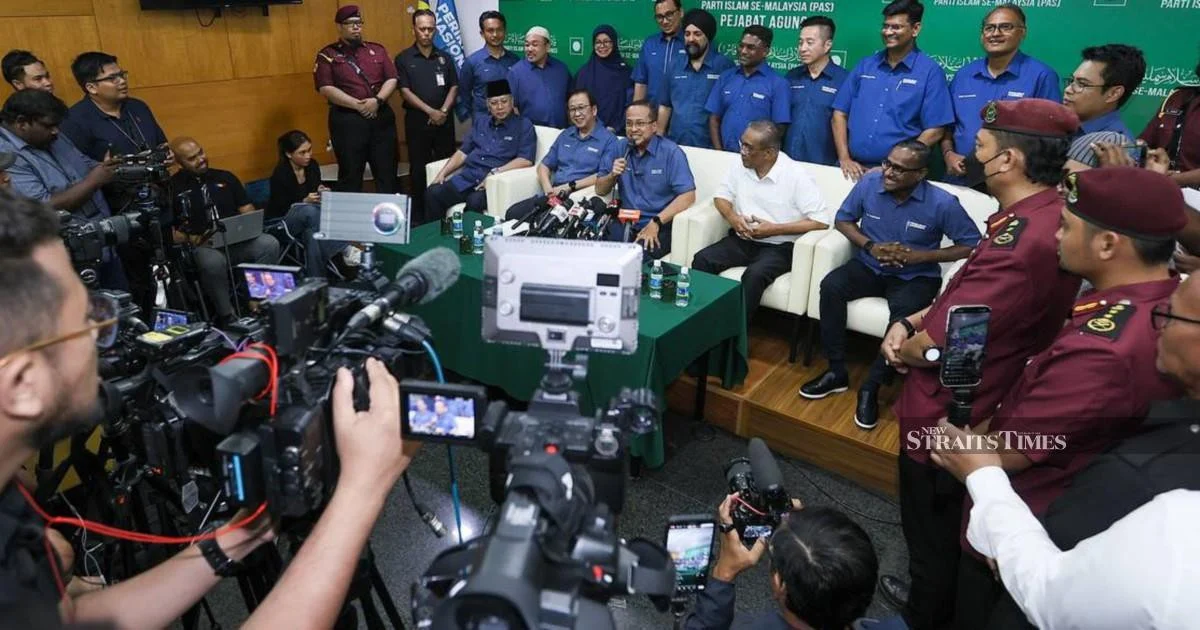
Perikatan Nasional has scheduled a critical meeting for today in Kuala Lumpur to nail down its constituency distribution strategy for the Johor state election. The special session represents a pivotal moment for the coalition as it moves from discussion into concrete electoral positioning, a process that has often proven contentious among member parties seeking optimal candidate placements.
The allocation process is particularly significant given the complex coalition dynamics within PN. The bloc comprises multiple parties with distinct regional strengths and organisational bases, each with legitimate claims to contesting seats that align with their support networks. In Johor specifically, the coalition's members have varying levels of grassroots presence and historical electoral performance, making the distribution exercise far more nuanced than a simple numerical division.
For Malaysian political observers, the Johor allocation represents a crucial test of PN's cohesion at a time when the coalition's unity faces pressures from competing interests and differing policy priorities. The manner in which the coalition leadership resolves seat disputes—whether through transparent negotiation or authoritative directive—will signal the strength of its internal governance structures to both members and the broader electorate.
Johor holds particular strategic importance for PN's broader political ambitions. As one of Malaysia's most populous states with significant economic clout, control of the state apparatus carries implications extending well beyond provincial governance. A strong showing in Johor could amplify PN's bargaining position in national politics and potentially shift the calculus of federal-level coalition negotiations in the coming years.
The timing of this finalisation meeting also reflects electoral realities. With constituency boundaries confirmed and nomination periods approaching, parties can no longer postpone difficult allocation decisions. The special session today effectively closes a period of internal negotiation and positions PN for campaign rollout, allowing candidates to begin formal campaign machinery and community engagement activities.
Seat allocation methodology within multi-party coalitions typically balances several competing considerations. Party leaders weigh incumbent performance and incumbency advantages against fresh candidates who might appeal to younger or demographic-shifting voter bases. Geographic representation ensures that member parties maintain presence across diverse communities rather than concentrating in particular pockets. Historical party strength in specific constituencies also factors heavily, with established strongholds usually retained by their traditional parties to minimise risk.
For PN's constituent parties, today's outcome will determine electoral fortunes for individual politicians and party organisations alike. Candidates receiving winnable seats gain platform and resource advantages, while those allocated to challenging constituencies face uphill battles. These decisions inevitably create internal satisfaction or disappointment that can affect party morale and campaign intensity during the crucial pre-election period.
The Johor election itself carries implications for Malaysian federalism and centre-state relations. Regardless of outcome, the state's governance direction will influence policy approaches to economic development, Chinese-medium education, religious administration, and other portfolios where Johor's preferences often set precedents for other states. A PN-led Johor government would represent significant political realignment in a state that has traditionally fallen within other political blocs' strongholds.
From a broader Southeast Asian perspective, Malaysian state elections provide important indicators of coalition stability and electoral competition patterns. PN's performance in Johor will be studied by political analysts across the region as evidence of whether the coalition can maintain momentum after its strong 2022 federal showing, or whether internal contradictions and competing member interests constrain its longer-term viability.
The finalisation of seat allocation also marks the conclusion of a period during which various grassroots factions and party leaders could lobby for specific constituencies. Once today's meeting concludes and decisions are announced, the coalition moves into implementation mode where candidacy becomes largely fixed. This transition from fluidity to finality creates psychological momentum toward unified campaign effort, even among those disappointed with their allocations.
Observers will watch carefully not just which candidates receive which seats, but also the symbolic clarity of PN's decision-making. A swift, publicly coherent announcement today would project confidence and organisation, signalling to Johor voters that PN operates as a genuine coalition capable of collective governance. Conversely, any indication of lingering disagreement or forced compromises might undermine the unified front essential for effective campaigning.
The seat allocation finalisation represents more than administrative housekeeping for PN. It crystallises the coalition's strategic vision for Johor, determines which individual politicians carry the coalition's banner into pivotal constituencies, and establishes the basic template from which all subsequent campaign activities will flow. Today's meeting effectively transforms abstract political ambition into concrete electoral machinery.

