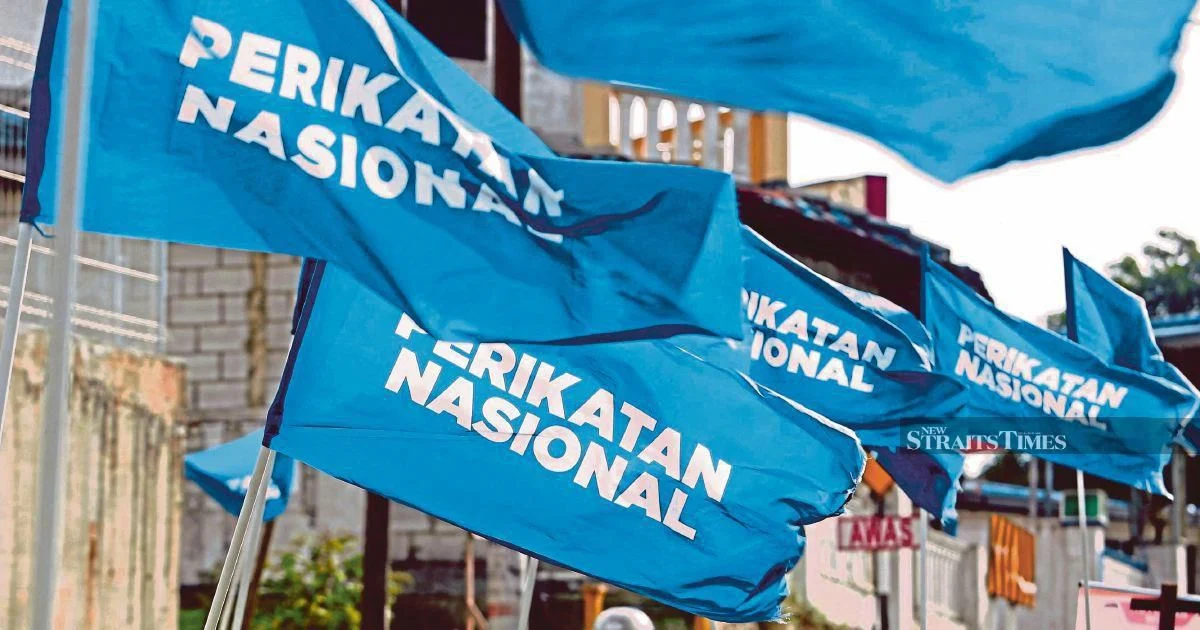
The coalition representing one of Malaysia's largest political blocs is experiencing mounting strain as internal disputes over fundamental governance procedures come to the fore. In Kota Baru yesterday, Pas leadership publicly questioned the legitimacy of Bersatu's decision to utilise the Perikatan Nasional emblem during the forthcoming state elections in Johor and Negri Sembilan, effectively challenging the partner party's independence in such matters.
The controversy centres on a straightforward but critical procedural question: who holds authority to greenlight the use of the coalition's shared identity assets? Pas representatives have made clear their position that only the coalition's elected chairman possesses the power to authorise such deployment. This assertion amounts to a direct rebuke of any unilateral action by Bersatu, suggesting that the party may have proceeded without obtaining requisite approval from the highest level of Perikatan Nasional governance structures.
Such disputes, whilst appearing technical on the surface, carry profound implications for the stability and functionality of coalition arrangements. When partner parties cannot agree on who controls shared resources and symbols, it signals deeper fractures in trust and consensus. The Perikatan Nasional coalition, formed to consolidate conservative and Islamist political forces following the 2022 general election, has faced repeated tests to its cohesion. This latest disagreement indicates that these strains have not diminished but rather intensified as the coalition prepares for critical state-level contests.
The timing of this row proves particularly significant given the electoral calendar ahead. The Johor and Negri Sembilan state elections represent consequential political battlegrounds where coalition performance will influence national political dynamics. For Perikatan Nasional to project electoral strength, maintaining a unified public front and operational coherence becomes essential. Instead, the party squabble plays out openly, potentially undermining the coalition's capacity to mobilise supporters and present itself as a stable alternative governance option.
Bersatu's apparent assumption of authority to use the coalition logo without explicit permission from the chairman reflects a broader pattern of assertiveness within the partnership that Pas and potentially other members view as overreaching. The party, led by Muhyiddin Yassin, has positioned itself as a major player within Perikatan Nasional, yet such unilateral moves generate friction with larger or more established coalition partners. Pas, despite its complexities, maintains substantial organisational presence and electoral machinery, particularly in East Coast states. Any action that marginalises or diminishes Pas's voice within coalition decision-making naturally provokes pushback.
The governance architecture of political coalitions in Malaysia typically requires consensus or hierarchical approval for matters affecting the collective brand and electoral strategy. Perikatan Nasional's founding frameworks presumably codified such procedures, yet their enforcement appears inconsistent or contested. This gap between institutional design and operational reality creates vulnerability. When partners disagree on basic governance questions, the remedies often prove limited short of formal disciplinary mechanisms, which coalitions typically seek to avoid lest such conflicts escalate into ruptures.
For Malaysian voters and the broader electorate, such internal coalition disputes raise legitimate questions about competence and reliability. Coalition partners who cannot establish transparent procedures and mutual respect for decision-making processes invite scepticism about their capacity to govern effectively at state or federal levels. The public airing of these grievances, rather than resolution through private channels, suggests either a breakdown in communication mechanisms or a deliberate strategy by one party to apply pressure through public pressure.
Regionally, Malaysia's coalition politics operate within a context where such arrangements have become increasingly common and necessary. The fragmentation of the electorate and the absence of single-party majorities at various governmental levels necessitate coalition governance. However, the success of such arrangements depends heavily on maintaining operational discipline and agreed procedures. The Perikatan Nasional's experience mirrors challenges faced by coalitions elsewhere in Southeast Asia, where ideological alignment alone proves insufficient to maintain lasting partnerships without robust institutional frameworks and demonstrated commitment to consensus-building.
The Johor and Negri Sembilan elections will provide an early test of whether Perikatan Nasional can resolve internal disputes and present itself effectively to voters. Should similar rows continue to surface during the campaign period, they risk distracting from substantive policy messaging and candidate promotion. Conversely, swift and transparent resolution through proper channels could demonstrate that the coalition possesses effective conflict resolution mechanisms. How the coalition chairman adjudicates this dispute will signal to both internal partners and external observers whether Perikatan Nasional can function as a disciplined political force or whether it remains vulnerable to the fragmenting pressures that have historically challenged Malaysian political coalitions.
Beyond the immediate electoral implications, this row illuminates the enduring challenge of sustaining multi-party coalitions in Malaysia's polarised political environment. Trust between partners, clarity on decision-making authority, and mechanisms for peaceful dispute resolution become paramount. The Pas challenge to Bersatu's logo usage, whilst specific, represents a test case for whether Perikatan Nasional's institutions can withstand the pressures inherent in coalition management.

