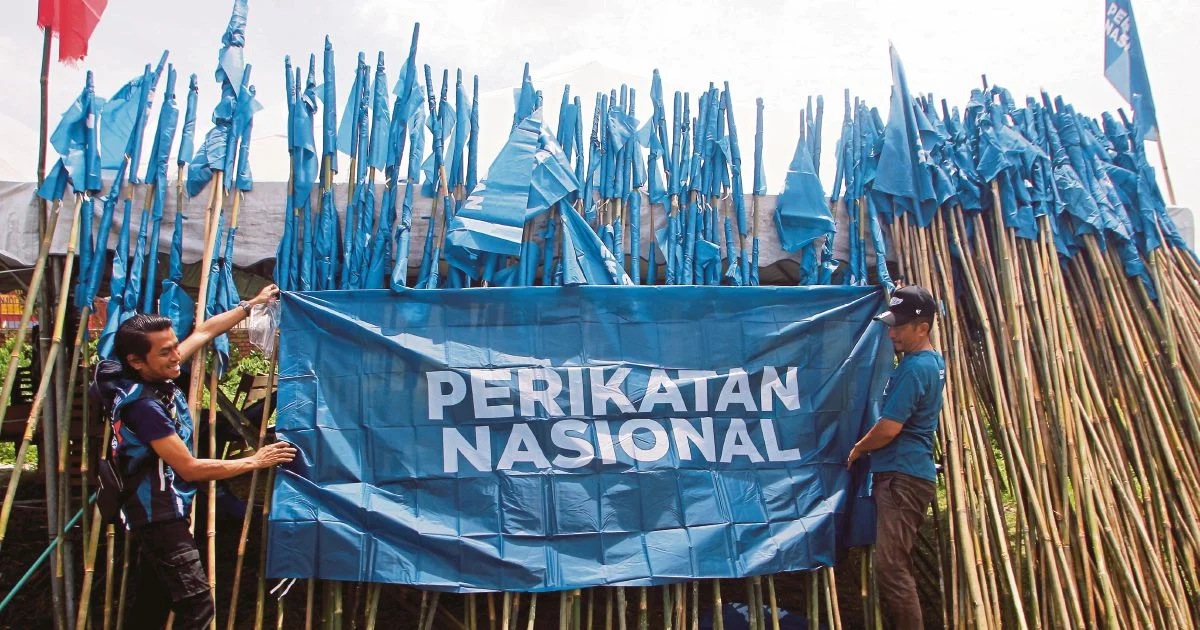
The Perikatan Nasional coalition faces a critical juncture as its Supreme Council prepares to gather on June 22, with the agenda focused on settling contentious matters that have threatened to undermine the pact's cohesion ahead of forthcoming electoral campaigns. The meeting, held in Kota Baru, represents a pivotal moment for the multi-party alliance as it grapples with procedural and strategic questions that have festered within its membership ranks.
Central to the council's deliberations will be the resolution of disputes concerning the utilisation of the PN logo across member parties. This technical yet symbolically significant issue has emerged as a flashpoint within the coalition, reflecting deeper questions about representation and unified branding as the alliance prepares to contest elections. The logo dispute encapsulates broader tensions about how individual parties within the coalition balance their distinct organisational identities with the collective image and messaging required for an effective electoral partnership.
Equally pressing for the leadership gathering is the thorny matter of candidate endorsements. Coalition politics frequently generate friction when determining which candidates bear the backing of multiple parties or when one party's preferred candidate faces competition from nominees sponsored by alliance partners. Such allocation decisions carry profound implications for grassroots morale, internal party dynamics, and ultimately electoral outcomes across constituencies where PN hopes to maintain or expand its representation.
The timing of this meeting assumes particular significance given Malaysia's political calendar and the anticipated electoral timeline. Unresolved questions about logo usage and candidate selection cannot persist indefinitely; they risk creating confusion among voters and demoralising party workers in the field. By June 22, the council must convert abstract agreements into concrete operational guidelines that member parties can implement uniformly across their campaign machinery.
For Malaysian political observers, the PN council gathering illustrates the perpetual challenge facing multi-party coalitions in maintaining unity while accommodating the distinct interests of constituent members. Unlike monolithic parties, coalitions must negotiate compromises that satisfy diverse stakeholder groups whilst projecting coherence to the electorate. The stakes inherent in these internal negotiations often receive insufficient media attention, yet they fundamentally shape how effectively alliances compete during campaign periods.
The Supreme Council's composition—including party presidents and senior representatives from PN's constituent members—reflects the collaborative decision-making structure intended to prevent any single organisation from dominating coalition affairs. However, this democratic approach simultaneously creates conditions for protracted disagreement when parties hold divergent views on procedural matters or strategic priorities. The June 22 meeting essentially functions as a pressure point where such disagreements must be resolved through negotiation and compromise.
Regional considerations further complicate coalition management. With the meeting convened in Kota Baru, the Kelantan location underscores PN's particular strength in the northeast, though the coalition now spans constituencies across multiple states following the 2022 general election results. This geographical diversity, whilst strengthening PN's overall reach, simultaneously multiplies the number of perspectives and interests requiring accommodation within coalition structures.
Party strategists recognise that unresolved operational questions create vulnerabilities that opposition coalitions might exploit. Clarity regarding logo usage and candidate endorsements allows the PN machinery to activate its grassroots networks with confidence, knowing that messaging and candidate selection reflect coordinated, consensus-based decisions rather than ad-hoc arrangements made under pressure. The council meeting therefore represents not merely internal housekeeping but foundational preparation for electoral competitiveness.
The logo dispute carries symbolic weight extending beyond mere branding aesthetics. In Malaysian electoral culture, party symbols carry deep meaning for voters, and confusion about which symbol appears on ballots could undermine turnout or create administrative complications. The candidate endorsement process, similarly, requires transparent criteria and fair procedures to maintain faith among party members and preserve the coalition's reputation for principled governance.
Observers will scrutinise not only which decisions the council reaches on June 22 but also how smoothly the meeting proceeds and whether consensus emerges without acrimonious public disputes. A harmonious council session projects stability and voter confidence; conversely, visible friction signals vulnerability that opponents might weaponise during campaign phases. The opacity surrounding coalition decision-making processes sometimes obscures the genuine difficulty of maintaining unity among organisations with distinct cultures, memberships, and strategic priorities.
For Southeast Asian coalition analysts, the PN example demonstrates patterns evident across the region's democratic systems: multi-party alliances require sophisticated institutional mechanisms to function effectively, and procedural questions—apparently technical in nature—often mask substantive disputes about power distribution and strategic direction. The June 22 meeting will test whether PN possesses sufficient institutional maturity to resolve such tensions without fracturing.
As Malaysia's political landscape continues evolving, the ability of coalitions like PN to maintain operational coherence whilst adapting to changing electoral circumstances will determine their long-term viability. The Supreme Council gathering thus carries implications extending well beyond the immediate questions of logo usage and candidate selection, fundamentally touching on whether PN can consolidate its position as a credible alternative governing arrangement for Malaysian voters.

